

Australia battery rebate tiering lifts household costs
Wed, 27th May 2026 (Today)
Australia's household battery rebate has shifted to a tiered subsidy structure, increasing out-of-pocket costs for some battery configurations.
Under the revised settings, the baseline Small-scale Technology Certificate factor falls to 6.4 from 8.4, with lower support rates for larger systems. The first 14 kWh of usable capacity receives 100% of the new baseline, capacity above 14 kWh and up to 28 kWh receives 60%, and capacity above 28 kWh and up to 50 kWh receives 15%.
The change reshapes the economics for households weighing battery size against cost. Systems that previously attracted the same subsidy rate across all usable kilowatt-hours now face a sharp drop in support once capacity moves into the upper bands.
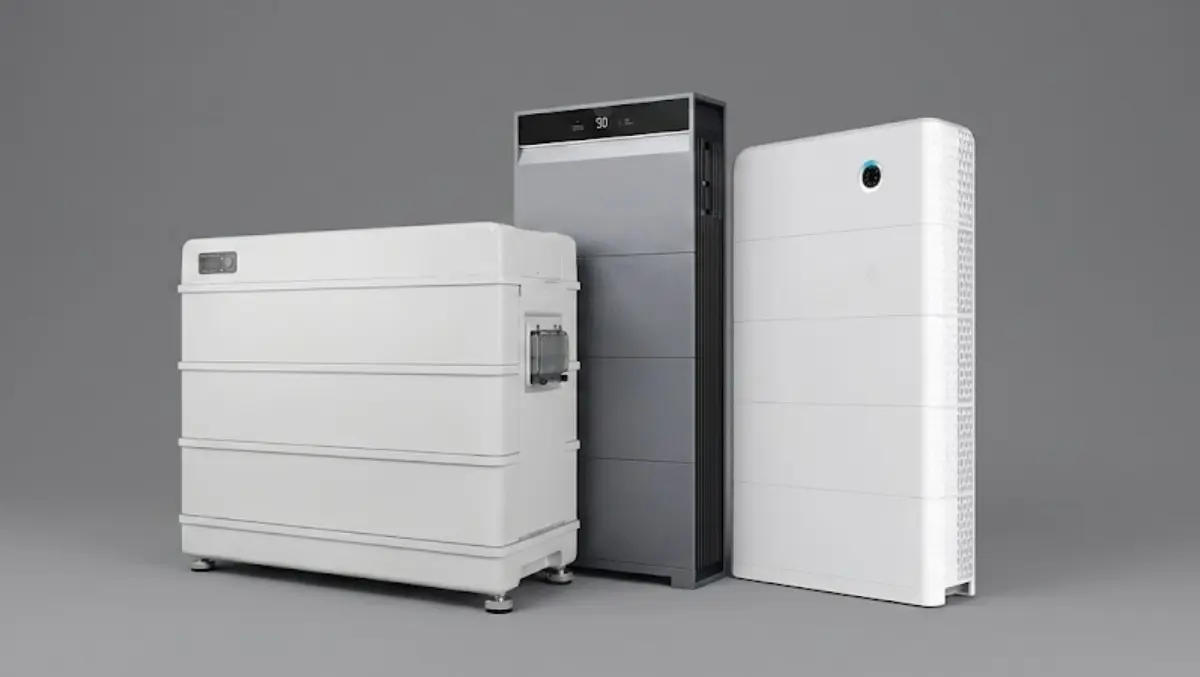
Analysis in the market review compared three modular battery systems and found that medium-sized systems now carry materially higher hardware costs after the rebate change. A 16 kWh Sungrow SBR system was shown rising by about AUD $1,485 to roughly AUD $8,485, while a 15 kWh Anker SOLIX X1 system increased by about AUD $1,302 to around AUD $8,402. A 16 kWh Sigenergy SigenStor system was estimated to rise by about AUD $1,485 to around AUD $8,285.
Larger systems saw steeper increases. A 28.8 kWh Sungrow SBR configuration was estimated to rise by about AUD $3,912 to roughly AUD $17,312, while a 25 kWh Anker SOLIX X1 system increased by about AUD $3,126 to around AUD $13,892. A 24 kWh Sigenergy SigenStor system was estimated to rise by about AUD $2,944 to roughly AUD $13,744.
These figures were based on historical hardware-only prices and a fixed STC clearing house price of AUD $40, excluding installation costs. Actual customer quotes may still vary depending on labour, site conditions, inverter requirements and any state-based support.
Tier effects
The new structure is likely to push buyers towards battery sizes that fit neatly within the higher-paying bands. Installers and households now have a stronger incentive to avoid capacity that only marginally spills into the lowest subsidised tier, where support falls to 15% of the baseline rate.
For households with modest storage needs, that may favour systems built from smaller battery blocks. Sungrow's SBR range, which uses 3.2 kWh modules, was highlighted as offering finer expansion increments. However, a 28.8 kWh version crosses slightly into the lowest-paying tier, reducing the effective subsidy on the final fraction of capacity.
Anker's SOLIX X1 uses 5 kWh modules, creating 15 kWh, 20 kWh and 25 kWh configurations that fit more cleanly within the revised thresholds. That makes it one of the clearer examples of a modular format aligned with the new subsidy settings without reaching the 15% tier.
Sigenergy's SigenStor, by contrast, uses 8 kWh modules. That gives buyers fewer sizing options under the new thresholds, with a 24 kWh set-up avoiding the next jump while a 32 kWh configuration would push part of the system into the least-supported band.
Brand positions
The review presents Sungrow as the established market option, citing its long trading history and relatively low starting hardware cost. It also notes the company's more traditional split-system design compared with newer integrated products.
Anker is positioned as a premium choice, with a 10-year warranty and design features aimed at homes in challenging locations, including coastal environments. The assessment also notes that households seeking a 10 kW single-phase output would need two parallel inverters.
Sigenergy is described as the newer entrant, with an integrated design that combines inverter, battery and energy management in a single unit. The system also includes an optional 25 kW DC electric vehicle charger, which may appeal to households pairing battery storage with vehicle charging.
Changing calculations
More broadly, system design is becoming more important in household battery purchasing decisions. Under the previous arrangement, buyers could scale up storage with more predictable subsidy support. The new settings create clear financial break points at 14 kWh and 28 kWh.
That is likely to place greater emphasis on matching battery size to actual household use rather than simply adding capacity. It may also favour products with module sizes that let installers stay just below the lower-support thresholds.
For consumers, the result is a more complex pricing landscape, in which similar-looking systems can now produce markedly different out-of-pocket costs depending on how closely they align with the rebate tiers. The biggest penalty applies above 28 kWh, where the subsidy rate falls to 15% of the baseline.