

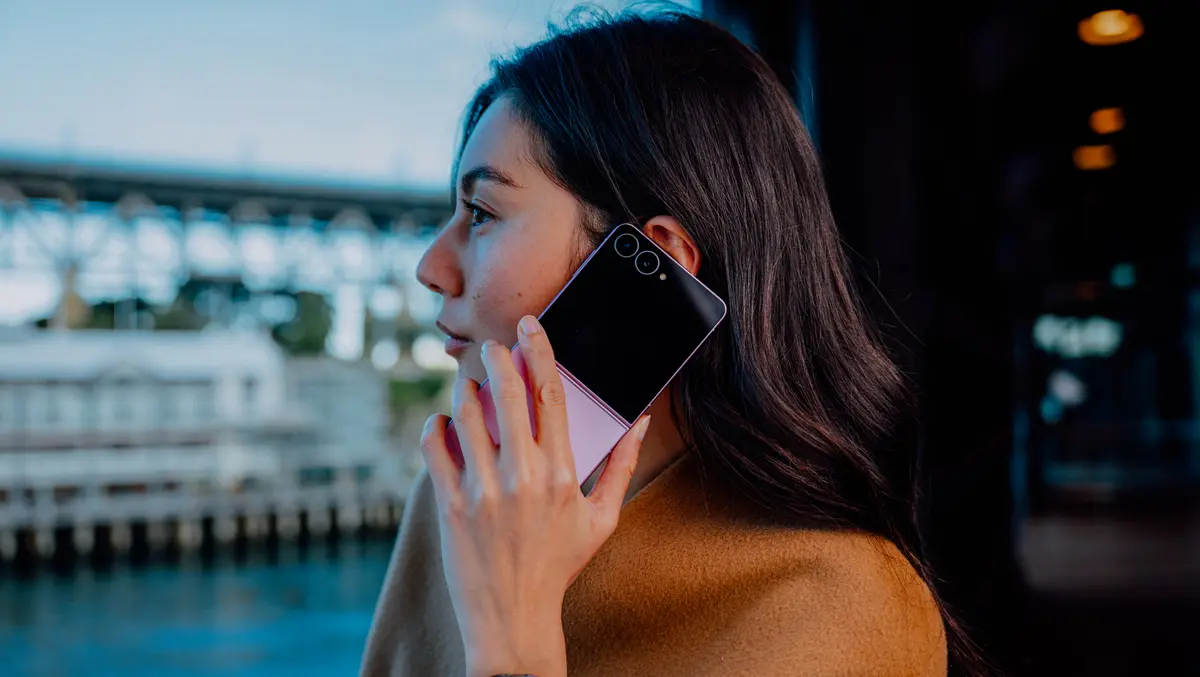
Australians shift from calls & texts to smartphone hubs
Wed, 21st Oct 2026 (Today)
Samsung Australia has published research showing that 22% of Australians aged 18 to 24 mainly use their smartphone for calls and texts, compared with almost 80% of those aged 55 and over.
The survey points to a broader shift in smartphone use across the country. The share of Australians who primarily use their phone for calls and texts fell from 67% in 2019 to 53% in 2026.
Over the same period, other uses became more prominent. Social media saw the biggest rise as a primary smartphone use, increasing from 17% to 24%, while use for work and productivity rose by almost 50%.
The data also suggests Australians now expect more from their devices in daily life. Six in 10 respondents said smartphone productivity matters more today than in 2019, while 63% said photography matters more than it did seven years ago.
Another finding reflects the growing use of phones as substitutes for physical items. The study found that 44% of Australians saw replacing their wallet, keys and identification as the most important smartphone innovation they did not know they needed seven years ago.
Generational divide
The sharpest contrast was between younger and older users. Fewer than a quarter of people aged 18 to 24 said calls and texts remained their main reason for using a smartphone, compared with nearly four in five of those aged 55 and over.
The gap points to a clear generational difference in what a mobile phone is for. For older Australians, the device still appears centred on its traditional communication role. Younger users are more likely to treat it as a broader digital tool.
Gary Mortimer, Professor of Marketing and Consumer Behaviour at Queensland University of Technology, described the shift in direct terms: "In just seven years, Australians have shifted from using smartphones primarily to call and text to relying on them as all-in-one tools for work, payments, navigation, social connection and AI-powered assistance. The smartphone has evolved from a communication device into a digital life hub."
Commercial backdrop
The research comes as smartphone makers try to persuade consumers to upgrade devices in a mature market. Samsung linked the changing patterns of use to the appeal of foldable phones, a category it first introduced in Australia seven years ago.
Its current foldable range includes three models: the Galaxy Z Fold8 Ultra, Galaxy Z Fold8 and Galaxy Z Flip8. The products are aimed at different user habits, including multitasking, content creation and entertainment.
Samsung's broader argument is that as phones take on more tasks, consumers may value larger screens, different form factors, and features that support work or media use more. The survey findings, particularly around productivity, photography and replacing wallets or keys, align with that position.
Still, the headline figures mainly underline how the smartphone's role has broadened rather than disappeared as a communication device. Even with the decline since 2019, most Australians still said calls and texts were their primary use in 2026.
Study details
The research was conducted by Pureprofile on behalf of Samsung and surveyed 1,092 Australians aged 18 and over. The company said the sample was nationally representative by age, gender and location, based on Australian Bureau of Statistics benchmarks.
The findings suggest that while the basic function of the mobile phone remains intact, the device now sits at the centre of a wider set of consumer habits. Payments, navigation, social media, photography and work-related tasks have all become more important in shaping how Australians view their phones.
For manufacturers, that shift makes it more important to sell devices not just as communication tools, but as products tied to daily routines and identity. For users, the survey points to a simpler conclusion: for many younger Australians, the phone in their hand is no longer mainly a phone at all.