

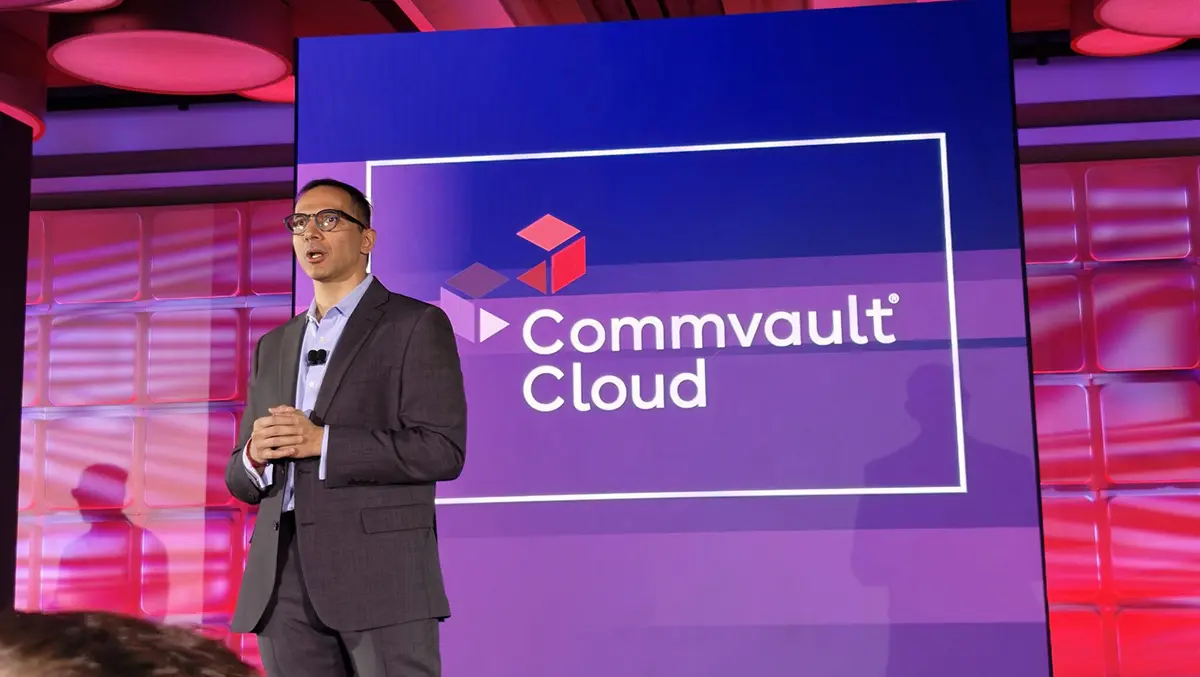

Commvault used its SHIFT event in New York to outline new technical measures aimed at resolving cloud-native recovery failures that occur when data, configurations and metadata fall out of sync across distributed environments.
Recovery gaps
The company highlighted the risk created when cloud-native workloads are restored without the configurations that govern them. Permissions, network controls and load balancing settings can become misaligned, leaving applications unable to restart even when the underlying data is intact. This issue is compounded when enterprises run services across multiple providers and regions, creating dependencies that are difficult to reconstruct quickly during an outage.
Pranay Ahlawat, Chief Technology and AI Officer at Commvault, said, "Models Cloud SaaS and on premise together under one intelligent control plane. And it's how we integrate every layer of resilience, protection, security, identity and governance into one experience that is what makes Humboldt Cloud Unity transformational. Unity delivers across five pillars Cloud, hybrid, identity, resilience, cyber resilience and AI. Each solves a distinct customer challenge, but together they redefine true AI resilience."
Threat exposure
Ahlawat pointed to the increasing risk of destructive cyber incidents. Cloud-native snapshots can store undetected malware for weeks before an attack is triggered. Organisations may then restore compromised data during recovery without realising it. Commvault framed this as a significant gap in standard tooling offered by major cloud platforms, which typically secure infrastructure but provide limited scrutiny of the data stored within customer environments.
Ahlawat said, "Second, limited security. Cloud native backups have a critical flaw. In the face of today's threats, destructive attacks are surging up 87%, according to Microsoft. This means when you're forced to recover, you're likely recovering from one of those cyber incidents and attacks, and you have no idea whether your backup copies are clean. The attacker's malware, their backdoors. They've been sitting in that snapshot for weeks. So when you hit restore, you're not recovering, you're reinfecting."
Metadata focus
Commvault has placed significant emphasis on the restoration of metadata alongside data. The company said this reduces the risk of configuration drift across cloud services. It also described a workflow designed to rebuild entire applications rather than running discrete data restores. This includes support for both snapshots and full backups, with options to span storage tiers or run copies across different clouds when required.
Ahlawat said, "We recover more than data. We rebuild entire applications with cloud rewind, restoring both the data and the metadata automatically."
Cloud breadth
The company said it intends to broaden the scope of its cloud-native workload coverage. Current capabilities extend across platforms such as Microsoft 365, Google Workspace, major DevOps systems and several enterprise CRM suites. Further integrations for collaboration, analytics and development tooling are planned. Commvault positioned this as part of a shift towards consistent control across SaaS, platform services and underlying infrastructure.
Ahlawat said, "And we're expanding fast with Atlassian, Jira, Power, BI and Slack coming soon, bringing the same enterprise grade protection to collaboration, analytics and communication workloads."
Cost pressures
Cloud cost visibility was cited as a factor in enterprise resilience planning. Commvault referred to operational fragmentation, where businesses use multiple tools to protect and recover workloads across different clouds. The firm said this leads to higher expenditure and increases the likelihood of failed recoveries when incidents occur. The company has argued that centralised governance can reduce duplication and provide more predictable cost models.
Ahlawat said, "Too many consoles, too many workflows, too many builds, no single source of truth. Every layer of fragmentation adds cost, complexity and chaos. It doesn't just slow down recovery, it drives up spending. And in a crisis, it simply doesn't work."
Workload discovery
The platform uses automated discovery to identify workloads across cloud estates, including new resources created after initial deployment. This supports policy-driven onboarding and reduces the need for manual configuration by cloud teams. The company said this can help organisations maintain consistent protection during periods of rapid change or expansion.
Ahlawat said, "Using tags and filters, you can automatically identify and protect unprotected resources. Whether you're onboarding a few resources or thousands, Commvault delivers policy driven automation that scales with your environment, freeing teams from manual setup and reducing operational risk."
Application context
Commvault also argued that cloud-native protection must account for the interdependence of modern applications. It cited an example of a global retail environment spanning container platforms, managed databases, analytics workloads and recommendation engines running across several cloud providers. The firm said disruption in one component can cascade into other layers unless recovery processes rebuild those services in the correct order with the required dependencies intact.
The real test of resilience is cloud native. Now think about just one of your critical cloud native applications. Think about a global CPG brand running a high traffic digital storefront. Your front end runs on OpenShift, your product catalog lives on MongoDB, Atlas transactions flow through Oracle, on AWS analytics runs on DataBricks and Azure. OpenAI powers real time recommendation that is a modern cloud stack, inherently multi cloud, multi platform, deeply integrated and massively distributed," said Ahlawat said.