

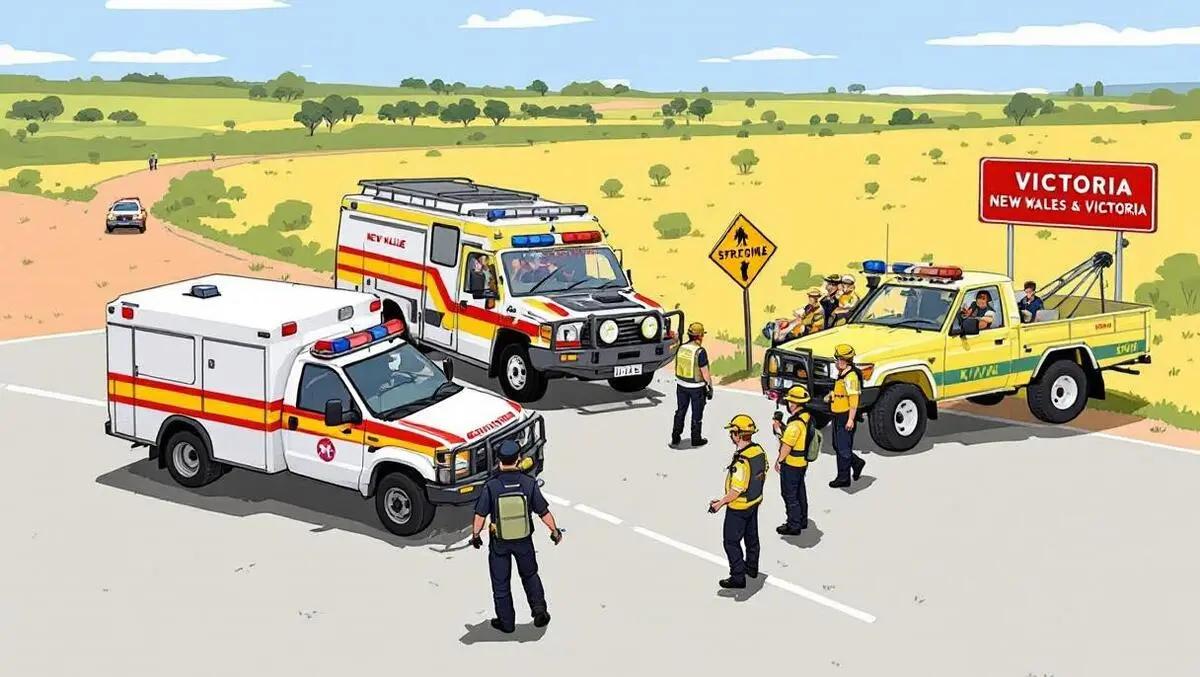
Cross-border radio trial boosts emergency response in NSW, Victoria
Thu, 24th Jul 2025
New South Wales and Victoria are trialling cross-border radio roaming to enhance emergency communications for frontline responders managing major disasters.
Emergency services in the two states are implementing a new radio communications trial designed to enhance the coordination of disaster response teams when operating across state borders. The initiative allows emergency responders from New South Wales and Victoria to switch seamlessly between state radio networks, minimising disruptions during critical operations.
The trial eliminates the need for frontline personnel to carry multiple radios, allowing them to operate using a single device across adjoining regions. When crossing the border, the crews' radios will automatically connect to the appropriate local network, maintaining uninterrupted communication without manual intervention.
This measure is particularly significant during wide-scale emergencies such as bushfires, floods or severe storms, when coordinated action between multiple agencies and jurisdictions is vital. The radios' interoperability is expected to speed up response times and facilitate safer, more efficient disaster management across state lines.
The cross-border trial follows the launch of Australia's first interstate radio roaming service by New South Wales and Queensland in 2023. This previous collaboration proved essential during the response to Tropical Cyclone Alfred earlier this year, when Queensland's radio infrastructure became inaccessible. Emergency teams responded by switching seamlessly to the New South Wales network, ensuring continued operations without delays.
The upcoming trial between New South Wales and Victoria is scheduled to commence later this year, under the leadership of the NSW Telco Authority and Emergency Management Victoria.
New South Wales' Public Safety Network, which plays a central role in coordinating emergency services and government responses, will form the backbone of the initiative within the state. The network is considered the most important communications system in New South Wales after Triple Zero.
Government viewpoints
Jihad Dib, Minister for Emergency Services, highlighted the importance of improved interoperability and crisis communications between states:
"State borders shouldn't be a barrier to public safety. This collaboration reflects a shared commitment to ensuring first responders have the tools to keep communities safe and connected. As technology improves, we need to look at new ways to harness it to improve our emergency response. This is yet another example of how we're improving communications to assist in a crisis. Through enabling seamless roaming and stronger network interoperability we're ensuring emergency responders can communicate clearly and stay connected when it matters most."
Victoria's Minister for Emergency Services and Natural Disaster Recovery, Vicki Ward, added:
"Our emergency service teams do an incredible job, and it's important they have the technology required to respond to emergencies regardless of where they occur. We're working alongside state government colleagues across borders, removing communication barriers and saving valuable time during emergencies."
The enhanced radio roaming capability is part of a broader commitment by both states to modernise emergency management infrastructure and ensure that responders have access to the necessary tools during major incidents.
The trial represents a significant step in bridging operational gaps that can occur when multiple agencies are deployed to crisis zones spanning state borders, reducing the risks of miscommunication or operational delays. The move is also seen as an acknowledgement of the increasing complexity and severity of natural disasters affecting the region in recent years, with agencies seeking collaborative solutions to ensure the safety of communities and the efficiency of their joint responses.