

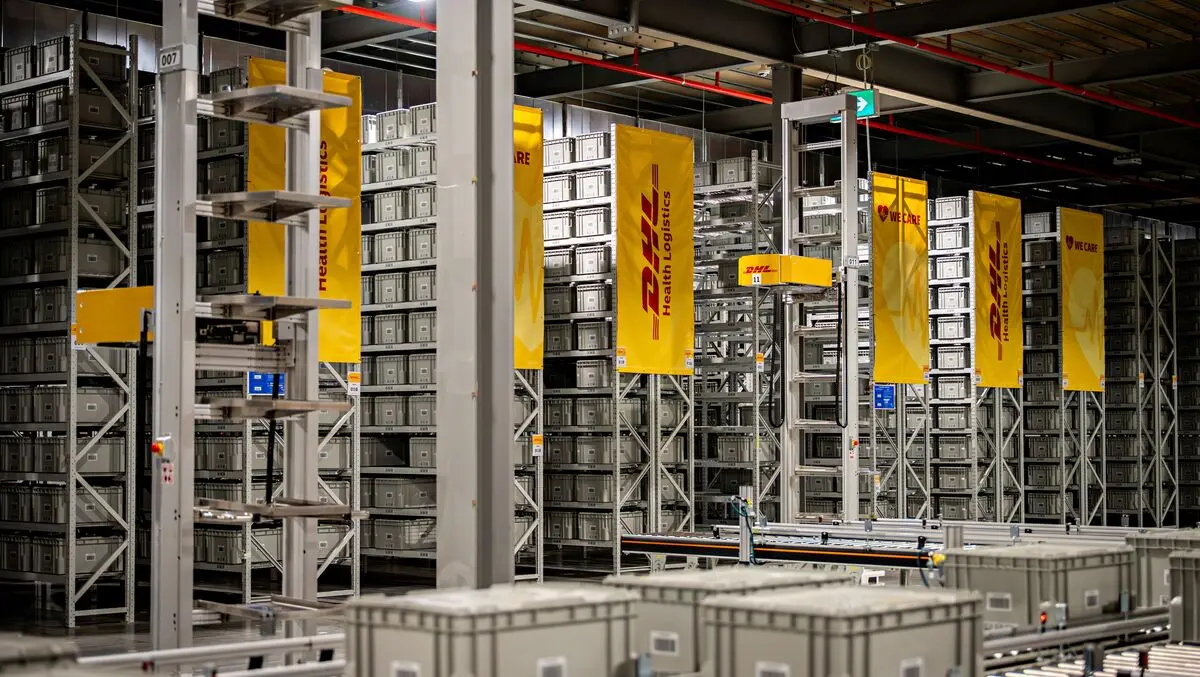
DHL adds automation to Sydney healthcare logistics hub
Thu, 29th Oct 2026 (Today)
DHL Supply Chain Australia has deployed advanced automation at its life sciences and healthcare logistics facility in South-West Sydney as part of a AUD $9 million upgrade.
The facility serves more than 40 customers in Australia's regulated healthcare sector, including pharmaceutical, medical device and diagnostics companies. The automation covers more than 3,000 square metres of the 36,237 square metre multi-tenant warehouse and is intended to meet rising demand from the life sciences and healthcare market.
The installation includes an Automated Storage and Retrieval System from Hai Robotics with 14,700 shelving locations and 14,000 inventory totes. It also features 12 AS/RS bots, five goods-to-person pick stations, six decant and pack stations, and 10 dispatch sortation lanes.
The set-up is designed to support 20 existing customers at the site. The broader South-West Sydney facility forms part of the company's healthcare logistics network in Australia.
The investment comes as logistics groups roll out more automated systems in specialist warehouses handling regulated healthcare products. Operators in the segment are under pressure to improve throughput and inventory handling while maintaining the controls required for pharmaceutical and medical products.
Steve Thompsett, Chief Executive Officer, DHL Supply Chain Australia & New Zealand, said the upgrade is intended to strengthen the company's ability to respond to customer requirements in the sector.
"We are committed to supporting our life sciences and healthcare customers, whose work is essential to the wellbeing of Australians. At our LSHC facility in South-West Sydney, we are deploying proven automation technology where it delivers tangible operational impact for customers and patients. This enhances our capacity, agility and responsiveness, enabling us to deliver flexible and scalable solutions that meet evolving customer and market demands. This investment strengthens our operational excellence and presents new opportunities for our workforce, using technology to complement human expertise with innovation to deliver reliable outcomes for our customers," Thompsett said.
Site details
The South-West Sydney operation has pharmaceutical-grade specifications and sits within DHL's Life Sciences and Healthcare network. The latest upgrade strengthens its healthcare logistics footprint in Australia and adds to its wider specialist network across Asia Pacific.
Beyond the automation systems, the building includes a 1 MWp rooftop solar installation. Its grid electricity consumption is matched through locally purchased renewable energy certificates, according to the company.
Other site features include LED lighting with sensor-based controls, smart energy metering, high-efficiency HVAC with intelligent controls, cool roofing, rainwater harvesting and reuse, water-efficient fixtures, and rapid-rise roller doors intended to reduce energy loss.
The South-West Sydney facility is designed to address changing requirements in the healthcare supply chain, where customers often need warehousing and distribution that can support strict product handling standards alongside variable order volumes. The latest automated systems focus on storage, picking, packing and dispatch functions within the warehouse.
The Australian healthcare logistics market has drawn investment as manufacturers and distributors seek more resilient local supply chains for medicines, devices and diagnostic products. Warehousing groups have also been expanding temperature-controlled and compliance-led infrastructure to support customers operating under tighter regulatory requirements.
DHL's upgrade in South-West Sydney reflects that broader shift towards specialist logistics assets, with operators investing in automation to manage greater order complexity in facilities serving healthcare clients.