

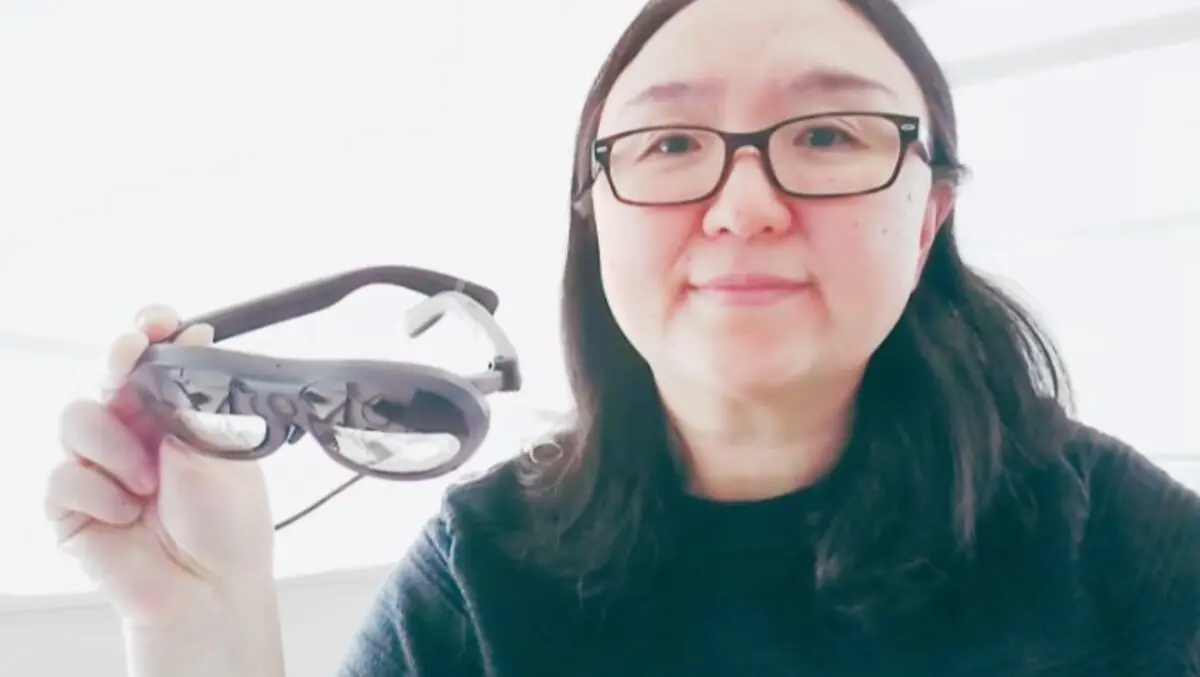

Flinders University researchers have reported that augmented reality smart glasses improved engagement and learning in a junior primary science trial involving 84 Year 1 and 2 pupils and five teachers at a Victorian primary school.
Conducted with academics from Australian Catholic University and Zhejiang Normal University, the study examined an immersive visual learning environment combining artificial intelligence-driven AR glasses with iPads, Apple TVs and teacher-led classroom activities.
Pupils used the glasses while learning about ants and nest-building communities, a topic that can be difficult for young children to grasp through conventional classroom methods. Each child wore the glasses for five to seven minutes under teacher supervision, while classmates followed the same activity on an iPad display.
The setup was intended to keep the wider group involved rather than limit the experience to the child wearing the device. Children using the glasses could move around the room, view virtual ants and nests from different angles, and use gestures to zoom in and out of the digital objects.
Meanwhile, observing pupils were recorded talking to one another and giving directions about what to find, including the queen ant, worker ants, male ants and different chambers in the nest. The group format supported shared exploration and classroom cohesion, the researchers found.
Classroom findings
The study found that pupils using the immersive AR system showed higher engagement than those using standard iPads or tablets. It also reported stronger focus, higher energy, more creative responses and greater participation during lessons.
Learning outcomes also improved. Pupils demonstrated a deeper understanding of the science topic, produced richer ideas and showed stronger problem-solving skills in their work and reflections.
The researchers also observed gains in social engagement when the glasses were paired with iPads or classroom screens for group tasks, leading to more discussion, collaboration and teamwork among pupils.
Professor Gretchen Geng, lead author and professor at Flinders University, said the difference from other classroom devices lay in how the system responded to children during the lesson. "Unlike traditional touchscreen devices or even bulky 3D glasses, these AR glasses deliver real-time, adaptive feedback aligned with individual learning preferences," Geng said.
Multi-modal approach
The project tested what was described as a multi-modal learning model, combining immersive technology with play-based learning, group work and more familiar classroom tools. Synchronisation between the glasses, iPads and Apple TVs allowed teachers and pupils to view the same material together, helping maintain collective attention in the room.
Rather than replacing standard classroom instruction, the trial placed the glasses within a broader lesson structure. Teachers first gathered the class together, then rotated children through the headset activity while the rest of the group continued to observe and discuss what they were seeing.
This setup allowed the researchers to assess not only the direct response of the headset user but also the behaviour of the wider class. According to the study, the combination of visual, sensory and movement-based interaction helped sustain children's interest and encouraged them to engage with one another as well as with the lesson content.
The work adds to a growing body of research into immersive technology in schools, particularly in early years settings where attention span, social development and play are closely linked. The study focused on junior primary pupils, a group that can be harder to assess through more traditional digital learning models.
Next steps
Broader studies across a wider range of early childhood settings and socio-economic backgrounds will be needed to test whether the results can be repeated elsewhere. Longer-term work with less direct researcher involvement would also help distinguish between a novelty effect and sustained gains in engagement.
Geng said the team plans to explore both the strengths and limits of the approach in later research. "With wider application of the AR-IVLE, future research will be conducted to investigate and identity challenges and opportunities to assist children's science learning in this highly engaging and seamless learning environment," Geng said.