

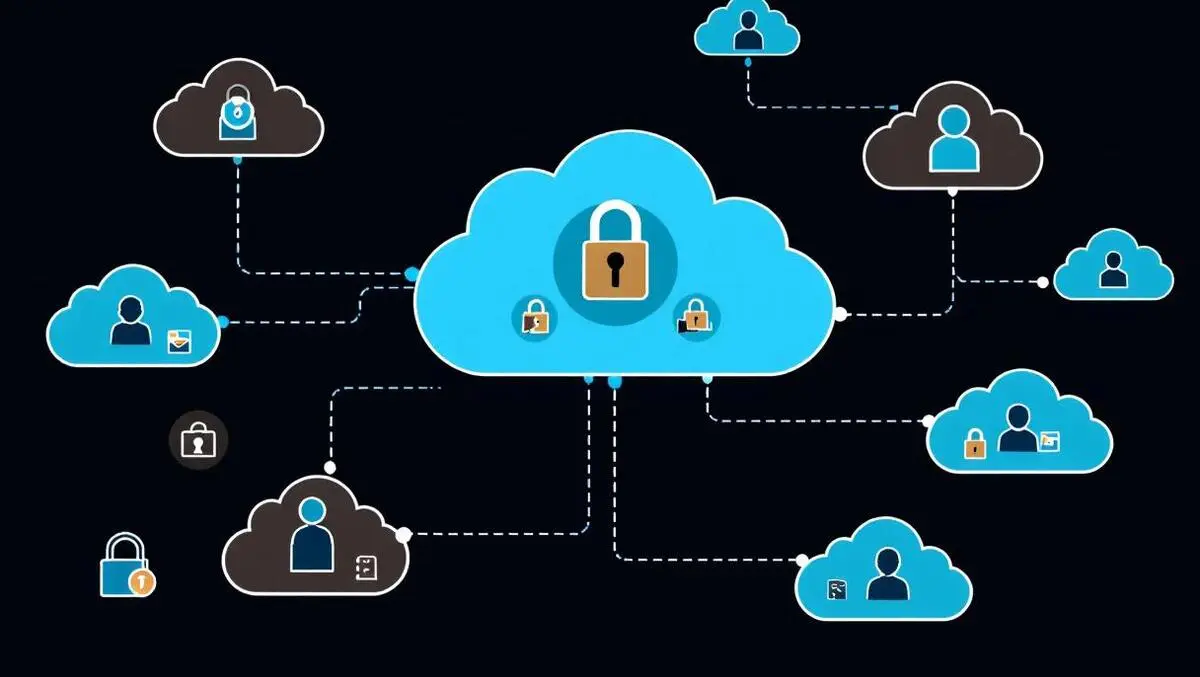
Fortinet expands FortiCloud with new identity & storage services
Fri, 8th Aug 2025
Fortinet has announced an expansion of its global cloud infrastructure FortiCloud, introducing new services aimed at enhancing identity management, secure storage, and communications for modern enterprises.
Expanded services
The update includes three new security-native services: FortiIdentity, FortiDrive, and FortiConnect. These services form part of Fortinet's ongoing strategy to deliver a unified platform for organisations seeking to consolidate security tools and streamline operations for hybrid workforces.
FortiIdentity provides cloud-delivered identity and access management for hybrid teams. It supports secure single sign-on (SSO), multifactor authentication (MFA), FIDO2 passkeys, and identity federation across Fortinet and third-party applications. The solution is designed to scale for enterprise and managed service provider needs and provides privileged access management (FortiPAM-as-a-Service) with zero-trust network access checks.
FortiDrive is a secure file storage and collaboration service that protects sensitive data both at rest and in transit. It features advanced encryption, granular access controls, real-time collaboration capabilities, file version history, and site management options for team or project-based organisation. Compliance requirements are addressed through role-based access control and least-privilege policy enforcement.
FortiConnect is introduced as a unified communication platform tightly integrated with FortiDrive. It enables secure calling, messaging, meetings, and file sharing, supported by FortiGuard Labs' AI-powered threat intelligence designed to protect communications from cyberthreats.
Integration within Security Fabric
FortiIdentity, FortiDrive, and FortiConnect, are key milestones in our vision to build a unified global cloud network that brings enterprise-grade security directly into the way teams manage access, store, share, and communicate. These new services extend the power of the Fortinet Security Fabric into everyday productivity and access control, reinforcing our strategy to simplify security operations, reduce vendor sprawl, and empower hybrid work at scale.
The new services are natively integrated into the Fortinet Security Fabric, providing centralised visibility, consistent policy enforcement, and real-time threat protection across users, devices, applications, data, and AI agents.
Cloud infrastructure investment
Fortinet's announcement builds on its continued investment in infrastructure with company-owned data centres located in Atlanta, Chicago, New York, Plano, Frankfurt, Sydney, and Torija, Spain. These centres are intended to deliver low-latency services and support regional requirements, including data sovereignty by allowing organisations to retain data locally.
Complementing this infrastructure, Fortinet uses over 160 points of presence through partnerships with providers such as Google Cloud, AWS, and Digital Realty. This supports high-performance delivery of edge services and broadens options for organisations operating in varied geographic locations. Services are also made available in cloud marketplaces run by AWS, Azure, and Google Cloud.
Platform approach
The expansion aims to help organisations reduce operational complexity, improve visibility, and optimise costs by providing a consolidated set of security tools. The FortiCloud platform now includes services spanning secure identity management, file storage and sharing, collaboration, and communication, all supported by AI-driven threat intelligence from FortiGuard Labs.
The newly announced services, available through the FortiCloud centralised portal, join a range of existing offerings such as FortiSASE, FortiAppSec, FortiCNAPP, FortiSOC, FortiMail, and FortiAIOps.
With continued investment in distributed cloud infrastructure and a unified approach to policy and threat management, Fortinet continues to expand access to enterprise-grade security tools for hybrid and global workforces.