

GenAI could revolutionise cardiac treatments and transplants
Fri, 27th Mar 2026
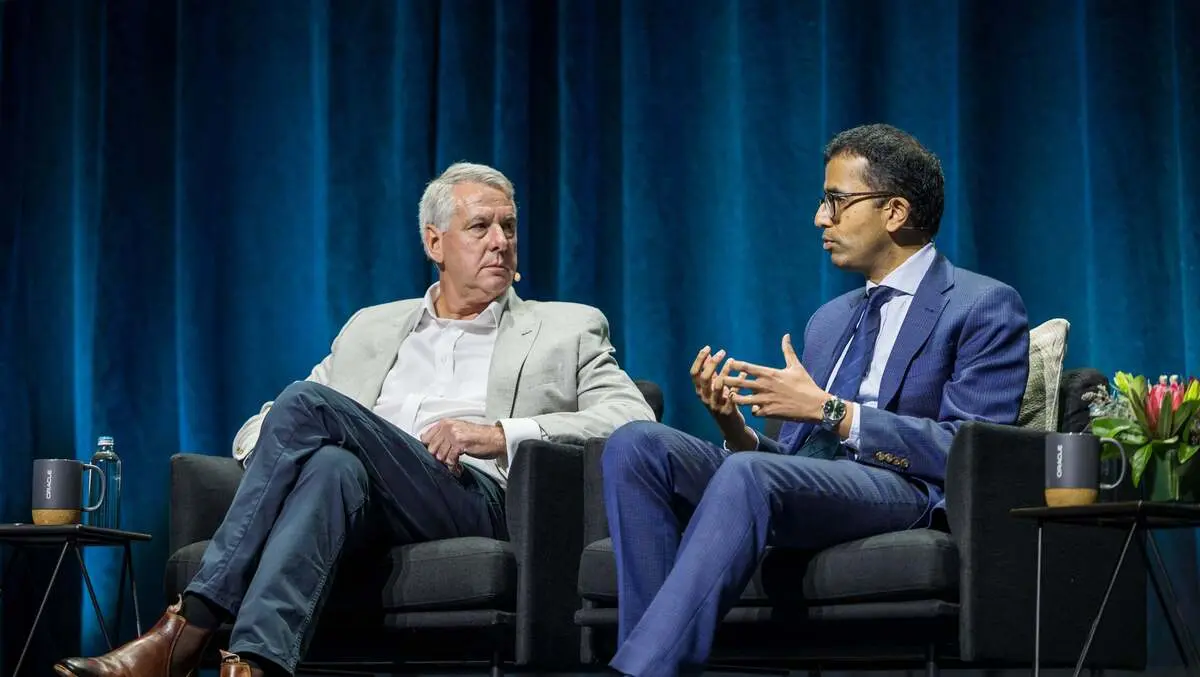
Australia's Victor Change Cardiac Institute has headlined the Sydney leg of Oracle's AI World Tour, discussing the technology's potentially game-changing role in improving diagnostic and transplant success rates.
Addressing a media briefing on the sidelines of the 24 March event, the world-renowned Victor Chang Cardiac Research Institute showcased the promising early results of its AI-powered application HeartSight, developed using Oracle's AI Database 26ai and Cloud Infrastructure Data Science.
"Aortic stenosis is a condition where the heart valve that separates the main pumping chamber of the heart from the rest of the body becomes progressively narrowed, and as it does that, it puts increased workload on the heart muscle, leading to premature death," explained Associate Professor Mayooran Namasivayam, Head of the Institute's Heart Valve Disease and Artificial Intelligence Laboratory.
"The challenge is being able to identify patients at the right time to treat them appropriately. Currently, we get that wrong about 40% of the time, because the metrics we use to identify the condition can internally disagree."
Namasivayam said that leveraging AI, his team has been able to take a process that typically takes around 100 loops of video and streamline that down to just a single video loop, while getting the same performance.
In its early pilot phase, the HeartSight application has slashed diagnosis times by 80 per cent and imaging data volumes by around 95 per cent, creating improved health outcomes for patients and streamlined the flow of critical information between medical teams.
The Associate Professor added that another major challenge surgeons and patients face is transplant rejection. He noted a current hypothesis being explored is whether AI could drive down rejection rates by developing individually tailored immunosuppressant regimes at scale, improving on the established practice of giving all recipients the same levels.
Longer term, Namasivayam said his vision for AI would be to scale what has already been developed into populations across Australia and globally and developing more durable heart valve prototypes using enhanced modelling capabilities.
Bridging the financial advice gap
Also speaking at the event was Colonial First State COO Jeroen Buwalda, who said much of his organisation's AI investment is focused on internal operational improvements that free up investment capital and labour time for customer-facing activities.
"If we can help our clients with their clients, then obviously that is very synergistic right across the value chain," he said, noting that Colonial First State works with around 10,000 financial advisers nationally.
"Not nearly enough Australians are able to access financial advice at the moment; the financial planning population is just simply too small to service all the advice needs in the industry. If we can contribute to that, by making our clients – our financial advisers – more productive and more efficient, they will be able to offer more advice to the Australian population."
AI project failures
Last year, Gartner unveiled research suggesting over 40% of agentic AI projects would fail by late 2027 due to broken processes.
Oracle's Executive Vice President, Autonomous AI Database Technologies, Çetin Özbütün, pointed to the growing multitude of databases as amplifying the complexity of AI projects, and hence the risk of failure.
"Building these new AI applications will require very different database technologies. For example, some data in many enterprises lives in relational databases, some data lives in document databases, spatial databases, graph databases, and now there is vector databases. Taking all of these specialised engines and stitching them together and offering it as an AI app is very complicated and likely to fail," he told TechDay.
"Unless you're going to make these agentic flows only work towards one personality, say your CEO… an audience of one, it becomes very complicated just to deal with the security aspect of it. So, a bunch of them will fail because of that.
"Oracle has invested something to the order of 1 million engineer years to build a complete, open and simple data platform so that our customers, instead of worrying about stitching these things together, they can concentrate on solving their business problems."
According to the tech giant's Senior Vice President of Oracle Applications Service Excellence, Maz Songerwala, another problem revolves around lack of clarity about why AI is being deployed in the first place.
"What I've seen in the market is a lot of AI projects which are experiments, you build a lot of solutions to those experiments, and you have to try to connect that back into a business metric that matters," Songerwala told TechDay, noting this can be difficult to achieve.
"At the end of the day, AI is automation, it's a completely different level of automation than we've had before and it can do so much more than we've seen before. But [our approach is that] it's embedded, not bolted on, into the fabric of everything that we do."
In addition to facilitating greater curiosity and application of the technology to drive ROI, Songerwala said embedded AI will also change how employee skillsets are used.
"Maybe your domain knowledge was in a particular area like payments. Specialist agents are now able to remove a lot of the things that maybe that was all you did all day. It means you have to have enough knowledge about where it goes to in the next phase of the process," he said.
"You become more knowledgeable about the end-to-end process, and the exceptions you are looking at are not in a particular step, but exceptions to the process itself… You need to be more aware what is downstream and upstream from you."