

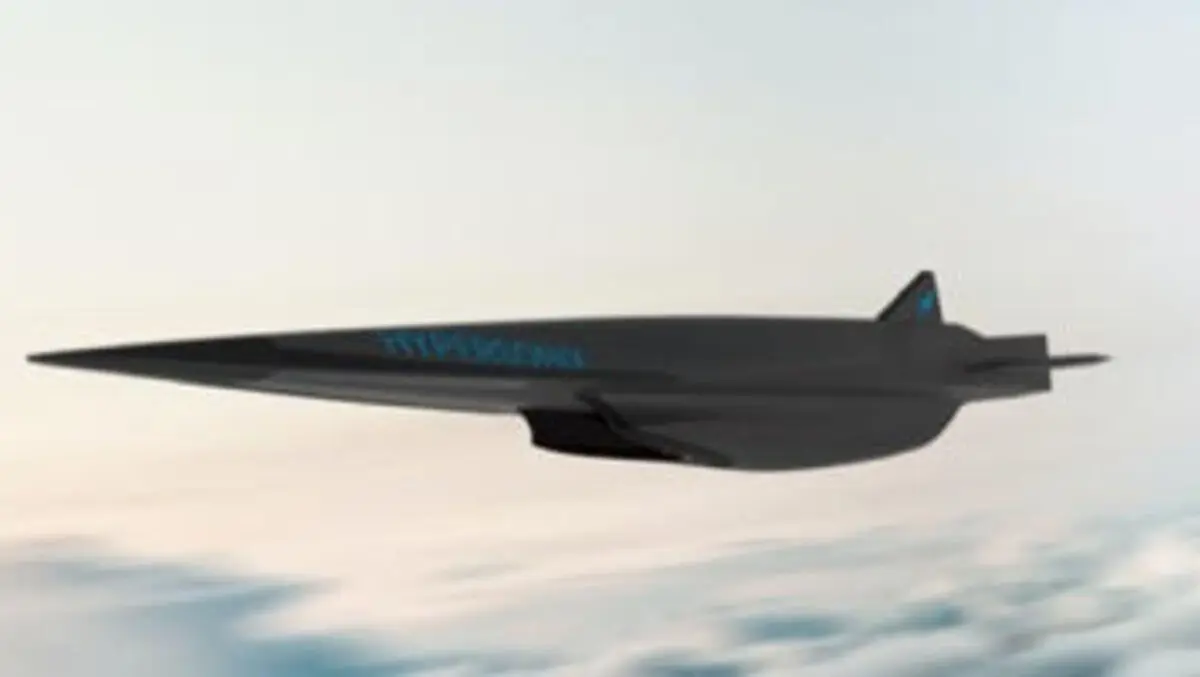

Hypersonix Launch Systems is preparing for the first flight of its scramjet-powered hypersonic aircraft, with a mission planned from Rocket Lab's US launch site at Wallops Island, Virginia.
The Brisbane-based company plans to fly its DART AE autonomous aircraft on a Rocket Lab HASTE rocket from Launch Complex 2 at the Mid-Atlantic Regional Spaceport, within the NASA Wallops Flight Facility. The flight is part of a hypersonic test mission for the Defence Innovation Unit.
DART AE is a 3.5-metre aircraft designed for autonomous flight. Hypersonix is positioning the test as a step from lab and ground work to in-flight operation at very high speed.
Flight profile
Under the mission plan, HASTE will carry DART AE into the upper atmosphere before releasing it at the planned deployment point. Hypersonix expects its SPARTAN scramjet engine to ignite after separation and propel the aircraft through its hypersonic flight profile.
Hypersonic flight refers to speeds above Mach 5, more than five times the speed of sound. SPARTAN is designed to reach speeds of up to Mach 12.
SPARTAN is fully 3D-printed and has no moving parts. The flight will use hydrogen fuel.
The Defence Innovation Unit has named the mission Cassowary Vex, while Rocket Lab is calling it That's Not A Knife. Hypersonix described the mission as being conducted on behalf of the US Department of War's Defence Innovation Unit.
From lab to air
The technology was developed by Dr Michael Smart, Hypersonix co-founder, former Chair of Hypersonic Propulsion at the University of Queensland, and former NASA research scientist. He said the flight moves testing into an operational environment that cannot be replicated in facilities.
"This mission takes our propulsion, materials and control systems into the real hypersonic environment," Smart said.
"At these speeds and temperatures, there is no substitute for flight data. What we learn from this mission will directly inform the next generation of reusable hypersonic aircraft."
Hypersonix Chief Executive Matt Hill described the mission as a major milestone for the company and for Australian aerospace development.
"Flying DART AE is a major moment for our team," Hill said.
"It reflects years of focused engineering and confirms that an Australian company can design and build technology capable of operating in one of the most demanding flight regimes on Earth."
Funding backdrop
The flight follows a USD $46 million Series A funding round that included backing from Australia's National Reconstruction Fund Corporation and Queensland Investment Corporation.
High Tor Capital led the raise. Saab and Polish family office RKKVC also participated.
Hypersonix said the funding supports an expanded flight-test program and additional advanced manufacturing work in Queensland. It also pointed to development of its next reusable hypersonic platform, VISR, which it expanded as Velos Intelligence, Surveillance and Reconnaissance.
Hypersonix employs more than 50 people in Brisbane across aerospace engineering, advanced manufacturing, and testing roles.
Rocket Lab role
Rocket Lab is providing the HASTE launch vehicle and US launch-site infrastructure. Hypersonix described HASTE as purpose-built for hypersonic test missions.
Rocket Lab, which is listed on Nasdaq, markets Electron as a small orbital launch vehicle and is also developing Neutron, a medium-lift rocket intended for larger payloads and constellations.
For Hypersonix, the mission is its first publicised attempt to collect flight data from an autonomous scramjet aircraft operating in the hypersonic regime. The company has also emphasised reusability in its forward program, including the VISR platform referenced alongside the funding announcement.
The launch is scheduled from Wallops Island during a window that opens at 4pm Eastern on Tuesday, February 25, with Rocket Lab planning to provide a launch webcast and mission updates through its social media channels.