

Logitech urges Australians to rethink desks over aches
Tue, 20th Oct 2026 (Today)
Logitech has urged Australians to pay more attention to desk peripherals such as mice and keyboards to reduce workplace discomfort, after company-commissioned research found 58% of office workers report pain or discomfort by the end of the workday.
The findings suggest a broad gap between the problems workers report and the measures they believe are most likely to help. Office workers were more likely to look to furniture such as ergonomic chairs and standing desks, while overlooking the role smaller desk tools can play in strain affecting wrists, shoulders and necks.
Among younger workers, the issue appears more pronounced. The survey found 65% of respondents aged 18 to 34 experience pain or discomfort by the end of the day, above the overall average for office workers.
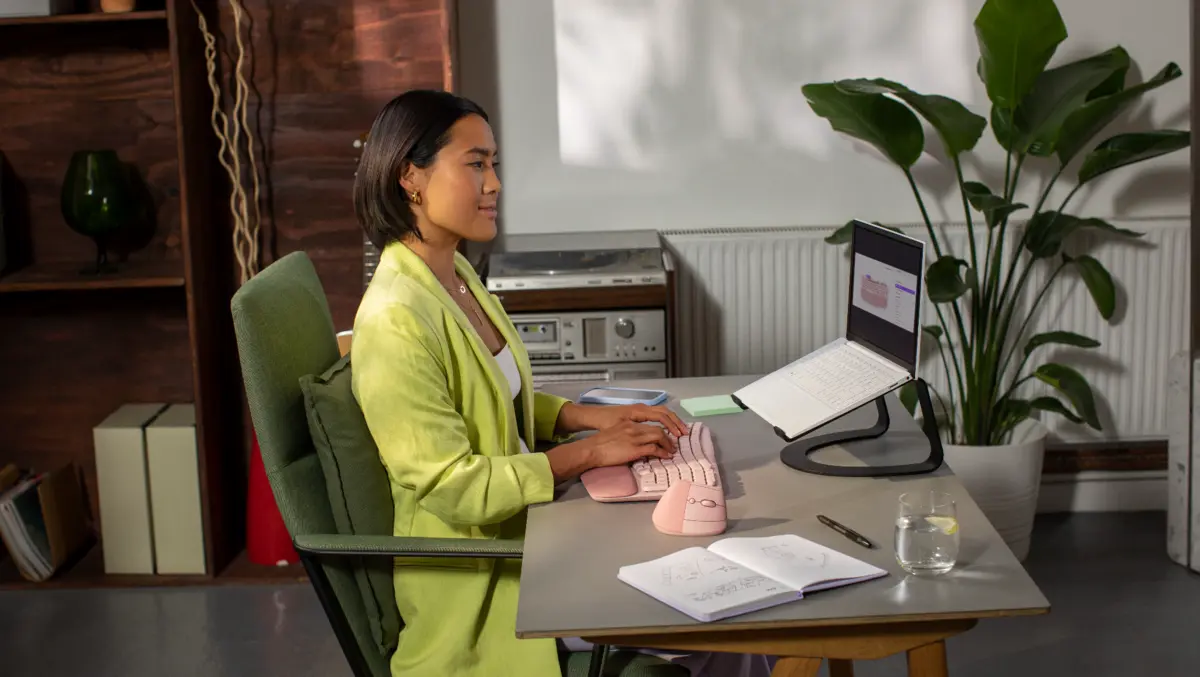
Backs, necks and wrists were identified as the main problem areas. Given the amount of time staff spend using keyboards and mice, Logitech argues those items can shape posture and comfort throughout the day.
Marisol Vargas, Senior Category Portfolio Manager for Logitech Personal Workspace Solutions ANZ, said the issue deserves more attention in offices and home workspaces.
"Workspace comfort isn't a seasonal trend, but Global Ergonomics Month is an ideal time to give it the spotlight it deserves. Yet, as this data shows, people may be blaming the wrong thing when they finish the day stiff and sore. Australians need to think small and consider what's on their desks if they're to avoid issues affecting workers worldwide. Our hands are on mice and keyboards for eight hours a day, and if these tools don't fit, they make every task that little bit harder. Swapping to mice suited to specific hand sizes and keyboards that put elbows and shoulders in a more natural position might not be as big a change as a new desk or chair, but the impact of these smaller tweaks soon adds up," Vargas said.
The argument reflects a broader shift in how employers approach workstation design as hybrid working becomes more common. Staff now often split their time between corporate offices, home desks and shared workspaces, making standardised desk setups harder to justify and potentially less effective.
Hybrid pressures
That shift has also raised questions about whether businesses should provide more tailored equipment rather than relying on a standard issue across the workforce. Logitech said identical peripherals for all staff can fail to account for differences in hand size, posture, reach and working habits.
In practice, a worker may use several desks in a week without consistent equipment suited to their needs. The result can be cumulative strain rather than a single obvious injury, especially for staff spending long periods at screens.
Logitech's comments place peripherals closer to the centre of workplace wellbeing debates, which have often focused on more visible purchases such as chairs, sit-stand desks and monitor arms. Smaller items are usually less expensive and easier to replace, but they can also be treated as generic office supplies rather than personal tools.
Research cited by Logitech was based on a quantitative survey of 5,611 office workers across 11 global markets. The data reflects self-reported experiences gathered over a multi-week period.
Australia was not listed among those markets, but Logitech used the global results to frame its advice for local employers and workers. The survey covered the US, Canada, China, Taiwan, the UK, Germany, France, Mexico, Brazil, Argentina and Colombia.
Business response
For employers, the issue is likely to be viewed through both wellbeing and productivity lenses. Businesses face growing pressure to support staff health in hybrid settings while also managing spending on office equipment and home working arrangements.
Vargas said companies should not treat ergonomics as a secondary staff benefit.
"At-desk ergonomics shouldn't be filed as an office perk like free fruit or Friday drinks. A comfortable working environment is crucial to ensuring people are more present, focused and productive. Getting the right tools into the right hands should be a business priority, and it's one of the simplest investments a business can make in its people. This is something we're emphasising during Global Ergonomics Month and beyond: small, intentional at-desk adjustments at both the individual and company-wide level can help everyone get to 5pm without aches and pains," Vargas said.