

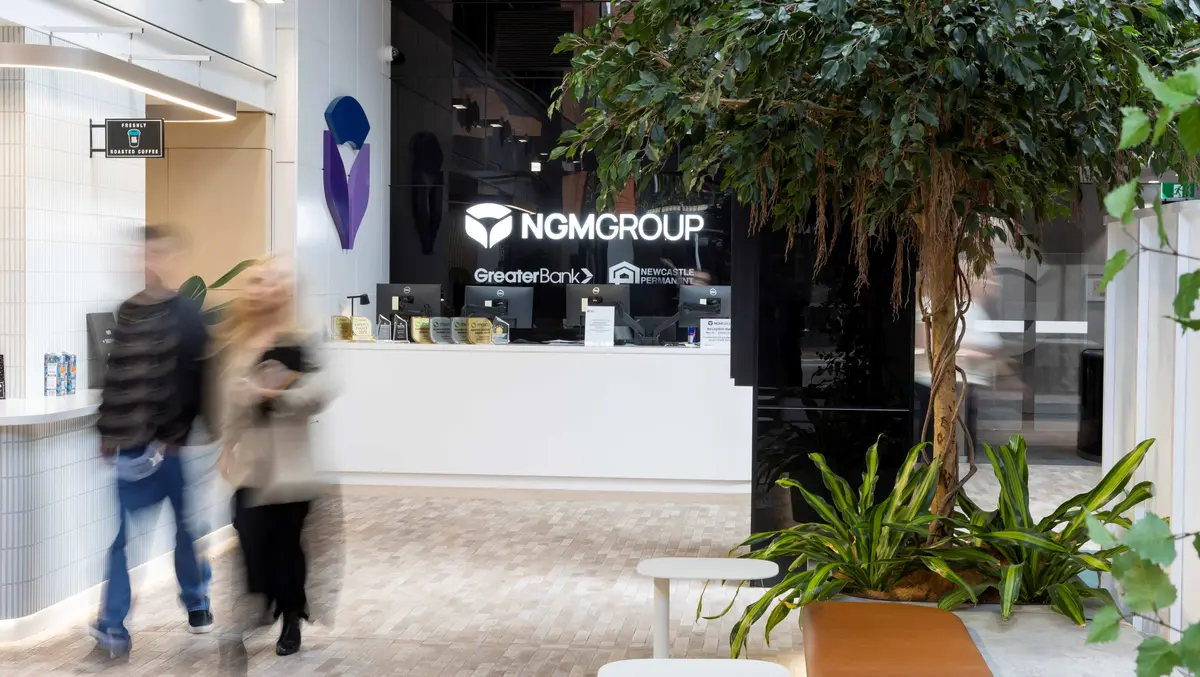
NGM Group moves core banking to cloud in Australian first
Thu, 26th Nov 2026 (Today)
NGM Group has completed a migration of its core banking ecosystem to the cloud, becoming one of Australia's first customer-owned banks to do so.
The project brings together systems serving more than 660,000 customers across Greater Bank and Newcastle Permanent, the two retail brands combined under the mutual after their 2023 merger. It covers digital and branch services, as well as the core systems and payment services used by members.
The migration marks another stage in the lender's broader technology overhaul following the merger. The combination created a group with more than AUD $20 billion in assets and 1,600 staff. NGM Group now says it has grown to AUD $25 billion in assets and more than 1,800 employees.
Over the past 12 months, the group has invested AUD $53 million in technology and innovation, with spending focused on security, resilience and customer service improvements.
Andrew Cresp, Chief Information Officer at NGM Group, said the cloud move was designed to simplify the bank's technology base and make it easier to add services over time.
"Our migration to the cloud gives us better flexibility to integrate new services, improve our digital experiences and simplify our banking ecosystem over time," said Andrew Cresp, Chief Information Officer at NGM Group.
He said the project spans the full customer journey.
"By moving the entire customer journey to the cloud, we're creating a safer and faster banking experience, with more reliable digital services, stronger data protection and improved resilience across our banking systems," Cresp said.
Regional hiring
The programme has also been linked to hiring in the Hunter region, where NGM Group is one of the larger employers. The mutual said it had expanded its technology division by 10 per cent and recruited cadets from the University of Newcastle as part of the work.
One of those recruits, Eugene Bolo, has since taken a permanent role as Junior Software Engineer. He said the migration project gave him practical experience applying what he learned at university in a large operational environment.
"Contributing to NGM Group's cloud migration has made me a better software engineer," said Eugene Bolo, Junior Software Engineer at NGM Group.
"The opportunity to work on a project of this scale let me put concepts I learned at university into practice, strengthen my technical skills, learn from experienced colleagues and collaborate with different teams across the business.
"I am so thankful to be able to get this kind of job in the Hunter and have the chance to contribute to the growth of an organisation that is so important to this region," Bolo said.
Cresp said the work reflects a shift in where technology careers are based, with more roles now available outside Sydney.
"The technology sector looks very different to what it did ten years ago," Cresp said.
"Career pathways that were once concentrated in Sydney are increasingly available in regional areas, and that's creating new opportunities for locals.
"As a leading regional employer, NGM Group is committed to creating meaningful career opportunities that help our communities prosper, and this project shows that technology careers and industry-leading innovation can thrive in regional Australia," Cresp said.
Systems overhaul
The migration also forms part of a broader effort to reduce duplication after the merger. The group said it had been operating two separate technology environments since Greater Bank and Newcastle Permanent combined, and the latest work has allowed it to consolidate those systems.
NGM Group said it has decommissioned about 30 per cent of its technology estate as part of the programme. It said reducing the number of applications and systems should cut complexity and lower operational risk.
The bank's cloud-first model is supported by two purpose-built data centres, which it said are moving towards net zero operations by 2030. It added that simplifying its technology estate has delivered cost savings alongside changes to system management and cyber protections.
"We have been working off two separate technology environments since we merged three years ago, so this transition has allowed us to simplify our operations and decommission around 30 per cent of our technology estate," Cresp said.
"By reducing the number of applications and systems we manage, we've streamlined system management, reduced operational risk, strengthened our cybersecurity protections and delivered major cost savings.
"Importantly, the migration has created the foundation for our future, giving us the flexibility to introduce new products, services and digital capabilities for our customers in the years to come," Cresp said.