

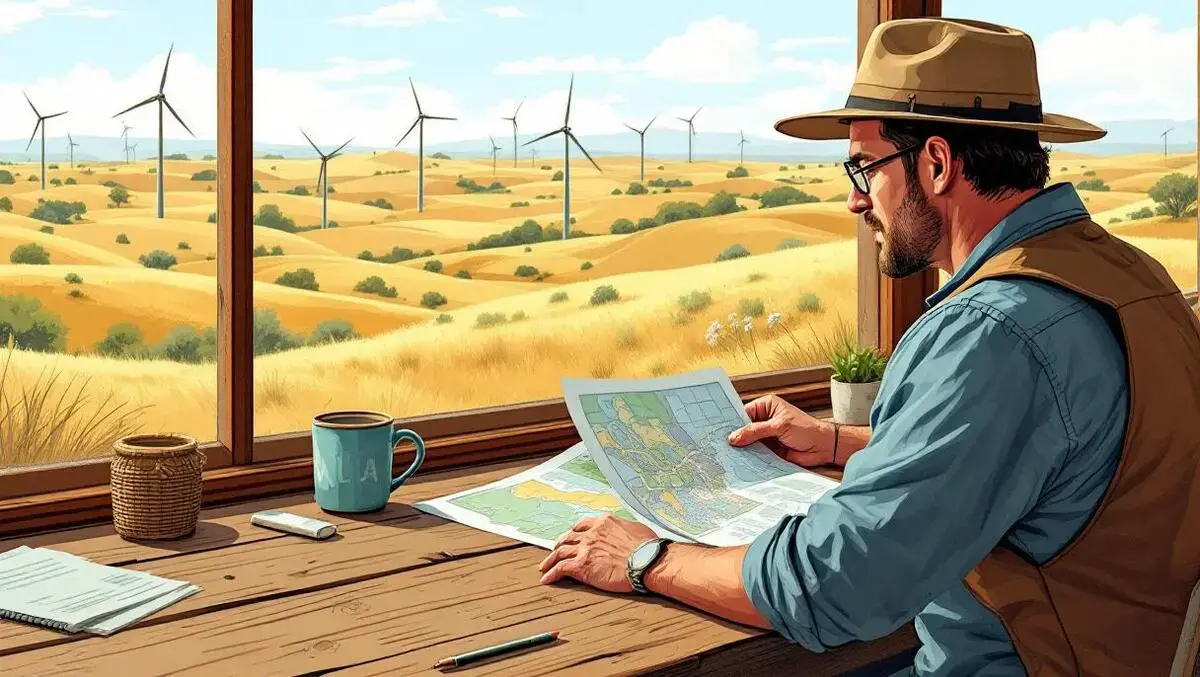
RELA launches Assess 2.0 for farm-friendly renewables
Fri, 27th Mar 2026
RELA has launched Assess 2.0, a land assessment platform for renewable energy planning backed by the Australian Renewable Energy Agency.
The updated platform is aimed at landowners considering whether renewable energy projects could fit alongside existing farm operations. It includes a new feature, Landplan Builder, designed to help users set property priorities, identify constraints and assess how project proposals could align with long-term land use plans.
Assess 2.0 is free to use and offers an independent assessment of land for renewable energy potential, its possible commercial value to a project and how development could coexist with agricultural activity. The platform is intended to support earlier, better-informed discussions between landowners and developers as project activity expands across regional Australia.
The launch took place in Canberra at Parliament House, led by Minister for Climate Change and Energy Chris Bowen. Development of the platform included input from landowners, First Nations representatives, agricultural groups, renewable energy developers, advisers and government representatives.
Land use
The platform combines geospatial data, land suitability information and planning tools to give landowners a clearer picture of how renewable energy proposals may affect their properties. A key change in this version is the shift from a specialist assessment tool to a more accessible public platform.
Landplan Builder is designed to change the planning sequence. Instead of starting with the project, it allows landowners to map their own priorities first, including preferred project areas, exclusions and operational issues such as stock routes, before considering how a development might fit.
The approach reflects broader concerns in the farming sector about land use competition, consultation and the impact of energy projects on agricultural businesses. The software is positioned as a way to help landowners understand feasibility and next steps before negotiations become more advanced.
"Our platform enables and empowers landholders to tell their story by centering the people and communities who are at the forefront of the energy transition," said Stuart Gourley, Chief of Product at RELA.
"Assess 2.0 equips landholders with clear, high-quality insights to make smarter decisions and secure faster, win-win agreements with developers," Gourley said.
"The renewable energy transition is a once-in-a-generation opportunity for our nation's $1 trillion agricultural land sector. Getting it right is key to our nation's long-term energy and food security and will define land productivity in the food, fibre and energy era," he said.
ARENA support
ARENA backed the project, saying the platform is intended to give landowners a stronger position in discussions about clean energy development. The agency supported a process that included a Stakeholder Reference Group drawn from agriculture, First Nations and industry participants.
"This tool is about giving landowners more information and greater agency in the clean energy transition. Assess 2.0 empowers landowners to better understand the renewable energy potential of their land. This will strengthen their ability to engage with developers and help ensure renewable energy projects deliver fair outcomes for landowners and communities," said Chris Faris, chief operating officer of ARENA.
Industry groups involved in the process pointed to pressure on agricultural land as a key issue. Farmers have increasingly raised concerns that renewable energy development can create conflict over land use, infrastructure placement and the terms of consultation.
"Land use competition is a key concern for farmers. It's only fair and right they receive proper consultation and choice, to better understand project proposals that impact their land and livelihoods. Tools like the RELA product are important for farmers to help them make decisions," said Hamish McIntyre, president of the National Farmers' Federation.
Platform development
The Stakeholder Reference Group was chaired by landowner Brent Finlay, who said the process shaped practical elements of the software, including privacy, simplicity and usefulness for on-farm planning. The platform has also been built with scope to support a wider range of land use choices alongside renewable energy planning.
Beyond the software launch, RELA is already working with landowners on more than 12 originated projects at different stages of development, covering more than 2.5GW of renewable generation, excluding early-stage projects without estimated capacity. It has also processed about AUD $150 million in lease prepayments to landowners across 20 projects.
"The SRG was a leading example that brought together a myriad of key industry stakeholders who were central to shaping the platform's usability, functionality and practical relevance. The process helped ensure the platform was grounded in real-world stakeholder needs, including privacy, simplicity, practical on-farm use and the ability to support future planning pathways over time," said Brent Finlay, Chair of the Assess 2.0 Stakeholder Reference Group.
"Assess 2.0 has been built to make complex information more practical and usable for landowners. By combining suitability insights with the Landplan Builder, it helps people move from a broad question of potential to a clearer understanding of how a project might fit with farm operations, constraints and long-term land use goals. It has also been developed with future flexibility in mind, including the potential to support broader land use opportunities alongside renewable energy planning," Finlay added.