

The tech behind the wellness boom: how LED science became a business category
Fri, 3rd Jul 2026
When NASA began experimenting with light-emitting diodes to grow plants aboard space shuttles in the 1990s, nobody was thinking about recovery studios in suburban Adelaide. But the agency's researchers noticed something unexpected: the same red LEDs accelerating plant growth appeared to speed up wound healing in astronauts. Three decades later, that observation has matured into a hardware category with real commercial weight - and red light infrared therapy is now one of the fastest-growing segments of the wellness technology market.
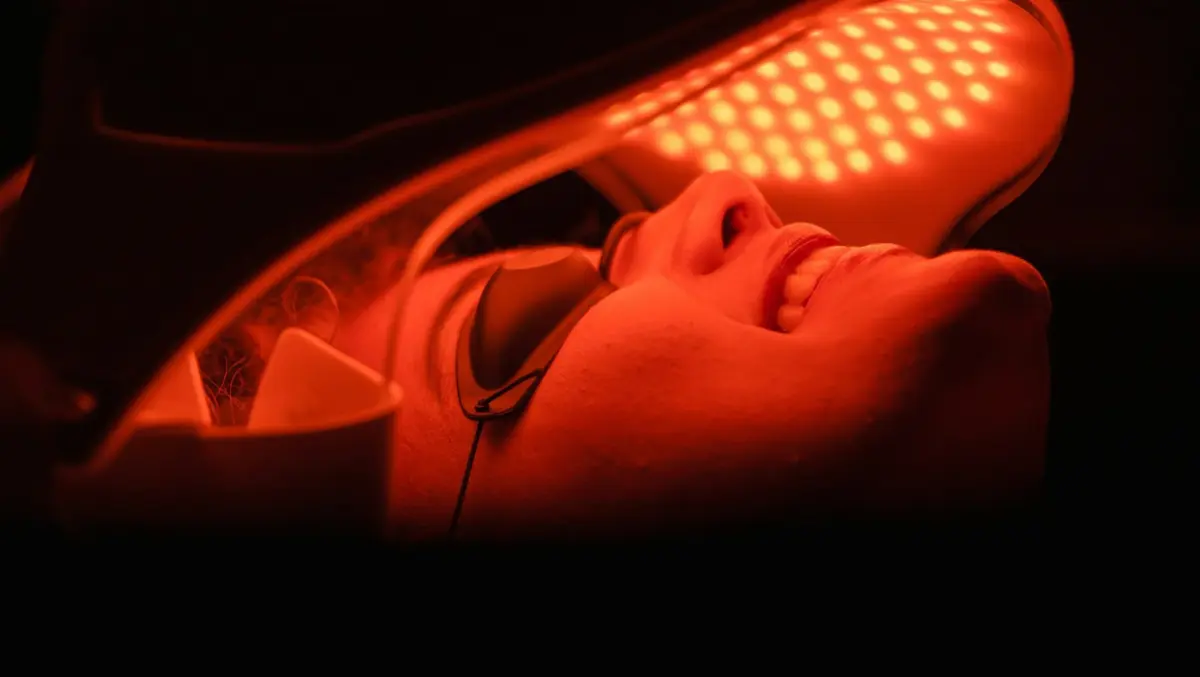
The science is called photobiomodulation, and the principle is straightforward enough. Light in the red spectrum (roughly 630 to 700 nanometres) and near-infrared spectrum (700 to 850 nanometres and beyond) penetrates skin and soft tissue, where it's absorbed by cytochrome c oxidase, an enzyme in the mitochondria. The proposed mechanism is increased cellular energy production - more ATP, better cell function, faster repair. Red wavelengths work closer to the surface; near-infrared travels deeper into muscle and joint tissue. Most commercial red light infrared therapy systems combine both, which is why the equipment has found a home everywhere from physiotherapy clinics to professional sporting clubs.
What's interesting from a technology standpoint isn't the biology. It's how quickly the hardware has industrialised.
From lab equipment to LED arrays
Early photobiomodulation devices were laser-based, expensive, and confined to clinical settings. A practitioner would treat a small area at a time with a handheld unit. The shift came when high-output LEDs became cheap enough to assemble into large panels and full-body beds. Suddenly a treatment that once required a clinician sweeping a laser over a knee could be delivered to the entire body in a 20-minute session under an array of thousands of diodes.
That's a familiar story to anyone who has watched other hardware categories commoditise. The cost curve of LEDs - driven by general lighting and display manufacturing - did the heavy lifting. Wellness equipment makers essentially rode the same component economics that gave us cheap flat-screen TVs and smart bulbs. The differentiation now happens in wavelength precision, irradiance (power output per square centimetre), flicker management, and form factor: panels, beds, masks, and targeted devices for specific body parts.
The result is a market that has split into tiers. At the bottom, sub-$500 consumer panels of variable quality flood online marketplaces. At the top, commercial-grade beds costing tens of thousands of dollars are built for throughput, with medical-device-style engineering and TGA listings. It's the commercial tier where the business model gets interesting.
The studio as the delivery channel
Most consumers will never spend $30,000 on a red light bed, just as most people never bought a commercial espresso machine. The gap created an opening for bricks-and-mortar recovery studios - businesses that aggregate expensive wellness hardware and sell access by the session or membership.
Adelaide's Breathe WRL is a good example of the model. The Glenelg East studio runs red light therapy alongside full-body cryotherapy chambers, infrared saunas, float tanks, and compression therapy systems - a capital-intensive equipment stack that would be absurd for any individual to own, but works as a shared facility. Sessions are bundled into recovery "protocols" targeting specific outcomes, from post-surgery rehabilitation to athletic performance, with red light therapy slotted in as a 20-minute component. It's effectively a hardware-as-a-service business: the studio absorbs the capex and the customer pays for time on the machines.
The model mirrors what happened with fitness equipment a generation earlier, but with a key difference - recovery hardware is newer, evolving faster, and harder for consumers to evaluate. That makes the studio operator a curator as much as a landlord. Choosing equipment with credible specifications, in a market thick with exaggerated claims, is genuinely part of the value proposition.
A category still finding its evidence base
It's worth being honest about where the science sits. Photobiomodulation has a substantial body of research behind it - thousands of published studies covering wound healing, muscle recovery, joint pain, and skin conditions - but the quality is uneven, protocols vary wildly between studies, and regulators have not endorsed many of the broader claims made by enthusiastic marketers. The strongest evidence clusters around tissue repair and inflammation; the more ambitious claims around fat loss and cognitive enhancement remain contested.
For the industry, that ambiguity is both a risk and a moat. Operators who anchor their messaging to the better-supported use cases - recovery, inflammation, skin health - are building on firmer ground than those promising miracles. The category's long-term credibility will likely depend on it.
Why the channel should pay attention
For technology watchers, red light infrared therapy is a case study in how component-level innovation creates downstream industries. LEDs got cheap, power supplies got efficient, and an entire commercial category materialised around the new economics - complete with manufacturers, distributors, installers, and service businesses.
There are also more direct angles. Recovery studios are technology-dense small businesses: cloud booking platforms, membership CRMs, connected equipment with usage logging, and increasingly, integrations with wearables so customers can track recovery metrics against session data. Each studio that opens is a new SMB customer needing connectivity, point-of-sale, scheduling software, and someone to keep it all running.
The wellness industry has always had a complicated relationship with evidence, and red light therapy will need to keep earning its claims. But as a hardware story, the trajectory is hard to argue with: a NASA plant experiment became a clinical tool, the clinical tool became a consumer category, and the consumer category is now propping up a new generation of recovery businesses across Australia. The diodes, as it turns out, were the easy part. Building durable businesses on top of them is the work now underway - and on current evidence, it's going well.