Omdia stories
Shorter certificate lifespans are leading Australian businesses to automate renewals as manual tracking raises costs and security risks.
With deployment hurdles still biting, 55% of enterprises now plan to own at least part of their AI infrastructure, a Schneider survey found.
Retail media is becoming a major earnings engine for Walmart, with its global advertising revenue rising to USD $6.4 billion in fiscal 2026.
Businesses can deploy customer service AI without overhauling existing systems, as Genesys rolls out new tools and effort-based pricing.
Businesses adopting voice AI can now better handle live calls, as Twilio adds failover, sharper audio and supervision tools to reduce errors and interruptions.
The vast majority of ANZ firms are still struggling to prove AI pays off, with many lacking budgets, governance and reliable data foundations.
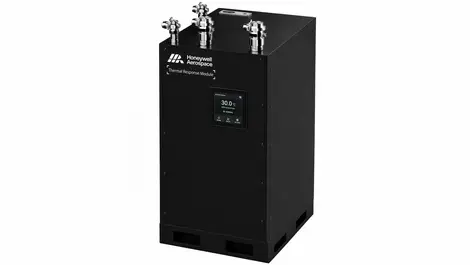
The trial is aimed at helping data centre operators avoid overheating and GPU downtime as AI workloads strain liquid-cooling systems.
Many ANZ firms lack the data governance and integration needed to prove AI is lifting productivity, costs or customer experience.
More than half of IT budgets in Australia and New Zealand are spent on keeping existing systems running, a study says.
The update aims to help security teams spot and stop AI-driven intrusions that use stolen credentials and trusted tools rather than malware.
Enterprises are under pressure to prove AI value as Stacklet's new tool ties token usage to budgets, teams and cost centres.
The museum underscores TCL's shift from a Huizhou maker into a global electronics group, as it marks 45 years with displays on its industrial rise.
Fewer, larger partners are now carrying more of the installed base, raising renewal risk and making account ownership harder to track.
The service aims to speed enterprise tech sales by letting partners offer OEM financing without waiting for separate finance approvals.
Taiwan's foundries and server makers are becoming more critical as AI hardware shifts from single chips to integrated systems.
As AI workloads intensify, the module is being positioned to help data centre operators avoid cooling interruptions that could damage costly GPU hardware.
Despite weak data foundations, 65 per cent of local organisations are already running AI projects, while many cannot measure success effectively.
It gives IT teams a single policy layer to monitor unsanctioned AI use and approve high-risk changes before they are made.
It targets a growing enterprise risk, with Omnissa saying unsanctioned AI tools are already present on 75% of managed devices.
Regulated security teams get auditable AI assistance as Corelight's new tools aim to speed triage without losing traceability.