

Agscent wins AUD $1.25 million for cattle breath test
Thu, 19th Nov 2026 (Today)
Agscent has secured AUD $1.25 million from the NSW Government to advance a cattle breath test for bovine respiratory disease. The funding will support a AUD $1.5 million project through the Emerging Technology Commercialisation Fund.
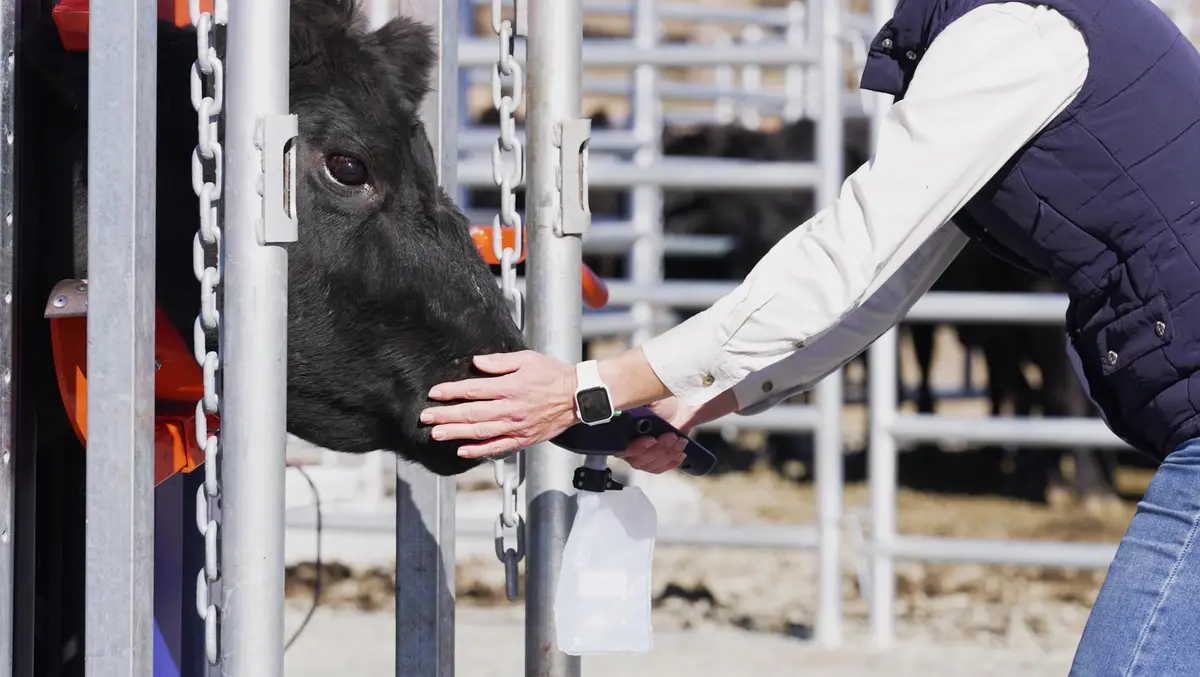
The NSW agricultural technology company is developing a handheld diagnostic system that analyses a single breath sample from a cow and returns a result in less than a minute. The test is intended to detect bovine respiratory disease, or BRD, before visible symptoms appear and help distinguish between bacterial and viral infection.
BRD is a major issue for Australia's feedlot sector and is estimated to cost producers between AUD $60 million and AUD $100 million a year through deaths, lower productivity and treatment expenses. Existing screening often relies on observing changes in behaviour, breathing or appetite, while laboratory PCR tests can take 24 to 48 hours after samples are sent away for analysis.
Agscent's system is being designed for use during routine cattle handling rather than in a laboratory. It combines a proprietary breath sampler with nanosensors that detect volatile organic compounds in exhaled breath, while artificial intelligence interprets chemical signatures linked to disease.
The work builds on research with the NSW Department of Primary Industries at the Elizabeth Macarthur Agricultural Institute. The company said that research identified breath-based markers associated with key pathogens involved in BRD.
Under the commercialisation programme, Agscent plans to manufacture 10 production-representative prototypes and run field trials at multiple feedlot and dairy properties in New South Wales. The project will also fund further work on the AI diagnostic system, with performance targets of more than 95 per cent sensitivity and more than 90 per cent specificity.
Dr Bronwyn Darlington, Founder and Managing Director of Agscent, said the test is designed to give cattle producers earlier information about infections.
"By the time a cow looks sick, the infection may already have spread and caused damage to its lungs," Darlington said.
"Farmers are often making treatment decisions without knowing exactly what they're dealing with. We've identified molecules in an animal's breath that can indicate whether it has a bacterial or viral infection before visible symptoms appear.
"Our goal is to give farmers that information in less than a minute, right there in the cattle yards, so they can identify affected animals earlier and make better decisions about treatment."
Commercial push
The funding will be used over 20 months to move the technology closer to market. About 80 per cent is expected to be spent in New South Wales, and the project is expected to create three specialist science and technology roles in the state.
Darlington said the company had already shown it could detect disease-related signals in cattle breath, but now needed to test consistency in commercial settings.
"We've already demonstrated that we can identify disease-related signals in cattle breath. The next challenge is proving the technology works consistently in the real world, across different animals, farms and conditions," she said.
"This funding allows us to take that next step, working directly with producers to develop a practical, affordable diagnostic tool that can become part of everyday livestock management. It also means we can advance the technology here in NSW, building on Australian research and creating the foundations for local manufacturing and international growth."
Agscent said it has adapted sensor technology originally developed for NASA applications and combined it with its own breath-sampling system and AI tools for livestock diagnostics. Alongside the NSW project, it is also running separate trials with Dairy Farmers of America as it examines overseas commercial opportunities.
Beyond BRD
Agscent sees the respiratory disease test as one application of a broader approach to animal health monitoring. Darlington said the underlying method could also be used to identify other diseases by reading chemical signals in breath.
"Every breath an animal takes contains information about what's happening inside its body," she said.
"We're reading that information and turning it into something farmers can use. Respiratory disease is an important application because the costs to producers are so high. But the same technology has the potential to help identify other diseases and improve how we monitor animal health more broadly."