

Asia-Pacific telecoms push AI monetisation at roundtable
Thu, 2nd Jul 2026
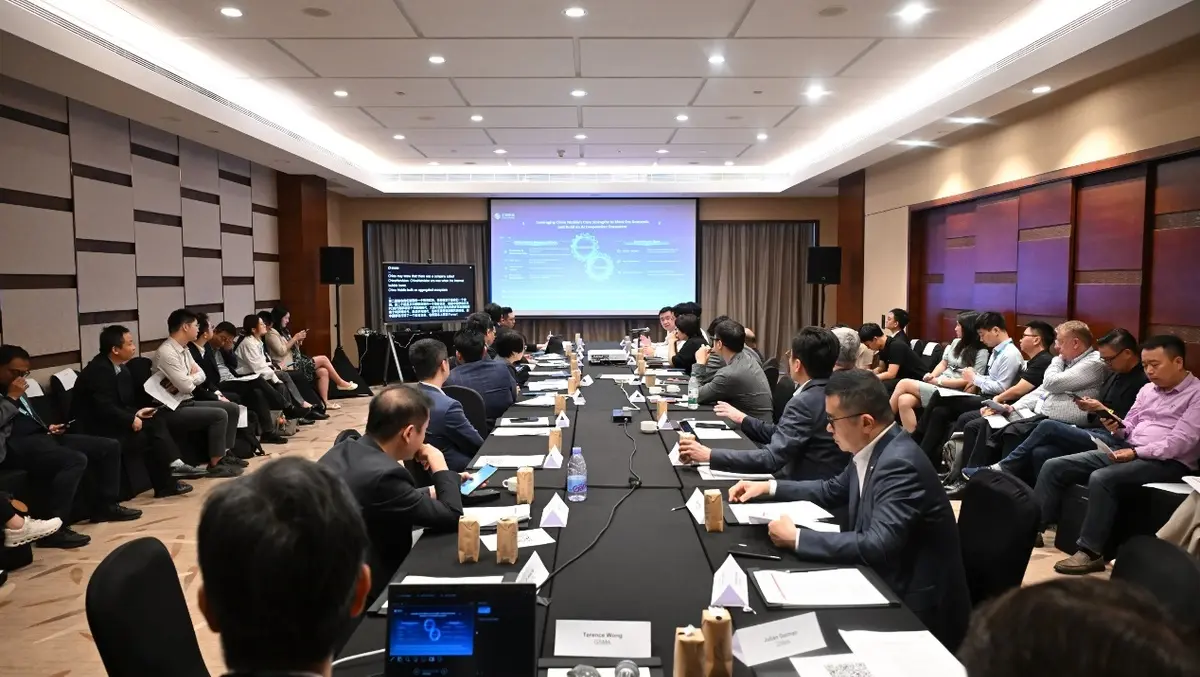
The GSMA Asia-Pacific 5G Industry Community convened an executive roundtable in Shanghai on AI monetisation and 5G-Advanced, bringing together more than 50 senior executives from operators, technology groups, industry bodies and enterprises.
Discussions focused on how mobile operators in Asia-Pacific can expand their role in AI services as the region's telecoms market looks for new revenue sources beyond core connectivity. Participants stressed the need for closer collaboration with AI developers and enterprise customers, particularly small and micro businesses, which employ a large share of the region's workforce.
Julian Gorman, Head of Asia Pacific at GSMA, outlined the commercial case for faster execution in mobile AI services.
"Asia Pacific leads the world when it comes to 5G rollouts, giving the region's mobile ecosystem a huge opportunity to further accelerate regional productivity and create an abundance of innovation. By utilizing 5G Advanced capabilities to deliver mobile AI benefits at scale we can seize this economic opportunity and move from potential to performance. But operators, technology partners and businesses must work together at pace to deploy practical, open repeatable solutions that can deliver measurable returns across Asia Pacific," said Julian Gorman, Head of Asia Pacific at GSMA.
Operator focus
Several operators outlined how they see AI changing telecoms economics. A recurring theme was that the industry's challenge is shifting from network expansion to finding services customers will pay for, including AI tools for consumers and businesses.
China Mobile linked that shift to a broader AI economy built around computing resources, models and applications.
"As AI enters the era of scaled commercialization, Token is becoming the foundation of the AI economy. By enabling Token monetization and connecting computing power, models, applications and users, we can unlock sustainable growth across the AI ecosystem," said Shiwei Sun, Deputy General Manager of the Market Operations Department at China Mobile.
LG U+ shared its experience with its consumer AI service ixi-O, describing it as part of a broader effort by operators to develop AI services that deepen customer relationships. Singtel focused on the enterprise market, arguing that telecoms groups can position themselves as partners for businesses moving from early AI trials to wider deployment.
"As AI reshapes industries, telecommunications operators have an opportunity to evolve beyond connectivity and become trusted partners in enterprise AI transformation. By combining advanced networks, AI-ready infrastructure and an open ecosystem of partners, we can help enterprises, including SMEs, move from AI experimentation to scalable business outcomes. Through cross-industry and cross-border collaboration, together with innovations such as 5G-Advanced, we can lower barriers to AI adoption, accelerate innovation and unlock sustainable growth across the region," said Anna Yip, Chief Executive Officer of International Digital Services at Singtel.
China Mobile International said it is integrating 5G networks, computing and robotic products through its own embodied intelligence stack, while China Mobile Hong Kong is embedding AI into production and operations workflows as part of its revenue strategy.
Ecosystem push
AI companies at the roundtable argued that operators still play an important role because they control customer reach, network infrastructure and billing relationships. That combination can help move AI tools into mainstream enterprise use if telecoms groups and software providers align products and commercial models.
MiniMax stressed the importance of working with operators across the region.
"MiniMax is committed to developing world-leading foundational AI models. We stand ready to partner closely with GSMA member operators across the Asia-Pacific, leveraging 5G infrastructure and regional reach to accelerate AI adoption, expand market presence, and create sustainable value for the entire DICT industry," said Daniel Shi, Global Business Account Executive at MiniMax.
iFlyTek said operators' AI transformation depends on combining foundation models with speech, language and communications systems, rather than simply adding large language models to legacy platforms. It pointed to applications including customer service, enterprise communications, real-time translation, AI call summaries and anti-fraud services.
uDesk described enterprise services as moving from digitalisation to intelligence and said operators, AI vendors and infrastructure suppliers will need to align products, computing resources and local delivery to support that shift.
Network model
Huawei presented a network roadmap designed around AI applications. Barry Hou, Director of 5.5G Marketing at Huawei, said communications networks are moving from carrying conventional traffic to supporting real-time interactions between intelligent agents.
His proposed "1+4 AI-Centric Target Network" model includes one application experience metric, AI MOS, and four network elements: enhanced uplink, enhanced downlink, lossless networking and deterministic assurance. The proposal reflects a broader argument from vendors and operators that network quality may increasingly be judged by how well it supports AI services, rather than by traditional speed measures alone.
Industry use
The discussion also extended beyond telecoms. Enterprise representatives said the next phase of AI adoption will depend on stronger coordination between operators, software companies and sector-specific businesses that can apply AI tools in customer-facing and operational settings.
Michelle Chan, General Manager at DCH Motor Hong Kong, highlighted that cross-sector approach in mobility and customer engagement.
"At DCH Mobility, we believe that the future of mobility will be shaped by stronger collaboration across the ecosystem, data-driven customer engagement, and seamless digital-to-physical experiences. This roundtable provides a valuable platform for industry leaders to exchange perspectives on how technology and partnership can create more connected, personalised, and sustainable mobility journeys for customers," said Michelle Chan, General Manager at DCH Motor Hong Kong.
Operators taking part included China Mobile, China Mobile International, China Mobile Hong Kong, Telkomsel, XL Smart, U Mobile, PLDT, LG U+, Singtel and VNPT, alongside TCCA, Huawei and AI ecosystem companies. The central conclusion was that AI monetisation has moved from a long-term ambition to an immediate business priority for Asia-Pacific telecoms groups.