


The AARON Awards have announced the winners of their inaugural global programme for AI-driven advertising, which drew entries from 45 countries.
Created to recognise artists, studios and creative teams using artificial intelligence as a primary creative medium in commercial advertising, the awards judged work on authorship, craft, workflow design, human-AI collaboration and originality, rather than visual output alone.
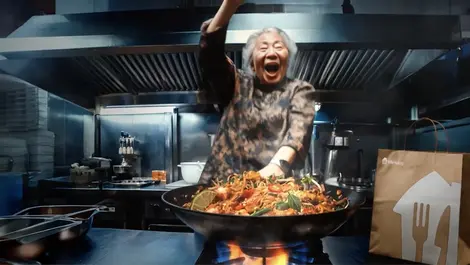
Australian work featured prominently. Thinkerbell won Best Hybrid Production for The Last Order, while Australian collaborators were also part of the team behind the Best Synthography winner, Crocs x TLF - Caged Line.
Australian creators also appeared across several shortlisted categories, adding to the country's visibility in a field expanding quickly as agencies, production companies and independent artists test how AI can be used in campaigns and brand work.
Global winners
The awards covered a broad range of categories, from narrative storytelling and sonic design to workflow innovation and real-time brand experiences. Best AI + Human Collaboration went to Made with Lenovo Yoga - SUPERHEROES from the US and the Netherlands, while Hungary's László Gaál won Best AI Artist.
Best AI-Powered Narrative went to Erotika - Manifesto by Bait Society and Director Kobayashi from Cyprus. Monks won Best AI-Powered Real-Time Brand Experience for My First Voice, which also took Best Sonic Design.
Elsewhere, Mariam Mouzoul of France won Best AI Spec Ad for Brand for Open Airlines. Denmark's Nikolaj Lykke Viborg won Best AI Workflow for Creative Ideation for Den Skjulte Regning / The Hidden Cost, and Groove Jones of the US won Best AI Workflow for Production for DICK'S Sporting Goods FOOH Holiday Campaign for Crocs NFL Collection.
Best Stock + AI Creative Alchemy went to Connections by Bait Society and Director Kobayashi from Cyprus. The spread of winners across Europe, North America and Australia underlined the field's international reach.
Judging focus
The winners were chosen by an international jury of creative directors, AI artists, technologists and production experts. The judging reflected a view that AI in advertising should be assessed as its own creative discipline rather than as a subcategory within traditional awards programmes.
That approach reflects changes in how agencies and creators are building campaigns, with AI now used not only for image generation but also for scripting, concept development, production planning, audio work and live brand experiences.
One jury comment highlighted that shift: "The craft was extraordinary in the sense that everyone was trying to figure out their angle using the tools... the work that really landed made me stop and think about the process and exploration behind it," it said.
Arlyn Panopio, Head of Brand & Creative at Envato and an AARON jury member, said: "The strongest work feels authored, not just generated."
Australian presence
The strong showing from Australian entrants drew particular attention. Pip Bingemann, co-founder of Springboards and an AARON jury member, linked the result to broader working practices in the local market.
"I've found that Australia has always punched above its weight creatively. Smaller teams, tighter budgets and more hybrid thinkers. That same instinct seems to be showing up in how AI's being used here locally with a way from prompt libraries to designed workflows & repeatable, scalable work that stands out on the global stage," Bingemann said.
Those comments point to an emerging divide in AI advertising between work that relies on novelty and work built around repeatable production systems and clear creative direction. That distinction is becoming more important as brands and agencies move from experimentation to regular commercial use.
Laureate honour
The inaugural AARON Laureate honour went to Kavan Cardoza, also known as Kavan the Kid. The jury recognised Cardoza for his contribution to AI-driven creativity in advertising, citing his concept-led speculative campaigns and visual storytelling.
His work has helped establish spec AI work as a recognised creative discipline within advertising. The award emphasises individuals whose work shapes emerging standards in a market where creative roles, production methods and authorship are all being redefined by generative tools.
Cardoza said the recognition reflected the growing importance of creative judgement in AI-based work. "AI doesn't replace creativity; it raises the bar for it. The tools make it easier to generate, but harder to stand out. What matters now is taste, ideas and direction. That's what turns AI from output into something meaningful."