

Australians use AI widely, but trust & standards lag
Mon, 22nd Jun 2026.webp)
Salesforce has published research showing that 66 per cent of Australians regularly use at least one artificial intelligence tool at work. The study also found adoption is spread across multiple platforms.
The findings suggest broad workplace use of AI, alongside limited standardisation within organisations. Salesforce commissioned YouGov to survey 1,293 Australians aged 18 and over.
Two in three workers said they use AI tools for writing, research, automation and customer service. Yet 27 per cent reported juggling multiple tools and switching platforms depending on the task, suggesting uptake is happening in a piecemeal way rather than through a single workplace system.
Worker preferences were almost evenly split between standalone products and AI built into existing software. The survey found 39 per cent favour standalone tools, while 38 per cent prefer tools integrated into the systems they already use.
Governance concerns
The data also highlights the extent of so-called shadow AI in Australian workplaces. Among workers who use AI on the job, 56 per cent said they rely on tools not provided or approved by their employer.
This raises questions for companies trying to manage security, compliance and data use while employees assemble their own mix of software. The pattern reflects a broader lack of standardisation rather than a narrow compliance issue.
Salesforce also pointed to the spread of agentic AI within organisations. Its data indicates Australian organisations use an average of 11 AI agents each, adding another layer of complexity to how these systems are managed and connected.
Embedded use
A separate global Salesforce survey of more than 1,500 desk workers suggests regular use does not always mean AI is embedded in everyday work. Only 9 per cent of Australian desk workers said AI is part of their day-to-day workflows.
That gap between experimentation and routine use appears alongside lingering doubts among staff. In the global research, 40 per cent of Australian workers identified as AI sceptics in some form.
Among those still building trust in AI, the most common concerns were poor performance in real-world scenarios and generic outputs, each cited by 36 per cent of respondents. Low trust in results was named by 30 per cent, lack of trust in outputs by 29 per cent, insufficient training by 24 per cent, and results lacking business context by 20 per cent.
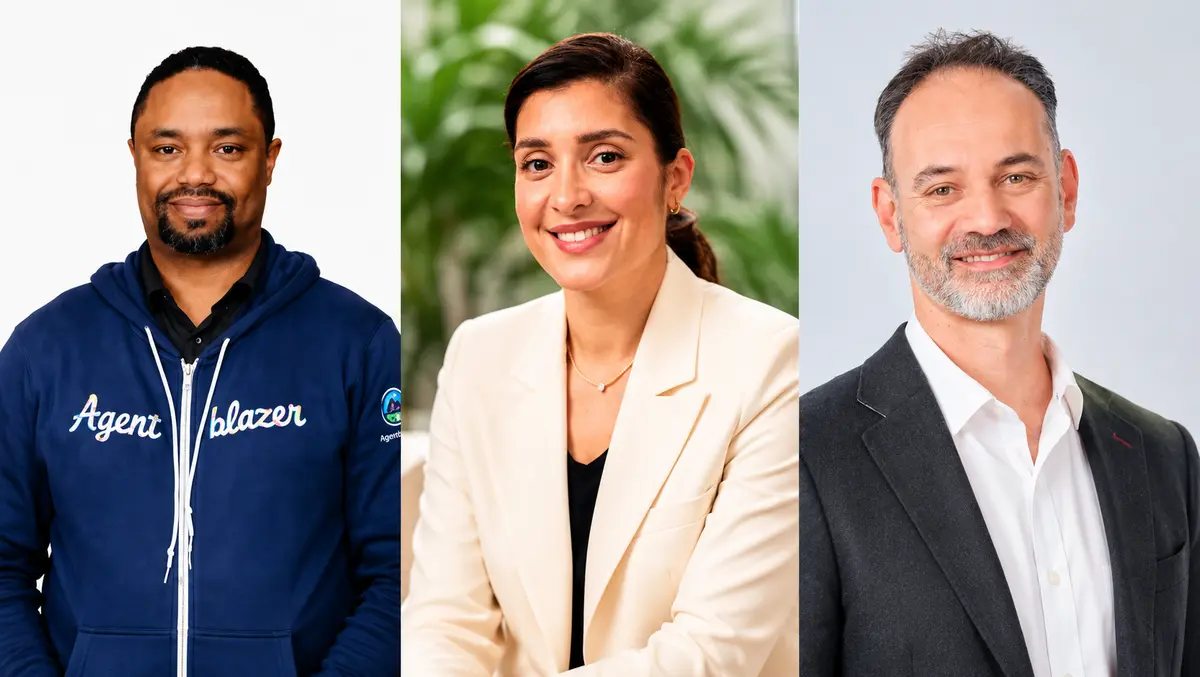
Justin Tauber, General Manager, Agentic Technology, Trust and Adoption at Salesforce, said the pattern showed workers moving faster than many employers.
"Australian workers have embraced AI faster than most organisations expected, but adoption without integration is just noise," Tauber said.
"What we're seeing now is a trust gap, with employees reaching for tools that work for them individually, without the data context, security guardrails, or workflow coherence that makes AI genuinely useful at scale."
He said the issue was less about access to tools than how companies organise their use.
"Closing that gap is an organisational capability problem, and the organisations that solve it first will be the ones that turn AI activity into a real competitive advantage," Tauber said.
Training and trust
Organisations that make wider use of AI tend to have several factors in common, including training, workflow integration and stronger trust in secure systems. Salesforce linked those conditions to whether businesses can move from ad hoc use to more routine deployment.
Nathalie Scardino, President and Chief People Officer at Salesforce, framed the issue in terms of workforce change rather than software rollout.
"When we get AI fluency right, AI moves from a technology innovation into a workforce advantage. It's the difference between deploying tools and actually changing how work gets done," Scardino said.
The customer view in the research came from Eightcap, where Salesforce Product Owner and Platform Lead Julius Anuari described AI adoption as a strategic decision for the business.
"Our business has made a big decision to become an agentic enterprise. What we really want to do is operate smartly and at scale, servicing as many people as possible in the shortest time possible," Anuari said.
He added that proof of measurable results is central to wider acceptance within companies.
"That's where AI earns its trust: not in theory, but in the measurable impact. The moment you have the measurement and can present the results, you can help demystify AI and build trust internally. We're now all using AI every day, so the question isn't whether it will take your job, it's how you can involve it to handle the mundane so humans can deal with the complexity," Anuari said.