

Authsignal launches carrier-backed number verify in US
Tue, 6th Oct 2026.webp)
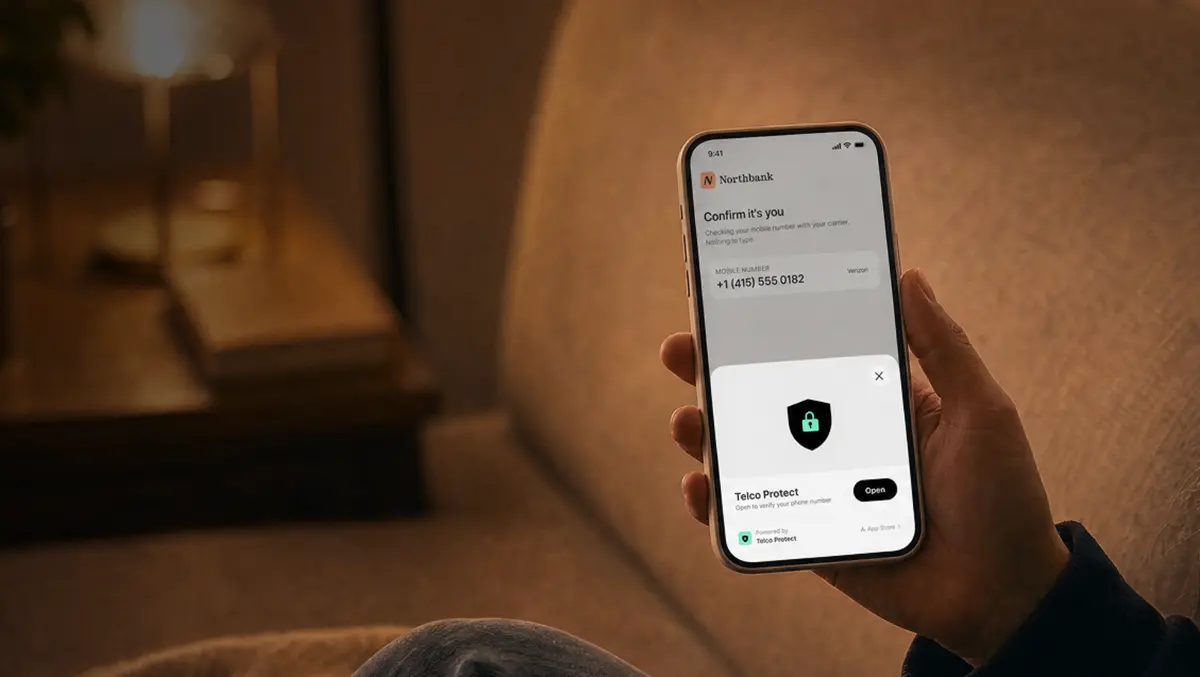
Authsignal has launched Number Verify in the United States and Australia through a partnership with Aduna, giving businesses a way to verify possession of a mobile number without using an SMS code.
In the US, the feature is available across major carriers. In Australia, it is provided through Telstra. Businesses can access the service through a single integration instead of connecting separately to each carrier.
Number Verify is designed to confirm that a customer controls a mobile number as part of an authentication process. Depending on the network and implementation, verification can be done through network-based silent authentication or SIM card-based verification.
The launch comes as security guidance moves away from text-message authentication. NIST SP 800-63B-4 classifies authentication using the public switched telephone network, including SMS-based authentication, as a restricted authenticator. That means organisations using it must provide an unrestricted alternative and prepare for the possibility that restricted methods may no longer be acceptable.
The new feature sits within the same workflows as Authsignal's other authentication methods, including passkeys and adaptive authentication. Businesses can place Number Verify within existing risk logic, orchestration, and fallback paths rather than building a separate user journey around carrier integrations.
Authsignal processes more than 12 million authentication events each month across 17 countries. Its customers operate in sectors including airlines, financial services, marketplaces, government, and telecommunications.
Paul Bickley, Vice President of Revenue at Authsignal, said the change reflected both regulatory pressure and operational risk for companies that still depend on text codes.
"Regulators are already moving past SMS, and businesses relying on it are inheriting a risk that only grows with scale. Number Verify removes the one-time passcode from the journey entirely. Combined with passkeys and adaptive authentication inside Authsignal, businesses can match the verification method to the risk," said Bickley.
Aduna provides access to network data from telecommunications operators through a single platform. Its Number Verification service spans three carriers in the US, creating what the companies describe as unified access across the major mobile networks there.
Carrier access
For businesses, the main operational change is the removal of separate carrier work. Instead of negotiating and integrating with individual operators, they can access carrier-backed mobile number checks through Authsignal's connection with Aduna.
The partnership also broadens Authsignal's international reach for mobile number verification. In Australia, access is extended through Telstra as part of Aduna's wider network API ecosystem.
Number verification differs from SMS one-time passcodes because it does not send a code for the customer to enter. That can reduce interruptions in high-volume digital journeys and lessen dependence on SMS delivery rates, retries, and failed-code support processes.
Wider shift
The launch reflects a broader change in digital identity as telecoms network data becomes more closely tied to customer authentication. Rather than relying on a single fixed method, companies are increasingly combining several checks and selecting them based on the customer, the transaction, and the level of risk.
Anthony Bartolo, Chief Executive Officer of Aduna, said the partnership is intended to simplify access to carrier-backed verification across the two markets.
"Digital trust depends on making secure experiences simple. Through our partnership with Authsignal, businesses can now access trusted, carrier-backed Number Verification across the major mobile networks in both the United States and Australia. Together, we're helping organisations strengthen security, reduce fraud, and deliver more seamless digital experiences at scale," said Bartolo.