

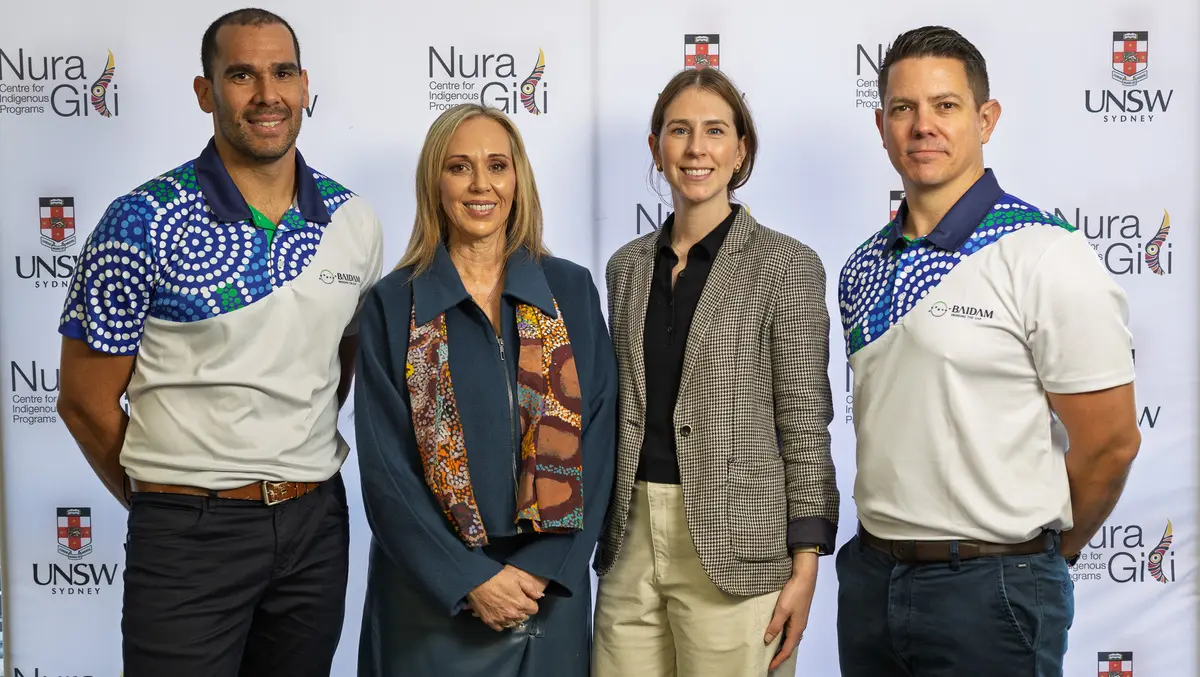
Baidam & UNSW launch First Nations STEM scholarships
Tue, 4th Aug 2026
Baidam and UNSW Sydney have launched an endowed scholarship for First Nations students at the university, funding two scholarships each year in perpetuity.
The scholarships are for Aboriginal and Torres Strait Islander students studying STEM degrees at UNSW. They aim to reduce financial barriers to university study and support entry into technology careers.
UNSW matched Baidam's initial contribution, creating a second scholarship. Support will continue for the duration of each recipient's technology course.
The initiative builds on Baidam's broader scholarship program. The Indigenous-owned information technology and cybersecurity business, founded in 2018, has previously backed STEM scholarships at Edith Cowan University, Australian National University and the University of Queensland.
Baidam said the arrangement with UNSW reflects a shared focus on increasing Indigenous participation in STEM education and employment. The scholarship was announced at UNSW's Nura Gili centre.
Beau Hodge, Chief Executive Officer of Baidam, said the program is intended to address unequal participation in the sector.
"Our goal is to help bridge the disparity gap between non-Indigenous and First Nations Peoples by allowing for more Indigenous involvement in the national technology community," Hodge said.
He said the benefits extend beyond students themselves.
"It's a win not only for Indigenous students trying to establish a meaningful, well-paid career, but for an industry that's desperately short of trained resources," Hodge said.
Wider effort
The UNSW scholarships are the latest in a series of university partnerships for Baidam. The company says its purpose is to help create training and employment opportunities for Aboriginal and Torres Strait Islander people in the IT sector.
Details released by the partners show UNSW's contribution doubled the number of scholarships available under the initiative at the university. That makes the arrangement one of the more substantial university-backed commitments in Baidam's current scholarship portfolio.
Hodge said the university had taken an active role in expanding the program's impact.
"UNSW have been incredibly engaged with and supportive of our First Nations scholarship initiative," Hodge said. "They've effectively doubled the impact by adding a second scholarship. These perpetual scholarships create a real pathway for First Nations students who want a career in the technology sector through UNSW. We've been incredibly impressed with how UNSW supports opportunities for Indigenous students to study and has generated awareness and engagement with local schools, communities and businesses."
University support
UNSW said the scholarships are designed to create long-term opportunities for Aboriginal and Torres Strait Islander students pursuing STEM careers. The university's Indigenous leadership formally marked the announcement during a campus event that included a smoking ceremony and Welcome to Country.
Professor Leanne Holt, Deputy Vice-Chancellor, Indigenous, UNSW, said the partnership responds to a need for stronger Indigenous representation in STEM-linked industries.
"We are proud to partner with Baidam on this enduring commitment to First Nations students. Together, we're creating pathways into industries where Indigenous voices, knowledge and leadership are needed now more than ever," Holt said.
Baidam is a wholly Australian-owned Indigenous ICT security services business and says it launched Australia's first Indigenous-operated Security Operations Centre. Its client base includes ASX 200 companies and government departments at local, state and federal level.
Under the endowed model, two First Nations students each year will receive support to complete STEM studies at UNSW, with both organisations saying the arrangement will continue indefinitely.