

Data unlocking the 'most under-rated safety control'
Tue, 15th Sep 2026
Whitehaven Coal has revealed how data analytics is helping the company slash the frequency of serious workplace incidents, offering practical insights for safety and operational performance improvements across high-risk industries.
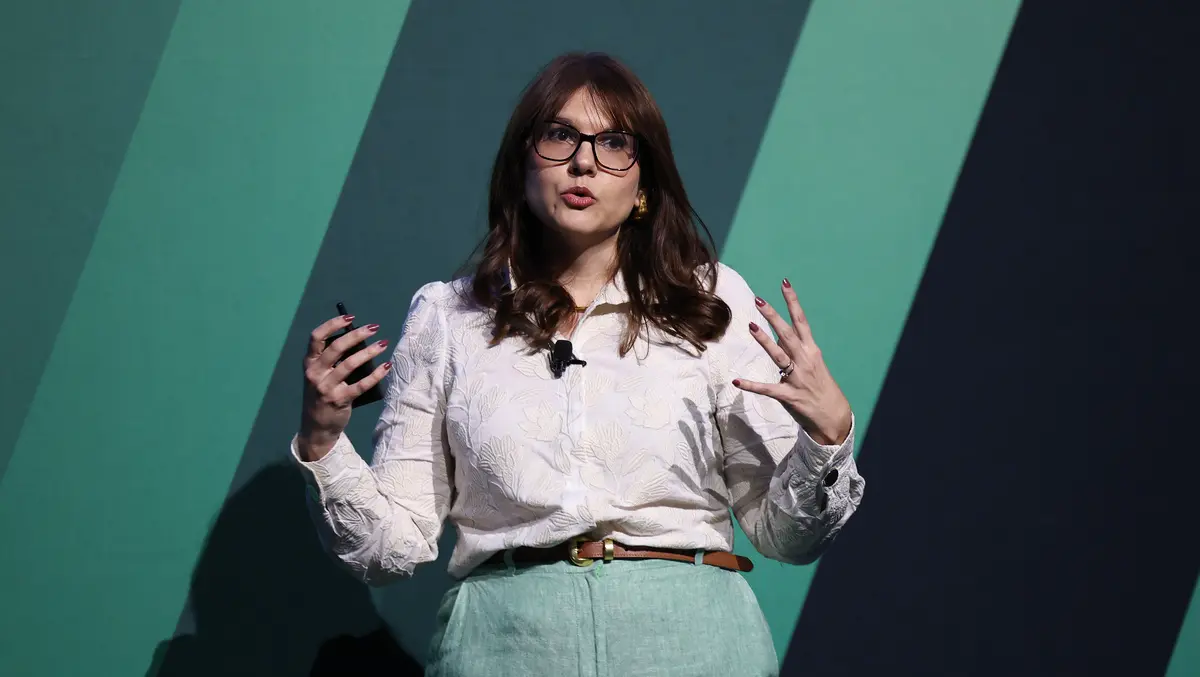
Speaking at the Avetta Summit in Sydney on 10 September, Whitehaven Coal's Group Manager of Systems, Performance, and Data Analytics HSE, Misha Fazen, said significant incident frequency across the mining company's sites dropped from 12.4 in FY21 to 1.1 in FY26.
It led the board to ask her to analyse how this was achieved and what could be leveraged to make further improvements.
Operational learnings
Fazen's team analysed over 100,000 hazard identification forms for each year and other relevant datasets, as well as feedback from workers, to test around 30 identified "assumptions" about workplace safety procedures and practices.
Among the assumptions tested, and subsequently disproved, were that contractors had higher safety outcomes than company stuff (rates were equal for both) and that higher hazard reporting volumes made sites safer (no correlation).
Crucially, an analysis of every action implemented in response to an incident found that very few had actually addressed the root cause.
Among the factors Fazen was able to definitely prove had delivered enhanced safety outcomes were an elevation of WHS to executive level within the organisation; three out of seven vehicle interaction risk initiatives implemented within the examined timeframe; and communication of root causes of an incident to workers using a simplified one-page notice.
Building lasting change
Speaking with TechDay on the Summit's sidelines, Fazen said the company has focused on empowering everyone across its sites to engage with data analytics. This is both to improve the quality and timeliness of data inputs as well as to achieve lasting cultural change around the buy-in and usage of data capabilities.
"My team is saying 'here is everything for you to play with and do this. Each of you have your own initiatives… you deep dive and you challenge your assumptions and you be curious and figure out what in your team you want to change'."
Fazen said a number of approaches aided company-wide uptake in its new data-led approach to safety, including:
- referring to 'data' as a 'strategic asset' to transition the mindset from a compliance/reporting burden to a powerful on-site operational tool.
- utilising pre-existing software and platforms that workers were already accustomed to using.
- not gatekeeping data to ensure visibility and transparency.
- creating a quarterly dashboard loop to ensure data remains fresh, avoiding human complacency or stale information.
- ongoing monitoring to drop any unused pages and replace with ones that are more relevant and user-friendly.
- adjusting KPIs to reflect reality, such as removing ones on hazard reporting volumes.
AI analytics training workshops have also been implemented to help workers better understand how to extract and interpret data in meaningful ways, after excited uptake led to data dumping and misaligned report writing.
"We had to say 'guys, you need to slow down here. That's not what data is telling you – that is what AI is telling you the data says. Let's put back onto your actual subject matter expert and challenge what is coming back at you'," Fazen said.
Work readiness challenges
Whitehaven Coal's experience comes as Avetta – a cloud-based platform offering supply chain risk management and contractor pre-qualification tools to 360,000 business customers in over 120 countries – released new research finding troublesome safety gaps in Australian workplaces.
Its survey of 500 professionals across high-risk industries including manufacturing, construction and facilities management found just 15% are easily able to verify an individual's work readiness in real time.
Almost half (42%) admitted workers sometimes or often start work prior to the required safety checks and credentials being verified, while 59% claimed to have restricted or no real-time visibility of who is on-site or their individual risk profiles. More than a third (37%) said they notice acknowledged but unaddressed health and safety risks at least once a week.
"When organisations lack visibility into who is on-site, whether workers are fully qualified and what risks are emerging in real-time, it becomes harder to respond quickly and confidently," said Avetta's Vice President of Operations, APAC, Luke Boyle.
"Closing that gap requires connected systems, stronger cross-functional alignment and a shared commitment to work readiness."
Changing face of safety
Contributing to this gap is the pace of change, with Australian Institute of Health & Safety (AIHS) board member Ben Kirkbride telling the Avetta Summit that safety has "changed more in the last 5 years than the 20 years before that". However, he said that companies often overlook one of their biggest resources.
"Procurement is the single most under-rated safety control in most organisations," he said.
"The decisions that are made in the procurement process – who you engage, who you pay, how long you give them, what you ask for in evidence – set the safety conditions for the work long before anyone steps foot on site."
According to Kirkbride, most serious incidents in the workplace don't occur from a lack of documented policies but from poor standards and processes behind them, and extend beyond employees to others across the entire supply chain and workforce profile.
As such, regulators investigating incidents look beyond company policies to ask, "what did you know, when did you know it, and what did you do about it?". And companies need to have these answers.
"Your duty of care does not stop at the ones on your payroll; your visibility in most organisations do. And the gap is where the risk lives," he said.
"Safety is moving from proving compliance after the fact to continuous visibility and prevention… It's leading an adaptive system of work across varied workers, more definitive risks and higher expectations for foresight, data and judgement."