

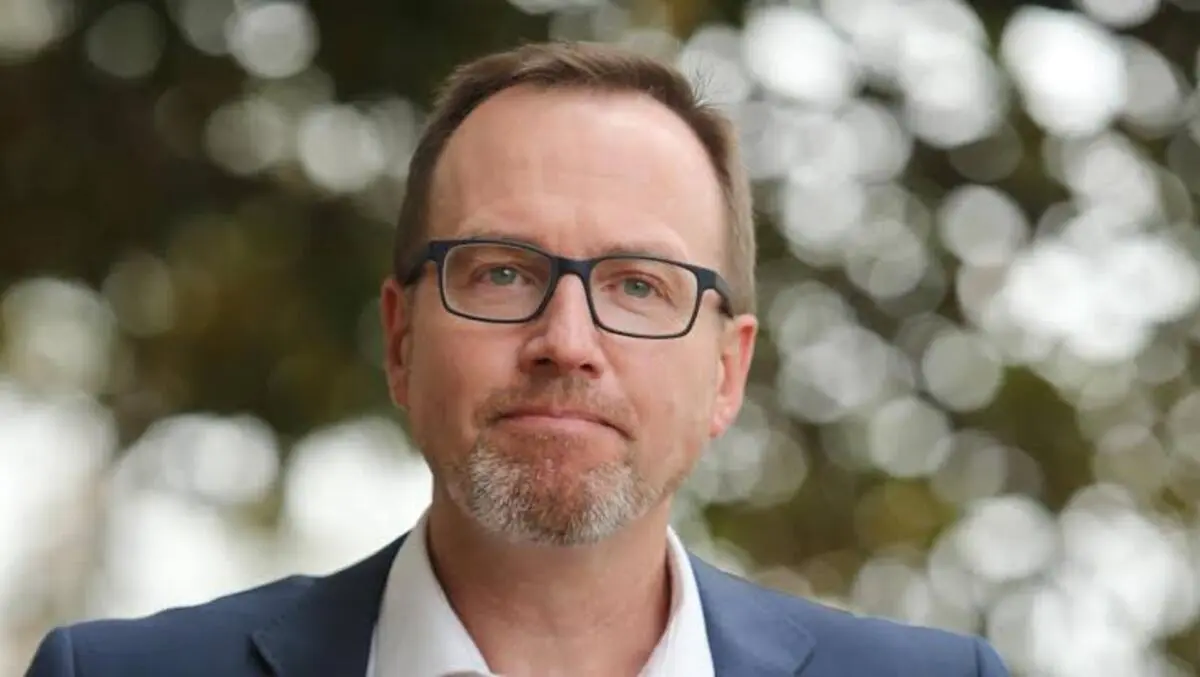
Greens Senator on why the age ban will be an 'open wound' for the Govt
Sun, 17th Aug 2025
Speaking before an audience of technology leaders, Greens Senator David Shoebridge launched a stinging attack on the federal government's approach to regulating technology, calling its policies "misconceived" and "dangerous."
"The Commonwealth is doing a really bad job at the moment," he admitted.
"It's leaping in without adequate preparation, with some fairly flawed policy in issues like social media, and then in critical areas where we would want the government to be stepping in, like AI, we're getting nothing close to silence."
Flawed social media ban
Shoebridge reserved his harshest words for the impending ban on social media for children under 16, due to come into effect in December.
He described it as a "mad political rush" born from a Murdoch media campaign and a government desperate for an announcement.
"Instead of deciding to make social media safe, the Commonwealth, in its wisdom, decided to ban anyone under 16 from having access," he said. "Even if it worked, it wouldn't work."
He warned the measure would leave children "with zero literacy in that space" until they suddenly gained unrestricted access at 16. "We're just going to give you the keys, and you can just go like the rest of us, like an adult, and go wherever the hell you like in a totally toxic mess that is social media," he explained.
Shoebridge said the trials on age verification had already shown high error rates and the likely reliance on third-party vendors, potentially global platforms such as Google and Apple.
"If age verification is going to be effective, it may rely upon the fact that a couple of mega US platforms know so much about us, they will become the gatekeepers," he said. "Not only do I find that troubling on a privacy point of view, but I also find it deeply troubling on a sovereignty point of view."
Ignoring AI regulation
While government energy is being poured into a social media ban, Shoebridge said meaningful efforts to regulate artificial intelligence had been abandoned. He credited former Industry Minister Ed Husic with leading work on AI guardrails, but lamented its abrupt end after Husic was removed in a reshuffle.
"They talk about productivity. They talk about not wanting to prevent the rapid roll out of this important tech, and they don't want regulation to get in the way," Shoebridge said. "I find that reckless to say the least. I think it's shameful that Ed's project has been dinged."
Shoebridge called for a clear national framework to ensure AI used in banking, medicine and government services is safe, transparent and free from bias. "Before banks roll out AI to determine who can and can't get loans, we need to ensure that the AI is safe for purpose," he said. "Before the Commonwealth Government adopts AI to determine whether you're entitled to a Centrelink payment, of course we need to have clear guidelines."
When asked what the outcome may look like for the Government in regards to the social media ban, he responded: "I think as it rolls out, it's going to become a kind of open wound for the government of scandalous stories. It's going to be an ongoing disaster."
A call for tech literacy in Parliament
The Senator also highlighted what he sees as a crisis of competence among federal politicians.
"I'm uncomfortable with the idea that we have political leaders who are designing or signing off on or ignoring tech policy, and they're doing it with an assistant who prints their emails out for them," he said. "That is the Canberra reality."
He urged industry leaders to engage directly with parliamentarians, particularly new MPs, to raise digital literacy levels.
"Dragging them to your conferences is a great idea," he said. "Start with first-term MPs... start having the conversation with people who are a bit hungry."
Regulating global platforms
Shoebridge pushed back on the notion that large technology companies cannot be held accountable.
He cited Meta's decision to use Australians' Facebook and Instagram data to train its models without consent.
"Even unethical players, there is an important role for strong legislative action that puts these kinds of guardrails and controls in place," he said.
He argued that a legislated duty of care for platforms could empower regulators and citizens alike to demand safer practices. "It would be a powerful pushback," he said.
A missed opportunity
Shoebridge concluded with a warning that without urgent changes, Australia will remain exposed.
"We need to be careful before you adopt machine learning and AI in critical government services. At a federal level, that is completely missing," he said.
Reflecting on the challenges ahead, he said Australia could yet carve out a role as a leader in ethical AI and responsible regulation. "We could develop a commercially, internationally valuable reputation as having ethical and responsible AI," he said.
But for now, his message was stark.
"No one is going to win from this policy venture, perhaps other than the news.com profile, who doesn't like competition from social media for eyeballs and advertising accounts," he said.
"I think we need to do better, and I do urge you to be a part of making it better."