

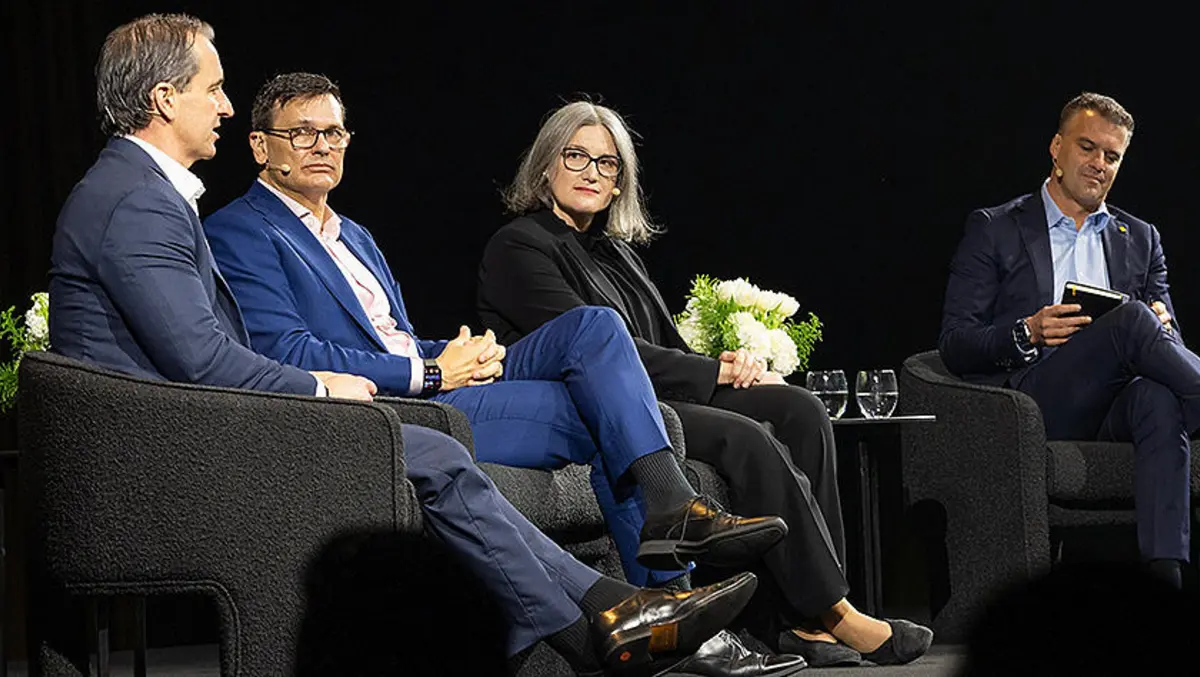
AI delivers measurable gains at Coles, bank & law firm
Wed, 27th May 2026
Coles, Gilbert + Tobin and Commonwealth Bank say artificial intelligence is delivering measurable results in their operations, signalling a shift from limited trials to broader day-to-day use in major Australian organisations.
Senior executives at the three companies said AI tools are beginning to change how work is organised, how services are delivered and where businesses find value. Their remarks suggest Australian companies are moving beyond experimentation into a phase where productivity gains, customer service changes and new commercial pressures are becoming more visible.
At Coles, AI is being used to improve product availability across a large and complex retail network. Chief executive Leah Weckert said the supermarket group analyses customer demand across 26,000 products while managing stocking, delivery and supply-to-shelf operations.
The retailer, which employs 115,000 staff and processes 18 million transactions a week across 850 stores, uses AI to make 109 million predictions a day and forecast likely customer purchases up to 100 days ahead. Weckert said that would not be possible through manual analysis alone.
She said the system had already improved reliability for shoppers looking for items on their lists.
"There's nothing more important for the customer than when they come into store with a list of products to buy and they can't find the pieces that they are after," Weckert said.
"Over time, we've added more and more data feeds into this system," she said.
Coles is also applying AI to customer-facing services such as shopping list organisation and more tailored interactions. Weckert said this could eventually lead to a model in which AI handles a household's weekly grocery shop with little direct customer involvement.
"There are lots of benefits for our customers in terms of making interactions far more frictionless, giving them much more reliability around availability of product in store. And for our team, it means that they're a lot more productive," she said.
Legal work
Gilbert + Tobin is also assessing what broader AI adoption means for its operating model. Chief executive Sam Nickless said the law firm had encouraged staff to use AI tools individually in what he described as an early "cut and paste era", producing gains in personal productivity.
He said the next stage would be to turn those individual efficiencies into firm-wide changes. One example is lease review in property transactions, where AI can examine every lease in a portfolio rather than relying on a sample because of the time human reviewers would need.
Nickless said that shift would affect not only the delivery of legal work, but also how clients are charged and how the firm measures performance.
"For us, there'll be changes in how we produce our services," he said.
"There'll have to be changes in how we charge clients for them, how we contract new clients," he said.
He said AI would allow lawyers to spend more time on specialist matters and high-value advisory work, while routine analysis could increasingly be handled by automated systems. That could place greater emphasis on judgment as the premium element of legal advice.
"I still believe there'll be a premium that clients will want to pay for judgment, but it will be for the very best judgment," Nickless said.
He also said firms would need to introduce AI with controls that protect client data and preserve trust.
"For professional services firms, if you get this wrong through this transition, it's existential," he said.
Banking focus
At Commonwealth Bank, chief executive Matt Comyn said AI is being used across engineering, software coding, fraud and scams detection, payments and data analysis. He said the bank had focused on demonstrating practical value to customers as it expands its use of the technology.
Comyn said the immediate aim was to improve digital services through more intuitive and personalised experiences, while also strengthening customer protections. His comments reflect a wider challenge for banks, which face close scrutiny over the use of customer data and automated decision-making.
"Over the last couple of years, we've made a very concerted effort to make sure we're demonstrating real value to our customers," Comyn said.
"That has been in intuitive, better experiences that are personalised and guided [and where] customers feel better protected," he said.
He said trust, safety and transparency would determine whether AI could be expanded more widely in banking.
"I think for us making sure trust is really the permission to be able to scale this technology which, of course, attracts an enormous amount of attention," Comyn said.
The comments from the three chief executives suggest AI is no longer being treated simply as a workplace tool for isolated tasks. Instead, it is becoming part of broader debates inside companies about pricing, job design, customer relationships, risk controls and the role of human judgment.