

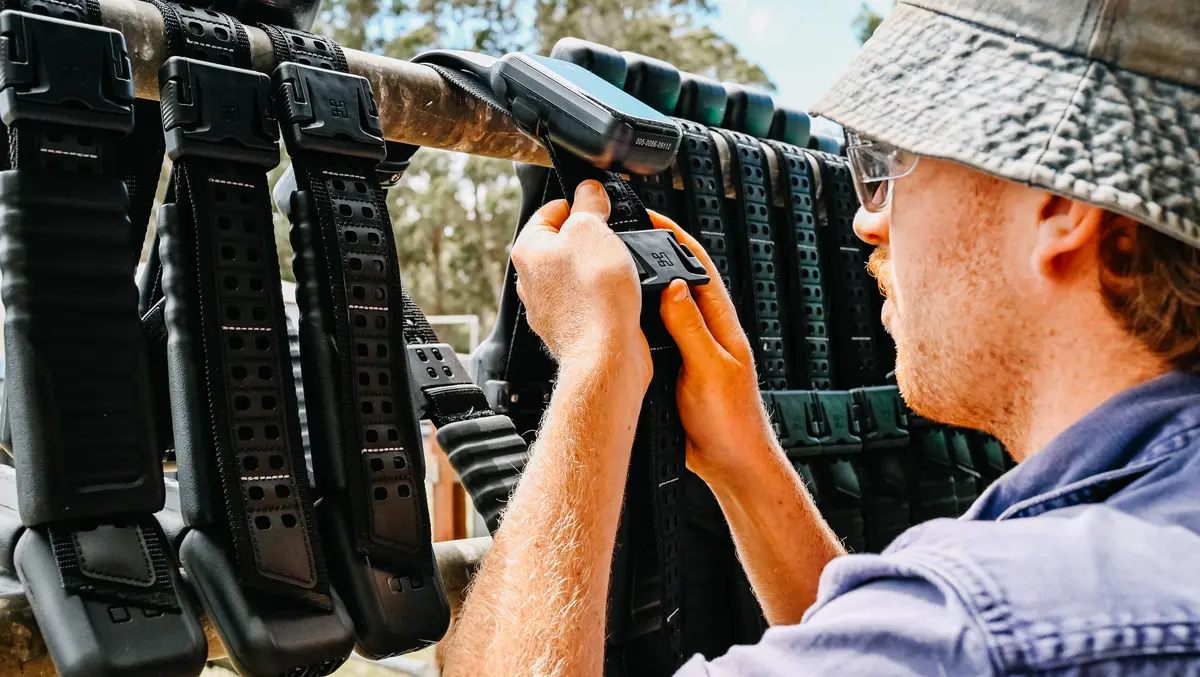
Halter wins WA approval for virtual cattle fencing
Thu, 5th Nov 2026 (Today)
Halter has been approved to operate its virtual fencing and herd management technology in Western Australia following a change to the state's animal welfare regulations.
The decision opens the market to a system that uses smart collars on cattle and a smartphone app that lets farmers set grazing boundaries, shift herds, and monitor animal movements and behaviour without physical fences.
Western Australia has a beef herd of about 2.2 million head and a dairy sector producing 344 million litres of milk a year, giving Halter access to a sizeable cattle market that spans large northern stations and southern beef and dairy farms.
The first beef and dairy farms in the state are already onboarding, giving local producers access to a tool already used in New Zealand, Australia's eastern states, and the United States.
How it works
Cattle wear collars that use sound and vibration cues to guide them within boundaries drawn on an app. Farmers can change paddock allocations remotely, and the collars then signal to the animals that a grazing area has changed.
The system is designed to let producers move stock between areas without installing or shifting temporary fencing each time. In dairy operations, that can include moving cows from a paddock to a milking shed without a farmer following behind them.
Data collected through the collars is sent back to farmers in regular updates. Information available through the platform includes GPS location, pasture grazed, cows on heat, and behaviours such as rumination, grazing, walking, and lying.
Halter says more than two million of its collars are now in use globally. The company combines the hardware with software aimed at grazing management, herd monitoring, and fertility and health alerts.
WA opportunity
The regulatory change comes against the backdrop of Western Australia's large agricultural sector. The state's agrifood, fibre, forestry, and fisheries industries are worth more than AUD $11 billion a year, according to figures cited by Halter, and agriculture is the state's second-largest export industry after resources.
Grazing management varies sharply across the state, from extensive cattle leases in the north to more intensive mixed farming and dairy businesses in the south. Technology that reduces manual fence shifting may appeal in different ways across those systems, but the common factor is the management of pasture and labour.
Australian Strategic Relations Lead David Nation said the market opening reflected the scale and diversity of the state's cattle sector.
"Western Australia's cattle industries are enormous by any measure of their scale and their diversity. From large cattle operations in the north of the state to a broad-based beef and dairy sector in the south, there are so many opportunities to use Halter's technology. We're grateful to the WA Government for opening the way for our technology in the state," Nation said.
Labour and safety
For livestock businesses, one of the most immediate questions will be whether the technology reduces routine work enough to justify adoption. Daily grazing changes, temporary fencing, and repeated stock checks can absorb labour on both dairy and beef properties, particularly where staffing is tight.
Nation linked the product to those operational pressures as well as pasture use.
"There are large areas of productive land in Western Australia, from grass-based dairy farming to grain-and-graze businesses to extensive beef leases. Each part of WA has a role in the state's cattle industry and one big thing in common: the ability to utilise more grass. Halter's ability to do both fencing and moving of cattle is a game-changer. Calves grow quicker, carrying capacity increases, more of the farm lifts in productivity. Cows are settled and respond really well to consistent and regular grazing management," Nation said.
Halter also said it had seen interest from local farmers who had followed its adoption elsewhere.
"We're seeing strong interest from farmers who have followed the Halter journey and seen exciting results across the east coast, in NZ and in the USA," Nation said.
Beyond labour efficiency, the business case is likely to rest on whether remote monitoring helps producers respond faster to changes in animal condition, fertility, or movement, especially on larger or more dispersed properties. The system also offers an alternative where physical fencing is impractical or time-consuming to maintain.
Nation also pointed to occupational risk in routine livestock work.
"Virtual fencing also cuts hours out of the day spent on routine jobs like setting up and maintaining fences and checking stock. It's more than time saved; it's also less time doing risky work, and farmers report real safety benefits," Nation said.