

How the 'human hour' mentality influences the future of tech
Wed, 17th Jun 2026
The pitch for artificial intelligence in the workplace has mostly been about subtraction: fewer hours, fewer headcount, lower costs.
Sam Altman noted in February that training an AI model requires a lot of energy and water. "It also takes a lot of energy to train a human," he rebutted, a framing that fits neatly into the industry's pitch: hours worked equal cost, so hours saved equal costs saved.
But a growing number of voices in information technology argue that the framing of AI quality output is the problem. The real shift, the experts argue, shouldn't be how fast machines can do the work but whether companies are willing to rethink what the automated work is for.
The data suggests the loudest claims about AI replacing the workforce don't hold up.
Info-Tech Research Group's AI Adoption in the Enterprise survey found that fewer than one in five IT executives expect AI to drive significant workforce reductions in the next two years, while 58 per cent of organisations report only partial or no measurable enterprise-wide impact from AI so far.
The World Economic Forum Future of Jobs Report 2025, which estimates roughly 170 million jobs will be created globally by 2030 against around 92 million displaced, a net gain, not the wholesale replacement headlines suggest.
None of which means AI isn't changing how work gets done, Info-Tech CEO Tom Zehren said, just that the "AI takes your job" framing and the "AI saves millions" framing are often two sides of the same oversimplified story. He pointed to two contrasting examples from the past year:
First, when Klarna added autonomous AI to its call centre operations in 2024, the company claimed it could do the work of 700 full-time workers, and estimated to drive USD $40 million in profit. The savings were real, Zehren said, but so was the fallout. Customer satisfaction declined, particularly in fraud cases and in regions where customers had no easy way to reach a human agent after the AI-first system was rolled out.
AWS, by contrast, used AI agents to migrate large volumes of legacy Java applications - shifting code written for Java 7, 8 and 11 up to Java 17, a task that would normally take around multiple developer-days per application. The difference, Zehren said, is that this was a narrow, high-leverage technical task rather than a customer-facing headcount play, and most companies don't have AWS's scale or in-house AI expertise to replicate it.
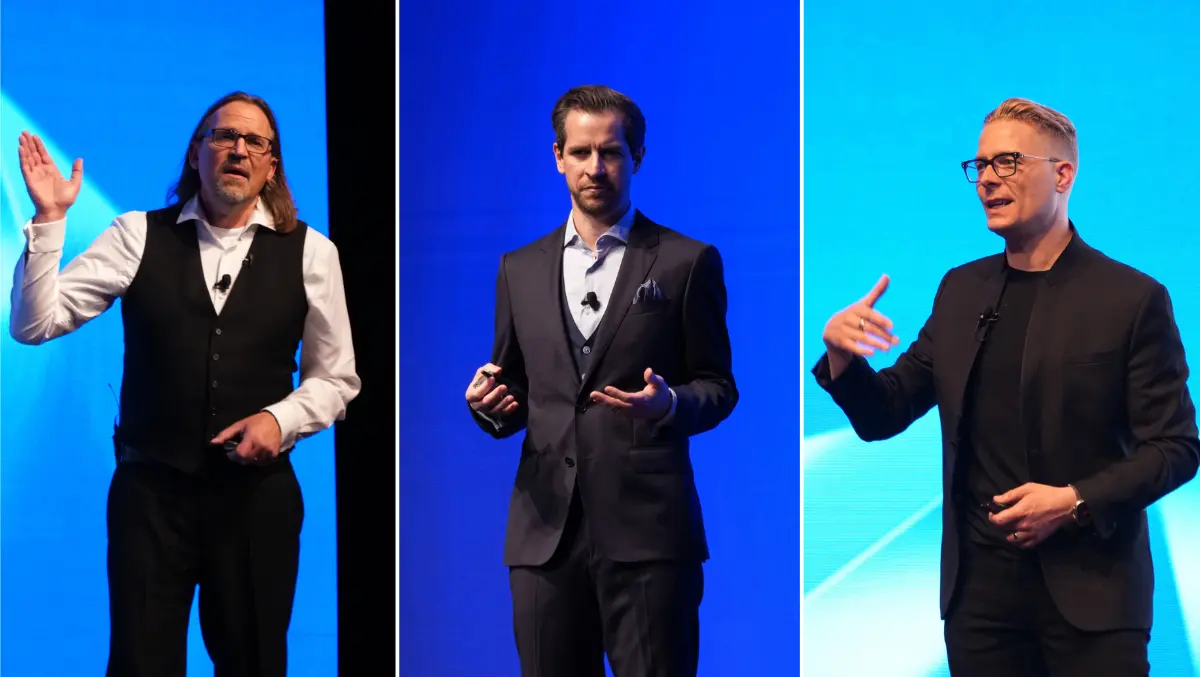
Ian Beacraft, CEO and Chief Futurist at Signal and Cypher, emphasised the need for cognitive transformation rather than just technological adoption.
He argued that in the daily work lives of information technology professionals, everything about how work is executed has changed, but the fundamentals of doing the work have stayed the same. Measuring AI's value by execution cost, he said, no longer makes sense now that execution costs have collapsed with the rise of agentic AI.
"What AI does really well is help scale volume of output, speed of output," Beacraft said. "What we need to be focusing on is not just doing the work, but mastering the design of the workflows."
The instinct to measure work by time rather than output isn't new, and, according to Dave Coplin, former Chief Envisioning Officer at Microsoft UK, it's the same instinct that's about to be supercharged by agentic AI, with the same flaws.
Coplin pointed to Frederick Winslow Taylor, the early-20th-century efficiency theorist, who in a 1906 speech described what he wanted from workers: obedience and speed, nothing more.
Specifically, Taylor stated, "In our scheme, we do not ask for the initiative of our men. We do not want any initiative. All we want of them is to obey the orders we give them, do what we say, and do it quick."
"Of course, he was talking about human beings in 1906," Coplin said. "But if you think about AI's failures ... it comes from this same wrong focus on productivity."
The core management problem, Coplin argued, never went away: workers are still measured on time spent rather than output produced, and agentic AI is being slotted into the same broken metric, just at scale.
"When along comes [agentic AI] that transforms how you might not work, the only way you can respond to those changes is to completely break your organisation before you can reassemble it, and that's the resistance that we're seeing today when we talk about a lack of return on the pilots that we run with AI," said Coplin.
"Efficiency should not be the king of the 21st century, it should be effectiveness."
Info-Tech's study of 578 IT leaders' integration of AI across the Software Development Life Cycle found that AI speeds up code creation, but doesn't remove accountability for working software.
"Don't reduce capacity massively in IT. Repurpose it because the hard part for AI to get the real value is the business logic and the business intent. Yes, AI is fancy, but at the heart of it, it's nothing else more than automation," said Zehren. "The people I call the 'hybrid unicorns' are the people that understand business workflows and understand technology. Those people extremely hard to find. If you have them in your organisation, protect them at all costs."
84 per cent of development teams have adopted AI in design, development, or testing, yet two-thirds said AI-generated code requires more testing than code written by humans, therefore requiring a human-in-the-loop, especially when the tech is integrated.
"I am sick to death of seeing someone else's case study about 'how AI has saved 17 million hours...'I don't care how much time you saved with automation. What are you going to do with the time? How are you going to deliver more value to your customers? What are you going to do to engage with your employees?" said Coplin. "That's the opportunity costs of the automation. As we're working through our clients and working through our programs, we're looking at what objectives AI can do. If you're focused just on the time saved, you're gonna fail."