

MathWorks R2026b adds AI tools for engineering teams
Wed, 4th Nov 2026 (Today)
MathWorks has released R2026b of MATLAB and Simulink, adding new products and expanding several existing tools.
The release introduces Simulink Variant Manager, Visual Inspection Toolbox and Polyspace Test Server, while extending capabilities across aerospace, embedded software, artificial intelligence, perception, audio engineering and statistical analysis.
The changes are aimed at engineering teams working on systems that combine software, electronics and AI. Those teams are dealing with more product variants, broader verification demands and pressure to move designs into deployment with less manual work.
Simulink Variant Manager is designed to help developers manage multiple product configurations across models and system architectures. It is intended to improve traceability and consistency for organisations building product families and platform-based designs.
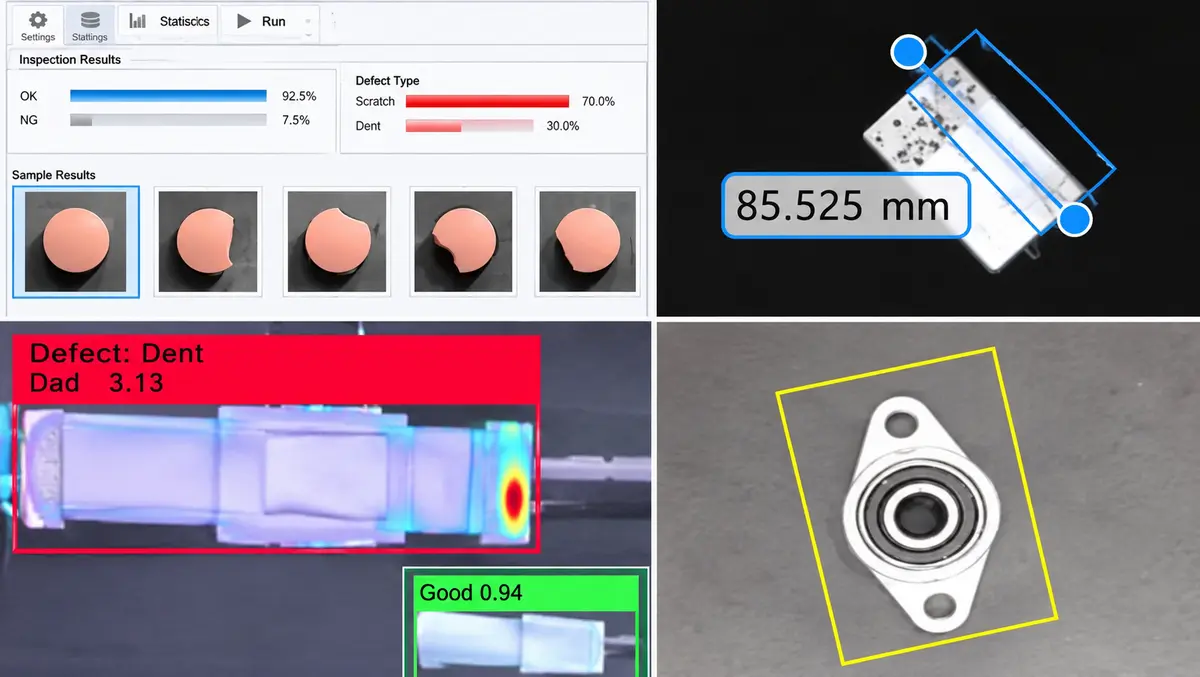
Visual Inspection Toolbox combines AI and image-processing methods for visual inspection in manufacturing and industrial settings. It supports tasks including anomaly detection, defect localisation, dimensional measurement and shape matching.
MathWorks also added Point Cloud Toolbox to broaden workflows for lidar, camera, radar and SLAM-based applications. The toolbox is intended for advanced perception work in robotics, automation, transport and other sensor-led systems.
For embedded software teams, Polyspace Test Server focuses on automated testing and code coverage analysis for C and C++ software in continuous integration environments. It allows teams to run unit and integration tests on automation servers and carry out structural coverage analysis to support compliance work.
Broader updates
Beyond the new products, the release includes updates across established MATLAB and Simulink toolsets. In MATLAB, the changes cover project management, source-control workflows, interoperability and data access.
Additions include TOML-based project files, package management through File Exchange, Google Sheets integration and performance improvements for data-focused workflows. In Simulink, MathWorks has added published models that can be reused without rebuilding, JSON-based data dictionaries for source-control processes and AI-assisted profiling insights through Simulink Copilot.
Several domain-specific products have also been updated. Aerospace Toolbox now supports high-fidelity orbit propagation, manoeuvre modelling, constellation design and lunar mission work, while Aerospace Blockset adds functions for guidance, navigation and control, mission planning and system-level analysis across aircraft, rotorcraft and spacecraft.
Audio Toolbox has been expanded to support modelling, simulation and evaluation of acoustic systems with Simscape integration, ray-based sound propagation for room and underwater acoustics, and audio quality and intelligibility metrics. Deep Learning Toolbox now includes a Time Series Modeler app and support for co-execution of PyTorch models in MATLAB and Simulink.
Simulink Design Verifier now supports distributed analysis across multiple CPU cores and offers improved precision for models using floating-point and complex mathematical operations. SoC Blockset for AMD has been updated for hardware-software co-design on AMD adaptive SoCs and FPGAs, covering communications, vision, deep learning and control applications.
In data analysis, Statistics and Machine Learning Toolbox now includes interactive applications for design of experiments and Gage R&R studies. These additions are intended to help users assess measurement-system variability and analyse experimental results.
Engineering focus
The release reflects a wider push by software suppliers to support engineering teams working across mechanical systems, software development, electronics and AI in a single workflow. Vendors in this market are increasingly adding tools for configuration management, verification automation and integration with modern software development practices.
MathWorks, founded in 1984 and based in Natick, Massachusetts, said its software is used in industries including automotive, aerospace, energy and medical devices, as well as in universities and research institutions. The company employs more than 6,500 people across 34 offices worldwide.
Commenting on the release, the company said the changes reflect the growing demands facing engineering organisations.
"Engineering organisations are being challenged to deliver increasingly sophisticated products that blend software, AI, electronics, and connected systems while maintaining quality, compliance, and development speed," said Avinash Nehemiah, Head of Product Management and Marketing - Design Automation, MathWorks.
"R2026b helps teams connect design, simulation, testing, and deployment workflows so they can spend less time managing complexity and move from concept to production more quickly," Nehemiah said.