

OpenAI adds usage analytics for ChatGPT Enterprise
Tue, 23rd Jun 2026
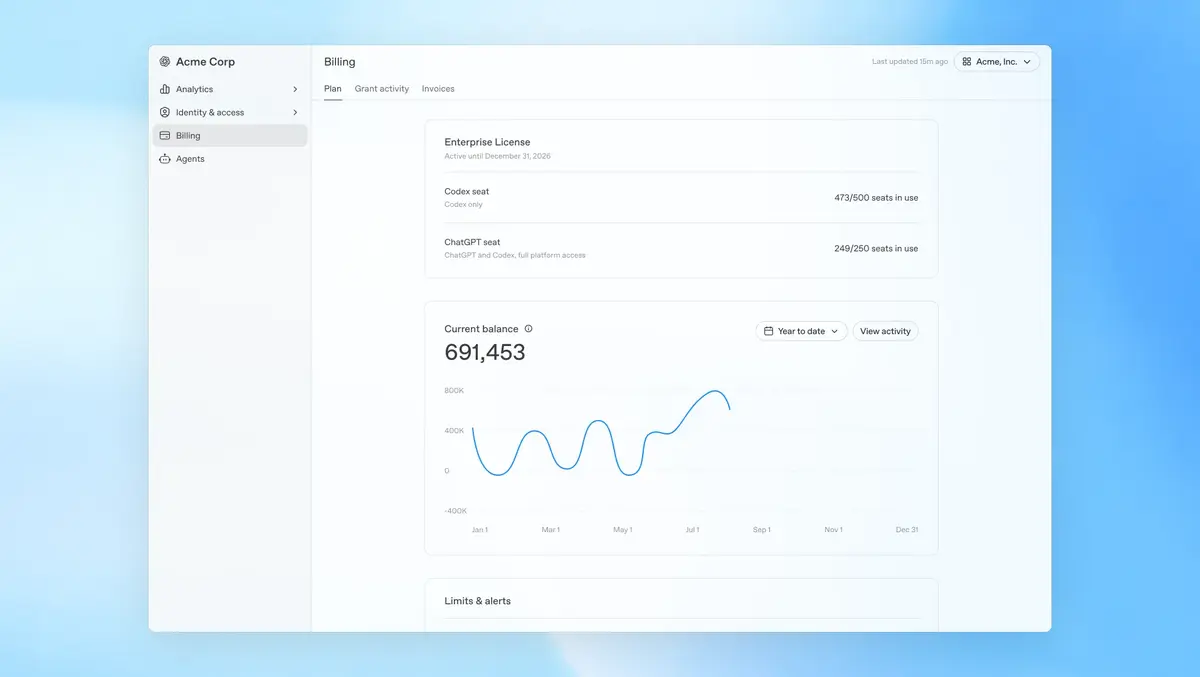
OpenAI has introduced new usage analytics and updated spend controls for ChatGPT Enterprise, giving administrators a broader view of credit use across their organisations.
The changes centre on the Global Admin Console, where enterprise administrators can now view ChatGPT and Codex credit usage in a single dashboard. The system provides a more detailed breakdown of credit consumption by user, product and model, helping companies see where spending originates and how it relates to actual use.
The data is intended to help organisations distinguish between higher usage linked to productive work and patterns that may need closer scrutiny. Administrators can track usage and credit trends over time, identify top users, and examine spending across the workspace at the user, product and model level.
The same information is also available through the Cost API, allowing companies to analyse credit usage within their own internal systems. This gives finance and technology teams another way to monitor adoption and spending without relying solely on the standard admin interface.
Admin controls
Alongside the analytics update, OpenAI has expanded how enterprise customers can set usage limits. Administrators can now apply a default limit across a ChatGPT Enterprise workspace, assign limits to specific groups, and create individual exceptions for employees who need a higher allowance.
The update builds on earlier controls for custom roles, designed to help workspace owners manage advanced model usage for different classes of user. The latest changes extend that structure by giving organisations more flexibility to align budgets with team needs rather than applying a single limit across the business.
Employees in ChatGPT Enterprise workspaces can also now view their own credit use against their available budget. If they need additional credits, they can submit a request with context about the work involved, giving administrators more information when deciding whether to approve an increase.
For large companies, the move addresses a familiar problem in software procurement and internal technology governance: how to widen access to a tool without losing oversight of cost. As generative AI systems move from pilot projects into routine business use, finance, IT and operational leaders have been under pressure to show how spending maps to practical use across departments.
The approach suggests OpenAI is responding to enterprise demand for tighter administrative controls as customers deploy AI tools more widely among staff. Better visibility into which products and models consume the most credits may also help companies determine whether adoption is concentrated in a few technical teams or spreading more broadly across functions.
A customer cited by OpenAI linked the changes to internal adoption and budget management. "Zipline's engineering has been all-in on Codex since January, and in recent months the broader company has adopted it. We asked the team at OpenAI to build usage analytics to help find and train-up folks who haven't adopted Codex, and for granular usage controls to keep spend predictable. These new tools are helping us faster scale productivity of our employees while keeping safeguards in place," said Ryan Oksenhorn, Co-Founder, Zipline.
The analytics and spend controls are available to ChatGPT Enterprise administrators, while users in those workspaces can access their own credit usage information through workspace settings. By bringing ChatGPT and Codex consumption into one administrative view and linking it to adjustable limits, OpenAI is giving enterprise customers more direct tools to monitor adoption and control costs as use expands across the workplace.