

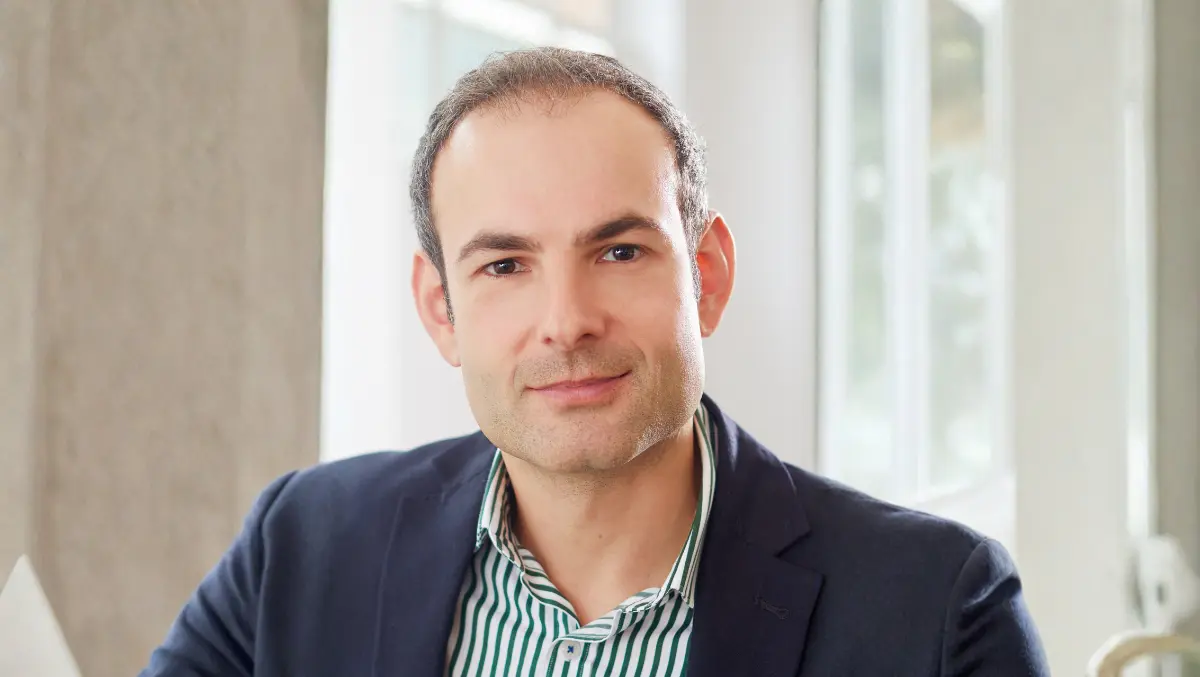

Tego Chief Executive Officer Eric Lowenstein has warned that insurers and healthcare providers face an emerging "AI Monoculture Risk", while existing policies remain largely silent on AI-related liabilities.
Speaking at a healthcare conference in London, Lowenstein argued that insurance frameworks built around human error are ill-suited to losses linked to artificial intelligence. The sector now faces exposures that do not fit established indemnity language, including the "look-back problem" and systemic dependence on a small number of foundation models.
Litigation linked to generative AI is already rising sharply in the United States, he said, citing figures showing GenAI-related lawsuits grew 978 per cent between 2021 and 2025, with year-on-year growth of 137 per cent in 2024-25 alone.
He said the chain of liability had also changed as AI tools spread through healthcare settings and other industries.
"Insurance has spent 200 years pricing one thing: human error. AI does not fit that frame. It is the first time our industry has had to ask not just who is at fault, but whether the concept of fault still applies. Insurance was built for a world where machines did not make decisions. That world is gone," said Tego Chief Executive Officer Eric Lowenstein.
His remarks focused in part on how multiple parties can be drawn into disputes over an AI-assisted decision. Liability no longer sits only between patient, clinician and hospital, he said, but can also involve software vendors and large language model providers.
"The chain used to be patient, clinician, hospital. The new chain is patient, clinician, hospital as deployer, AI vendor, foundation model provider (LLM). Each link is a potential defendant. Each link points at the next one when something goes wrong," Lowenstein said.
He also warned that many policies now in force were written before the recent wave of AI deployment and do not expressly address these risks. That leaves boards exposed if they assume existing medical malpractice, cyber or technology policies will respond to AI-related harm.
"AI is in exactly that silent phase right now. Silence is exposure. Boards should not assume their existing policies cover AI risk. Most do not address it at all," he said.
Stack gap
To illustrate the issue, Lowenstein described a hospital using a third-party AI triage tool that under-triages chest-pain cases in older women, leading to deaths and a class action. In that scenario, several insurers could each point to exclusions or disputed wording while the hospital remained exposed, he said.
"The hospital's medical malpractice carrier says the AI made the call, not a clinician. Cyber insurers say no network intrusion, no data breach, not our line. The vendor's Tech E&O excludes bodily injury. The vendor's product liability is in dispute over whether AI is even a 'product' in that jurisdiction. Every policy has a plausible reason to decline. The hospital is sitting underneath all of it. That is the gap," Lowenstein said.
Historic records
Lowenstein used the term "look-back problem" to describe a separate category of risk tied to validating new tools against old records. He gave the example of a healthcare provider testing an AI system on historical radiology scans and then discovering possible missed findings in past cases.
"The act of looking is itself what creates the liability. Every option comes with a different exposure. I call it the look-back problem," he said.
Systemic concern
His second term, "AI Monoculture Risk", refers to the concentration of many software tools on a small number of underlying models. He said that structure could create simultaneous claims across many insured parties if a fault emerged in one widely used model.
"In farming, there is a word for this. Monoculture. When everyone plants the same crop, one disease can wipe out the entire harvest at once. I am calling the equivalent the AI Monoculture Risk. A single defect in one widely used foundation model could trigger claims across thousands of unrelated insureds simultaneously, across every industry, across countries, across policy lines. That is a fundamentally different shape of risk to anything our industry has priced before," Lowenstein said.
Dedicated AI liability cover remains scarce, he said. There are about seven specialist AI liability products in the global market, most of them placed at Lloyd's of London, with significant variation in cover, triggers and exclusions.
Tego is developing a standalone AI liability product for the Australian market aimed at AI providers, vendors and companies deploying AI applications. The proposed cover is intended to address exposures including inaccurate outputs, intellectual property disputes, model drift, data leakage and regulatory breaches linked to AI use.
Lowenstein also pointed to Deloitte projections that global AI insurance premium could reach USD $4.8 billion by 2032, framing this as a sign of growing demand as organisations adopt AI more widely while insurers work out how to underwrite the risk.
He ended with a warning to boards on governance and contingency planning for AI systems already in use.
"The last question is the one almost no board has a good answer to. Most AI deployments are approved on the upside. Very few have a plan for the downside. When the AI fails, harms a patient or stops working, who is accountable, who picks up the cost, and is anyone insured for it? Most boards cannot answer that. That is the governance failure," Lowenstein said.