

The quantum revolution is quietly happening
Wed, 4th Nov 2026 (Today)
While AI dominates headlines, quantum computing is quietly making significant strides under the radar. And while quantum computing won't replace your laptop any time soon, or perhaps ever, it will be the powerful, unseen engine driving the next generation of scientific and business breakthroughs.
Unlike AI, which had a massive 'coming out party' with the introduction of consumer-friendly generative AI tools like ChatGPT in November 2022, quantum computing has been quietly gaining momentum. Since physicist Richard Feynman first started talking about quantum computing in 1981, progress has been moving along with the industry now transitioning from a research phase with physical qubits to commercial utility with logical qubits.
A physical qubit is the basic building block of a quantum computer. It is an individual quantum computing unit that stores quantum information. However, an individual qubit, the basic building block of a quantum computer, is highly susceptible to errors caused by noise and environmental interference. A logical qubit combines multiple physical qubits and uses quantum error correction to create a more reliable, fault-tolerant unit capable of performing complex computations.
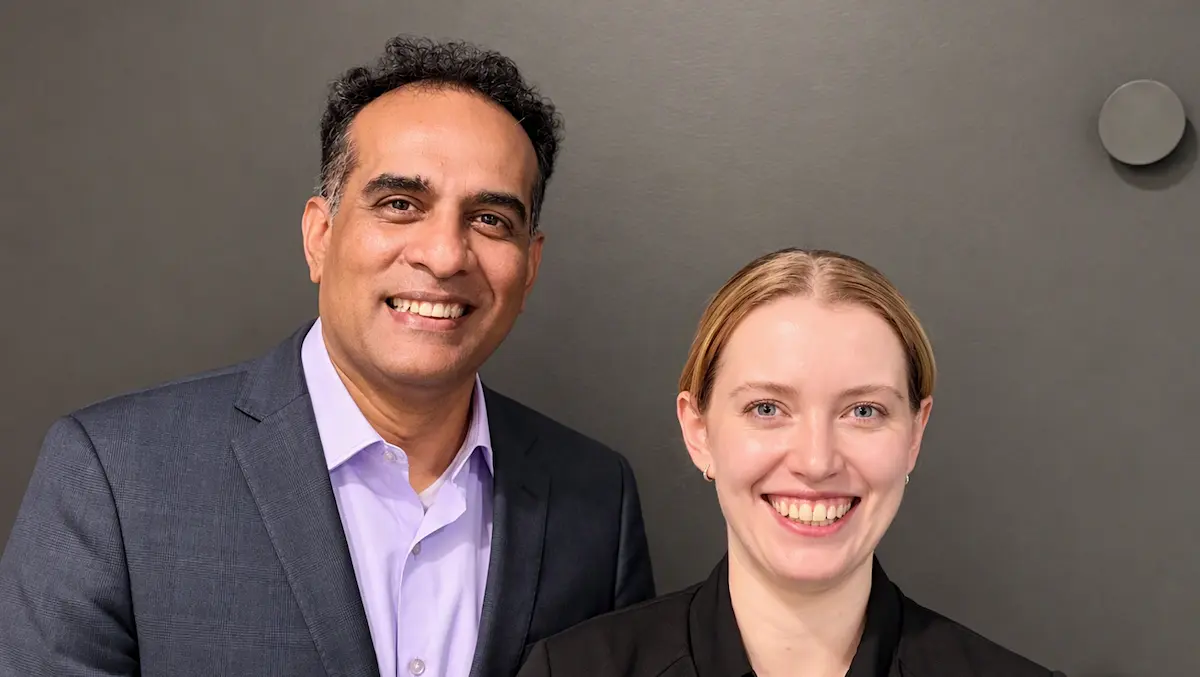
"Utility scale quantum computing is coming within the next five years. We expect to have hundreds of logical qubits by 2030 and thousands by 2035," said Dr Ellen Devereux, Fujitsu's Chief Quantum Strategist. "There are challenges, but we know what we're going to tackle and in what order."
Much of the progress we see today comes from using quantum-inspired techniques said Devereux. That's leading to solving problems in drug discovery, logistics and in some financial applications such as portfolio optimisation. She added that the first true quantum uses will likely emerge in material science, chemicals, and pharmaceuticals.
While the average consumer might never directly interact with a quantum computer, they will benefit from its outputs through things like customised medicines and vaccines.
Mahesh Krishnan, Oceania Chief Technology Officer at Fujitsu, explained.
"Quantum computing, everyone thinks it's like five or ten years away. We're saying it's today's problem. You need to start to build the literacy on it. You need to start looking at the use cases."
Going quantum today
The release of OpenQARP by Fujitsu, an open-source SDK lowers the barrier to entry for developers and makes it possible to use quantum-inspired techniques to solve today's challenges. For example, Fujitsu has collaborated with Toyota and used quantum-inspired techniques to analyse more than three million possible delivery routes for automotive parts. In just 30 minutes simulations indicated cost savings of up to 5%.
Krishnan said that Fujitsu has established several collaborations to help move the needle on quantum.
A partnership with the Australian National University (ANU) is focused on quantum hardware research while a collaboration with Monash University and CSIRO is building quantum applications and enhancing literacy to ensure the next generation of computer science students and technology leaders are prepared for the wider use of quantum technologies.
The convergence of High Performance Computing, AI and quantum computing is setting the scene today, as quantum processors are increasingly paired with supercomputers and AI in hybrid workflows, while quantum-inspired optimisation technologies and quantum simulators already run on that same HPC and AI foundation, giving organisations practical value from quantum thinking well before fault-tolerant hardware arrives.
Platforms such as Open Quantum, which provides unified API access to real quantum hardware such as that built by IonQ, Rigetti, IQM and AQT, or Fujitsu's own open-sourced OpenQARP platform, are providing developers the tools they need today so they will be ready when more quantum computers are available.
Quantum's challenge
Perhaps the biggest obstacle facing quantum computing today is error correction. This makes scaling quantum systems difficult and remains an active research problem. Devereux said.
Unlike classical computers, quantum computers rely on qubits that are sensitive to environmental interference, including temperature fluctuations, electromagnetic noise and unwanted interactions with neighbouring qubits. These can result in errors that undermine the accuracy of calculations.
Correcting these errors is difficult because directly measuring a qubit can disturb its quantum state. Quantum error correction requires information to be distributed across multiple physical qubits to create a single, more reliable, logical qubit. This hardware complexity and processing overhead presents a major technical challenge.
Government strategy
In 2023, the Australian government published its National Quantum Strategy. Its focus is on defence and national security. But it also has the goal of bringing sovereign quantum capability and, eventually, physical hardware, into the country to foster local talent.
The strategy focusses on five key pillars: research and development; commercialisation; infrastructure; workforce; and national interests. The strategy is intended to turn Australia's scientific expertise into an economic and strategic advantage, ensuring the country not only develops quantum technologies but also builds the businesses, workforce and infrastructure needed to commercialise them.
"Quantum computing is not tomorrow's problem. It is happening now. But it's going to progressively happen over a period of time," said Krishnan.
Fujitsu is building partnerships here in Australia, and globally, and offers services to support organisations wanting to build quantum literacy and identify areas where quantum technologies can deliver value today and help them prepare for the commercial availability of quantum computers sometime in the future.
"We know a limited subset of what quantum computing can do. And the only way we're going to scale that is by improving quantum literacy [within] the wider population. If you want to be on the front line, you needed to start a couple of years ago to take advantage today," said Devereux.