

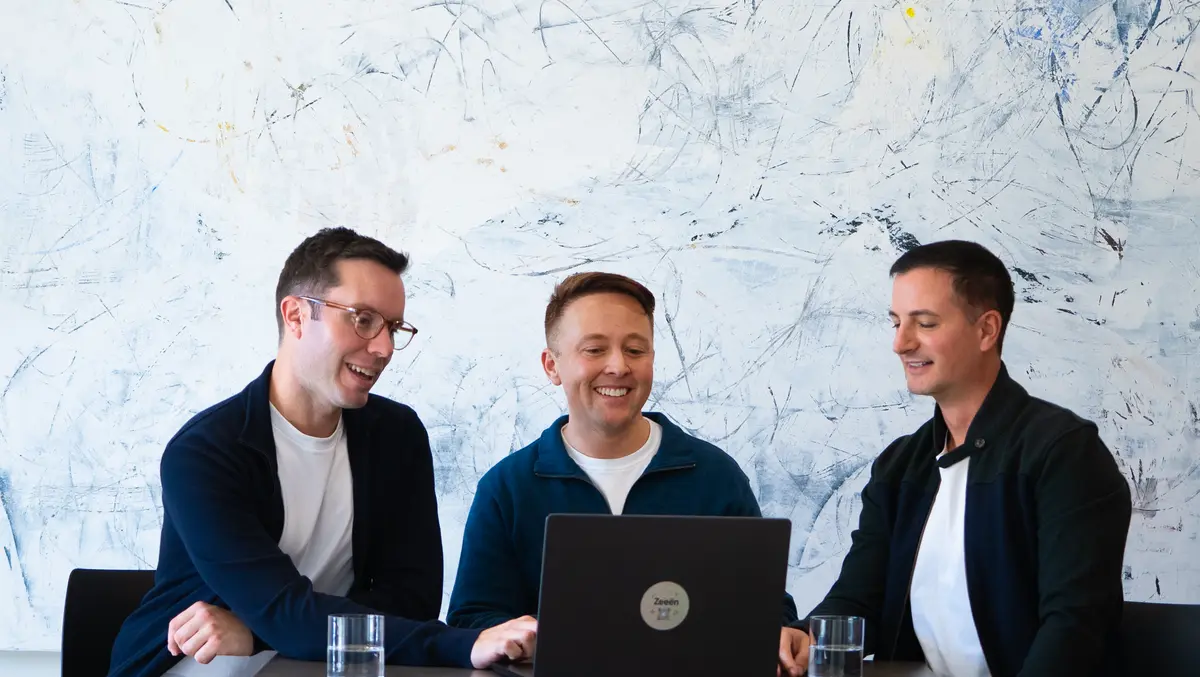
Zeeën launches app to help Australians make friends
Mon, 5th Oct 2026
Zeeën has launched its social discovery platform across Australia following a pilot that attracted more than 3,000 registered users within weeks.
The Australian-developed app is designed to help people build in-person friendships by showing them nearby users who share interests and common ground before they decide whether to connect. Its founders position it as a friendship and community tool rather than a dating app or conventional social media platform.
The launch comes as official data points to persistent loneliness and social isolation across Australia. Australian Bureau of Statistics figures show about one in six Australians aged 15 and over often feel lonely, while reporting from the Australian Institute of Health and Welfare shows almost half of adults feel isolated from others at least some of the time.
Zeeën was created after its founders moved from New Zealand to Australia and found it difficult to identify potential friends or contacts in everyday settings despite being surrounded by people. The platform lets users discover others in their broader area, compare shared interests and choose which profile information to make visible.
Safety settings are built into the product design. Users do not appear on a live map and retain control over their visibility, what they share and whether they interact with anyone they discover.
Jakob Parker-Smith, Co-Founder of Zeeën, said: "Social media makes it incredibly easy to connect with someone on the other side of the world, yet we can know almost nothing about the person living three doors away, working in the same building or sitting beside us at a café.
When we moved to Australia, we were surrounded by people every day, but there was no natural way of knowing who we might have something in common with.
The idea was to give people some context before that first interaction. If you can see that somebody nearby also runs, has a dog, follows the same sport or shares another interest, they no longer feel like a complete stranger but someone who is genuinely like-minded.
The app provides the accessibility and familiarity of digital technology, but the objective is still human connection in the real world."
Early user data released by Zeeën suggests people with common ground may often pass one another without realising it. Around one in three active users have verifiably crossed paths with another live user, while profiles viewed shared 58.8% of interests on average, compared with 35.1% expected by chance, according to the company.
Most active users are in Australia, which accounts for about 84% of the total. Brisbane represents 55% of users, followed by Sydney at 15% and Melbourne at 14%.
Changing patterns
Zeeën argues that shifts in work and migration are making it harder for people to build social networks. Government figures show more than one in three employed Australians usually work from home, while overseas migration has added hundreds of thousands of new arrivals, including international students, working holidaymakers and skilled migrants.
Parker-Smith said the platform was built to reduce the friction involved in meeting new people. "A lot of existing social platforms are built around people you already know, people you follow or content you consume.
We were interested in a different problem: how technology could help somebody understand who around them they may have genuine common ground with before deciding whether they want to interact.
The aim is not to replace real-world interaction. It is to make that first step less random and potentially less awkward."
Sarah Buckle, a Brisbane Psychotherapist, said broader changes in how people live and communicate have made relationship-building harder for some Australians. She pointed to greater mobility, work-driven moves between cities and countries, and more daily interaction taking place through devices.
Buckle said: "Connection, belonging and safety are basic human needs, but the way we live has changed enormously. People are travelling more, moving between cities and countries for work and living much more of their lives through technology.
The desire for connection has not disappeared, but there are more gaps people have to bridge to achieve it."
She said younger people can face particular difficulties if much of their social development has taken place online rather than face to face. Buckle added: "They still want connection and belonging, but some simply don't know how to create it offline. Approaching somebody new or putting themselves into an unfamiliar social situation can feel incredibly uncomfortable.
Loneliness is not simply about being physically alone. When people don't have that sense of connection, belonging or safety, it can feed anxiety and fear of rejection and make them less likely to put themselves into the social situations that could help them build relationships."
Parker-Smith said: "A lot of people want connection, but the hardest part is often the first interaction.
If technology can establish that somebody nearby is open to connection and that you already share some common ground, it can lower the barrier without removing the human part of the experience.
That is the gap we are trying to solve."