

Zoom launches AI Companion 3.0 with agentic workflows
Tue, 16th Dec 2025
Zoom has launched the latest version of its artificial intelligence assistant, AI Companion 3.0, adding agentic workflows, a new web interface and early features for personal automation and document creation.
The release marks a further shift in Zoom's strategy beyond video meetings and into broader workplace software and AI-based work orchestration.
AI Companion 3.0 is available through free-tier trials and as a standalone add-on. Zoom Workplace Basic users can test selected functions or buy AI Companion separately for USD $10 per month without upgrading to a paid Zoom Workplace plan.
New web interface
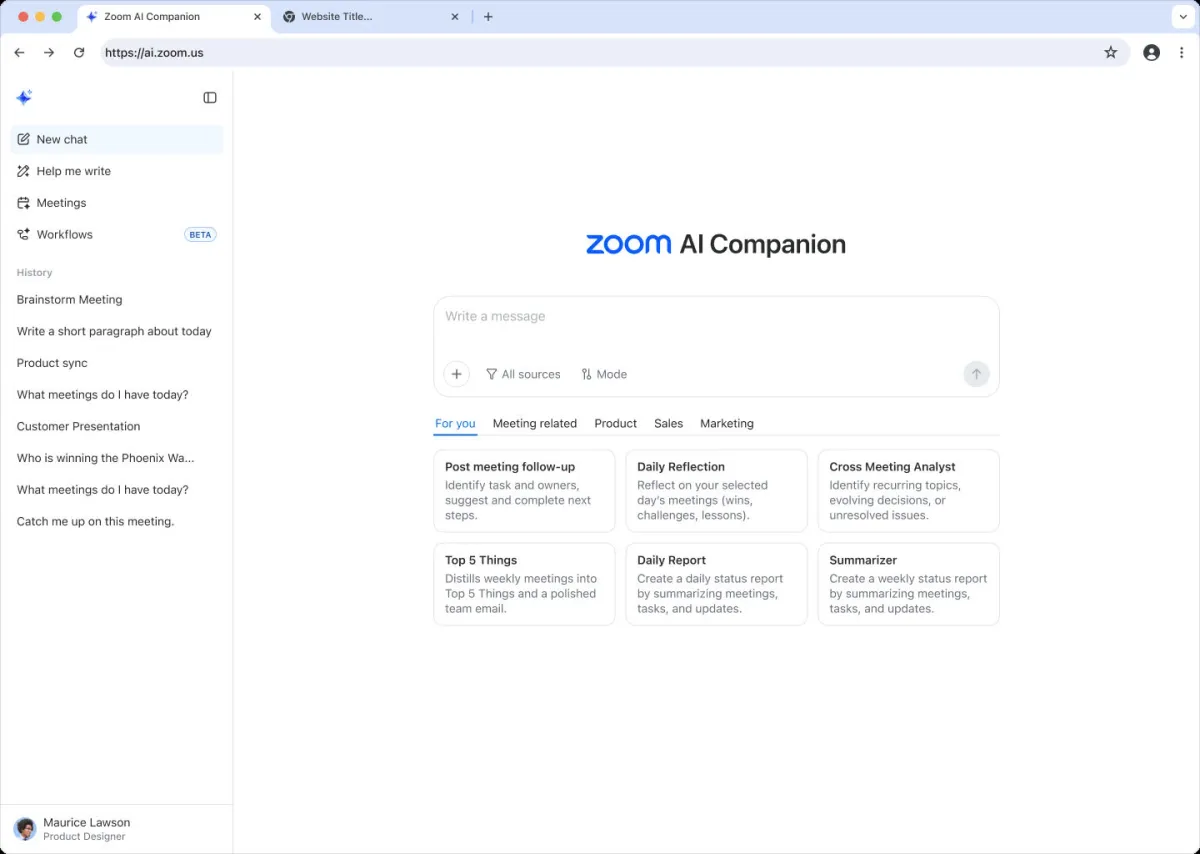
Zoom has introduced a browser-based interface for AI Companion at ai.zoom.us. Users can access AI tools from a desktop web browser rather than only inside meetings or specific Zoom apps.
The company said the new interface draws on data from work conversations and other assets. The system generates plans, briefs and insights based on previous meetings and related content.
Zoom has positioned the interface as a conversational work surface. The system uses past discussions and stored materials to assemble summaries, track progress and draft content. Users do not need to upload meeting transcripts or write detailed prompts.
"The launch of AI Companion 3.0 is a turning point for Zoom, continuing our transformation from a meeting company into a pioneer of AI-first intelligent work orchestration. By empowering our users with new AI Companion capabilities, we're helping them get even more done so they can focus on connection," said Velchamy Sankarlingam, President of Product and Engineering, Zoom. "Offering AI Companion's newest capabilities both as a standalone option and within paid Zoom plans reflects our core belief of democratising access to AI and providing users with intuitive solutions that can seamlessly understand their work context and help move conversations to completion."
Federated AI stack
AI Companion 3.0 runs on a federated AI approach. Zoom combines its own large language models and smaller language models with systems from OpenAI and Anthropic.
Customers can also use select open-source models. Zoom highlighted support for NVIDIA's Nemotron family of models.
Zoom said the combination of models sits behind its transcription and caption tools. The company said this approach improves the quality of output, including meeting transcripts, closed captions and translated captions. It said the system supports more accurate information retrieval and task execution.
"AI Companion 3.0 is the type of solution people need to get work done," said Kevin Kieller, Co-founder and Lead Analyst at enableUC. "People need easy-to-use, consistent, consolidated solutions, and that's exactly what Zoom is striving to deliver with AI Companion 3.0. Adopting this type of solution will help organisations be more efficient and collaborative, ultimately driving productivity across an organisation."
Security and privacy
Zoom said it will maintain its existing security and data handling policies as it expands AI features. The company encrypts customer data in transit between users and Zoom, between Zoom facilities and third-party model providers, and at rest on its own platform.
The company reiterated its stance on training data. Zoom said it does not use customer communications content to train its own models or third-party models.
Large customers have begun to integrate AI Companion into daily work. Oracle is one of the early adopters.
"AI Companion is changing the way teams at Oracle work, helping us turn conversations into clear next steps and actionable insights," said Christine Sarros, Senior Vice President, Enterprise Engineering, Oracle Cloud Infrastructure. "We look forward to the upcoming AI Companion 3.0 release and the new capabilities it offers to further enhance collaboration and productivity."
Agentic retrieval and writing
AI Companion 3.0 introduces a set of agentic functions. These functions search across Zoom Workplace content and some connected third-party applications.
The new agentic retrieval feature scans meeting summaries, transcripts and notes. It also accesses linked services such as Google Drive and Microsoft OneDrive. Zoom said support for Gmail and Outlook is planned.
Users can issue a Post Meeting Follow Up prompt template. The system then generates follow-up tasks and draft email messages based on meeting content and identified to-do items.
Another template, called the Daily Reflection Report, collects meetings, tasks and updates. It produces a summary of the working day.
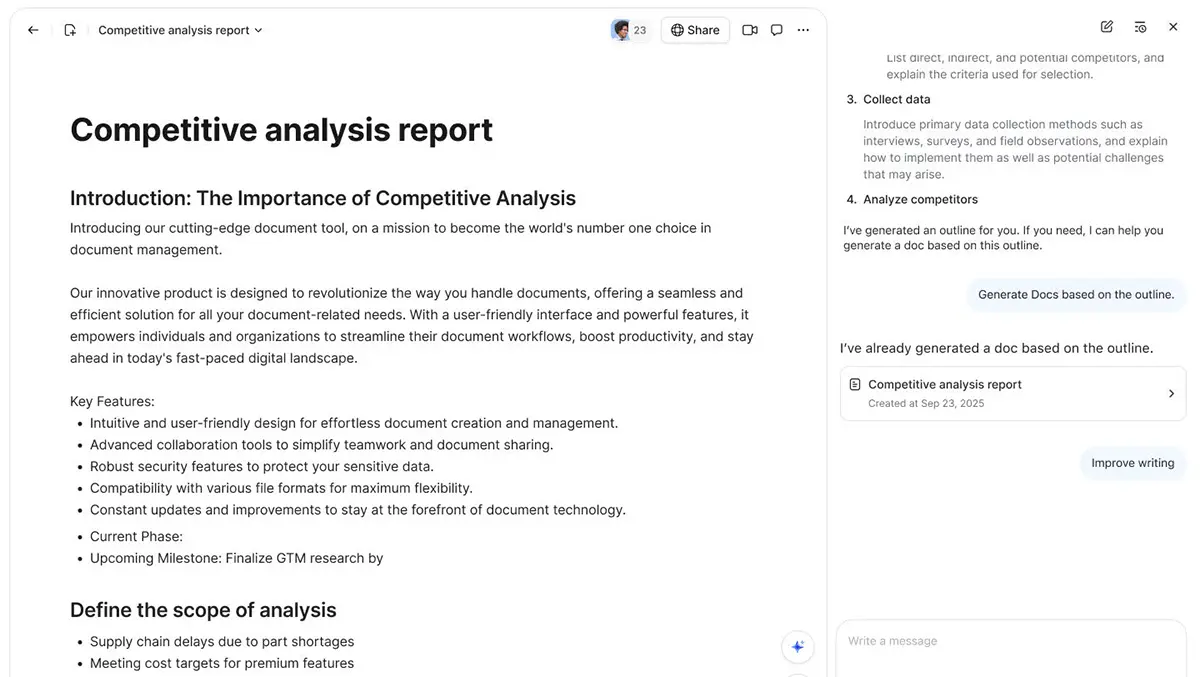
An agentic writing mode supports document creation and editing. The feature drafts and refines business documents using information from specific meetings or stored resources. Users can edit alongside the AI system in a shared canvas.
Users can export outputs in multiple file formats. Supported formats include MD, PDF, Microsoft Word and Zoom Docs.
Teams can continue writing and editing in Zoom Docs. The service supports shared commenting, version history and co-authoring tools.
Zoom has also added a brainstorming function. The feature produces ideas for new projects and presentations.
Custom AI Companion customers gain an additional deep research mode. This tool analyses several documents and meetings in parallel. It then produces consolidated insights and recommendations.
Notes and workflows
Zoom is also expanding AI Companion's role in note-taking and task automation. Some of these features are in beta or coming soon.
My Notes is a new service that collates meeting information. It uses AI Companion's transcription tools across in-person sessions, Zoom Meetings and some external meeting platforms.
The company said My Notes will gather key details in a single place. It then links these notes with other AI Companion workflows.
Personal workflows are now in beta. The feature automates follow-up actions, such as compiling insights from meetings and documents and generating a daily reflection report.
Users can also automate summary delivery for Team Chat threads. AI Companion can summarise conversations and send key highlights each morning.
Some personal workflow functions depend on account type and may have usage limits. Zoom said beta availability varies by customer.
Users can start content work in the web interface and then move it into Zoom Docs. They can also originate work inside Zoom Docs. The underlying AI and context-awareness remains the same across both surfaces.
Zoom plans new agentic writing and data table features inside Zoom Docs. The company said these will support content creation and project collaboration.
"At G42, we're thrilled about the possibilities that Zoom AI Companion 3.0 brings to us," said Ali Dalloul, CSO and Americas CEO at G42. "The new web-based work surface allows some of our divisions to experience Zoom's agentic AI capabilities firsthand. It's an exciting step toward a more connected, intelligent, and productive workplace."
"Through our collaboration with Zoom on AI Companion 3.0, NVIDIA Nemotron open models are helping power the future of work," said Kari Briski, Vice President of Generative AI Software at NVIDIA. "Nemotron enables advanced reasoning and retrieval-augmented generation within Zoom's federated AI stack, creating a private, powerful, and personalised work environment that enhances productivity for every enterprise customer."
Zoom said it will continue extending AI Companion across its wider platform. The company plans further agentic features that span meetings, chat, documents and other workplace tools.