Cloud stories
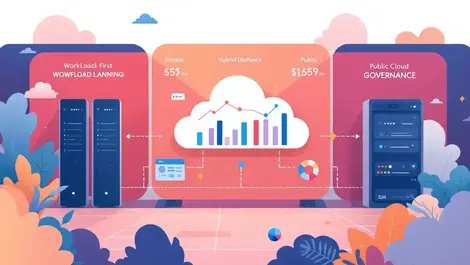
Poor workload choices can drive higher cloud bills and weaker governance as firms race to replace ageing kit and meet AI demands.
The move could speed up vehicle software integration by more than 10 times, cutting dependence on hardware benches and test rigs.
Partners in five launch markets will gain access to KUKA's autonomous mobile robots as TD SYNNEX pushes into industrial automation.
The deployment gives regulated firms in France a locally controlled option for finance software amid tighter scrutiny of data sovereignty and cloud compliance.
Melbourne's faster approvals are helping it pull ahead of Sydney, as Australia's data centre pipeline expands by 5.2GW and shifts beyond the east coast hubs.
Cloud customers could gain extra protection against automated attacks as Oracle and F5 plan to embed web application and API security into OCI.
Mid-sized firms face a policy blind spot that could slow AI adoption, despite contributing GBP £2.7 trillion in turnover in 2025.
It aims to cut downtime by telling plant operators not just that something is wrong, but which fault is likely and what to fix first.
The open-source stack aims to cut latency and boost accelerator use for AI workloads that now arrive in bursts and compete with interactive requests.
The update lets data pipelines keep running when bad rows appear, while malformed Python UDF records are captured in Cloud Logging for later repair.
Google says teams should judge AI coding agents on what they execute, after internal tests showed final replies can hide successful tool use.
The tools aim to help supply chain teams cut waste, balance scarce capacity and speed approved decisions across planning, logistics and procurement.
Biotech researchers could gain tighter control over sensitive data and slower simulations as Google Cloud separates planning, computation and oversight.
The deal widens access to AI inside corporate systems, with a free-to-start SMB bundle offering USD $12,000 in cloud credits a year.
The addition will give Oracle Cloud Infrastructure customers a faster option for AI agents, with Cerebras inference due in calendar year 2027.
The update aims to help firms and AI agents make better decisions from enterprise data by adding shared definitions, governance and planning tools.
The changes aim to reduce bottlenecks and outages for customers running large AI workloads across Oracle Cloud Infrastructure.
The platform is already running across more than 1,000 enterprise projects, with claims of faster releases, lower AI costs and less legacy risk.
Payroll and HR teams may cut rota-to-payroll processing by up to 90 per cent as the Oracle Cloud HCM tool moves into the X Cloud Platform.
The study could ease peak load pressure on Singapore's grid as AI demand rises, while testing whether data centres can help balance power use.