Modular data centre stories
Rising demand for AI and cloud services is pushing operators to spend on lower-emission facilities as the market heads towards USD $197.02 billion by 2031.
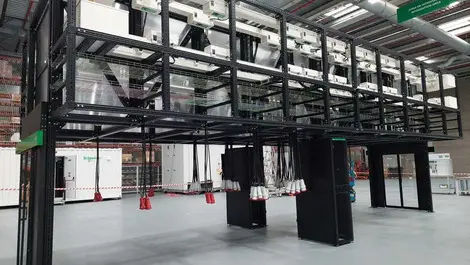
Rising demand for AI computing is pushing operators towards repeatable builds, and Schneider Electric says its new modular design can speed deployments.
Governments tightening energy and water rules are pushing data centre operators toward smaller sites that avoid grid delays and local backlash.
Adoption has climbed to more than 6,500 customers as businesses shift from AI pilots to on-premise production and weigh rising costs.
Rising AI-driven demand for faster data centre builds has prompted EfficiencyIT to add a veteran engineer to manage modular production risks.
The new venture aims to speed up AI infrastructure builds by factory-testing modular systems before they are shipped to customer sites.
The deal lifts DXN's AI high-performance computing order book to about AUD $21 million as demand for faster-deployed modular sites grows.
It lets cloud operators pair custom XPUs with NVIDIA's rack-scale systems, aiming to cut delays and integration costs in AI build-outs.
Rising AI heat loads are pushing data centres towards liquid cooling, as Echelon and Trinovium begin work on fluids and monitoring.
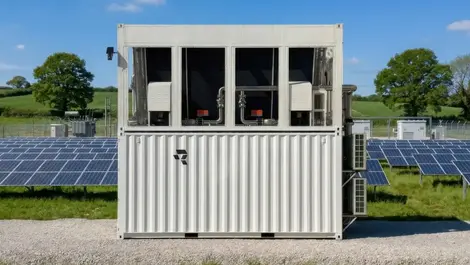
The modular units aim to ease AI compute bottlenecks by bringing 1 megawatt of capacity online in weeks, not years.
AI and data centre demand is forcing Vertiv's Asian resellers to rethink sales plans as the group marked a decade of partner summits in Johor.
Rising electricity demand is emerging as a bottleneck for AI deployment, with some training sites approaching 1 GW and facing delays.
The hire comes as Rubix races to secure sites and power for AI campuses, with an initial global portfolio of more than 8GW.
Rising demand for AI-ready power and cooling systems is reshaping channel work in Australia and New Zealand as customers move into deployment.
Demand is being lifted by edge and AI workloads, with the market forecast to more than double to USD $4.32 billion by 2030.
Customers and partners can now inspect integrated power and cooling systems in Singapore as AI data centres demand denser, more efficient infrastructure.
Operators facing surging AI demand can now test integrated cooling and power systems at a new Singapore facility for dense computing workloads.
Operators in Southeast Asia could speed AI capacity builds as Delta's modular system pairs liquid cooling with 800 VDC power for NVIDIA Vera Rubin.
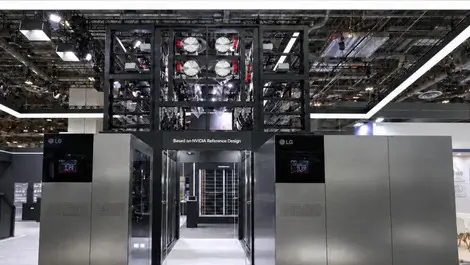
Operators facing soaring heat and power demands from AI servers may gain faster, more integrated infrastructure from LG's new offering.
Operators face lengthy delays for power kit as artificial intelligence and cloud demand pushes data centre expansion.