

Anthropic limits Claude Mythos over AI hacking fears
Wed, 22nd Apr 2026
Anthropic has restricted access to its new Claude Mythos artificial intelligence model after it identified previously unknown security flaws in major web browsers and operating systems. Financial regulators and cybersecurity specialists say the model signals a shift in the cyber risk facing banks and other critical sectors.
The San Francisco-based AI company limited Mythos to a small group of organisations in critical infrastructure and security research after internal tests showed it could independently uncover software vulnerabilities. Among them was a Linux kernel flaw that had gone undetected for almost three decades.
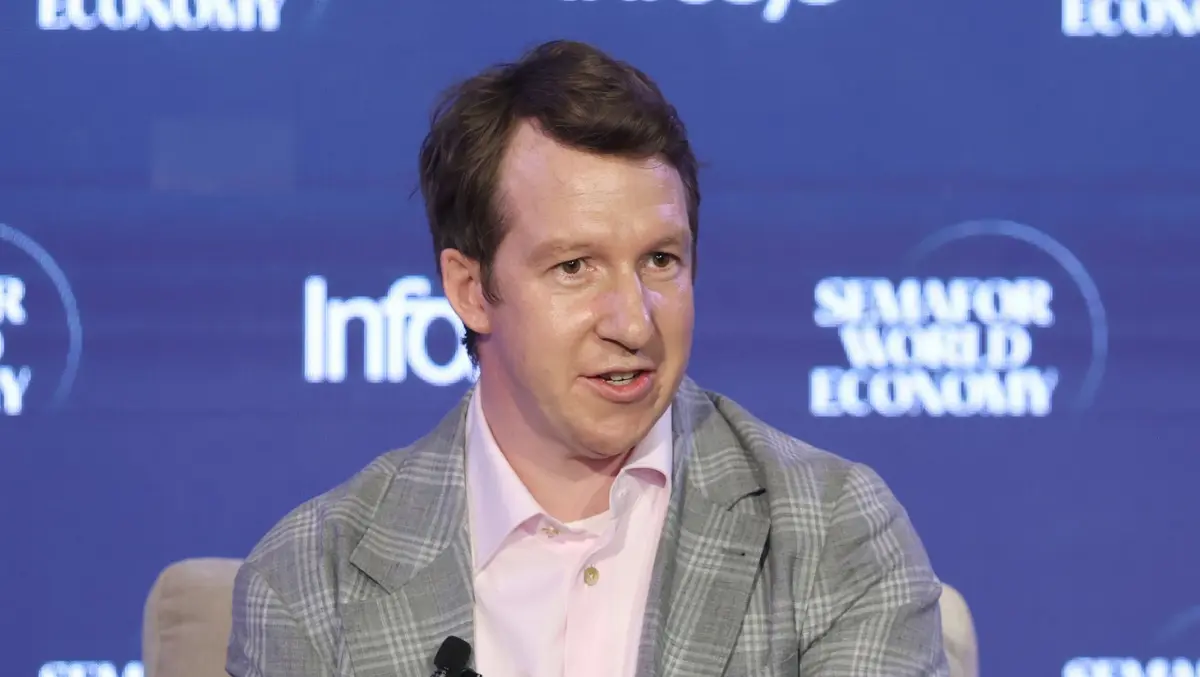
At the Semafor World Economy gathering in Washington, DC, Anthropic co-founder and head of public benefit Jack Clark described the current moment as an early sign of what more advanced AI models from multiple providers will soon be able to do. He warned that the broader technology ecosystem needs to prepare for a near-term future in which automated vulnerability discovery becomes standard.
"This is not a special model. There will be other systems just like this in a few months from other companies. And in a year to a year and a half later, there'll be open weight models from China that have these capabilities. So the world is going to have to get ready for more powerful systems that are going to exist within it," said Clark.
Clark said Anthropic had moved cautiously in deploying Mythos because of its ability to find and, in principle, exploit software weaknesses at machine speed. The company has worked with external partners on coordinated disclosure and patching.
Authorities in the United States and the United Kingdom have already engaged financial institutions on the implications. The US Treasury Secretary has convened leaders of major US banks to examine the risk to financial stability, while British banking regulators have held similar discussions with domestic lenders.
Senior bank executives have recently warned that AI-driven hacking tools could raise operational and market risks. They have pointed to concerns about the automated exploitation of zero-day vulnerabilities in trading systems, payment infrastructure, and customer-facing platforms.
Clark also sought to address questions about Anthropic's relationship with US defence agencies after a recent contracting dispute drew political attention.
"We have a narrow contracting dispute, but I don't want that to get in the way of the fact that we care deeply about national security. We always have as a company," said Clark.
The episode has prompted analysis from other technology companies working in cybersecurity and AI risk. Some industry figures argue that Mythos marks a turning point in how institutions think about systemic risk from frontier AI models.
Nik Kairinos, chief executive of RAIDS AI, said the AI system's discovery of a long-standing Linux vulnerability without targeted instruction illustrates the speed of change in automated security research.
"What makes Mythos significant is not only the capability, but what Anthropic chose to do with it. A frontier model, without instruction, surfaced a Linux kernel vulnerability that had gone unnoticed for 27 years. Restricting release to critical infrastructure partners is the right call, but it only buys time."
"When finance ministers, central bank governors, and the CEOs of major banks are publicly concerned about a single AI model, the framing has already shifted. We are no longer debating whether frontier AI creates systemic risk. We are watching institutions scramble to catch up to capabilities that are already in the wild."
"The harder problem sits downstream. You cannot prevent every zero-day from being found, by AI or otherwise. What you can do is monitor every AI system in your estate for anomalous behavior, in real time, with a continuous evidence trail. The organizations that instrumented their AI before this week are in a very different position from those still treating governance as an annual audit exercise," said Kairinos.
Security specialists at major technology suppliers have echoed the warning that Mythos reflects a broader shift rather than an isolated case. Thales executive Ansgar Dodt said organisations should now assume that adversarial AI will constantly test and reverse engineer their software products.
"We've been warning about this shift for a long time - AI is dramatically lowering the barrier to discovering and exploiting software weaknesses and accelerating it to a scale humans simply can't match."
"The implication is clear: organisations now have to assume their software and applications will be continuously analysed, deconstructed and stress-tested by adversarial AI."
"That demands a fundamental rethink of software protection. It is necessary not only to systematise the remediation of vulnerabilities after they are discovered, but also for developers to make it more difficult, from the design stage onward, for attackers to understand and exploit the code. That means protecting the application itself through encrypting code and sensitive data, obfuscating logic, and embedding runtime defences that actively detect debugging, tracing or tampering attempts and respond in real time, for example by preventing execution or invalidating access."
"Critically, protection also needs to be resilient, ensuring the integrity of the application and removing the clear seams of vulnerability attackers can exploit to separate and analyse code. The goal is to deny adversaries, and increasingly their AI tools, the visibility they rely on."
"An industrialised cybersecurity approach is needed to combine AI-augmented SOCs, AI-driven DevSecOps, automated patching and response (SOAR), advanced testing, and legacy system protection within a trusted framework. Cloud Security Alliance's recommendations and the upcoming Cyber Resilience Act (CRA) both emphasise integrating AI-based vulnerability analysis throughout the development lifecycle to prevent exploitation from the outset."
"Mythos Preview might never become public, but it's only a matter of time before we see models with comparable hacking abilities released by competitors out in the wild. Organisations need to act now to harden their applications against AI-driven analysis, or risk being exposed at machine speed. The conversation needs to move quickly from awareness to implementation. With the obligations under the CRA, failing to protect software applications from vulnerabilities can lead to reputational damage, potential penalties, product recalls, and loss of market access," said Dodt.