

Artificial intelligence express entry underused as fans queue in heat
Wed, 4th Feb 2026
Organisers at the Australian Open introduced an express entry system using artificial intelligence-linked identity checks, but many spectators did not use it and faced lengthy queues in extreme heat.
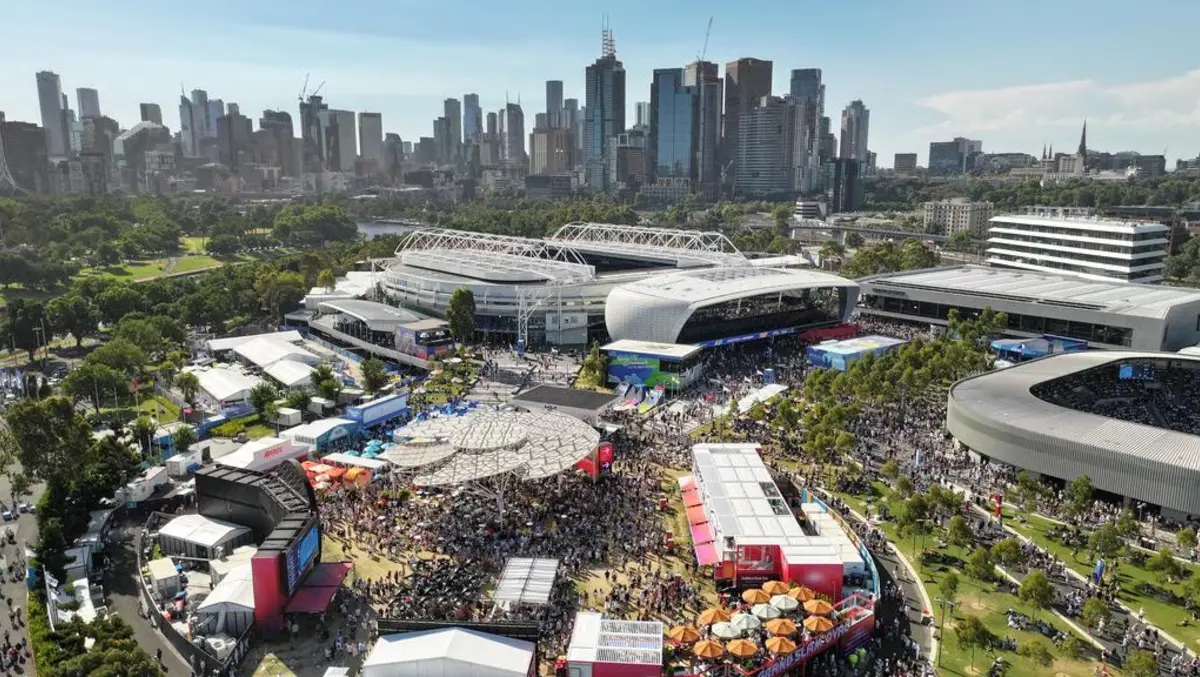
The Australian Open recorded 1,150,044 visitors during the tournament, which organisers said exceeded last year's total of 1,102,303. Opening week attendance also rose sharply. Organisers reported 217,999 people attended during qualifier matches, up from 116,528 in 2025.
The higher footfall placed pressure on entry points at Melbourne Park, where spectators have traditionally relied on manual checks and standard ticket scanning. This year, event staff introduced AO Express Entry. The system provided designated express gates for pre-registered attendees.
Spectators could register for free by uploading a selfie to their Ticketmaster account. The process linked the image to an entry credential for use at the express lanes. Once registered, users could walk through the designated gates instead of joining standard queues.
Not all spectators knew the service existed. Some attendees waited up to two hours to enter the grounds. The event also experienced near-40-degree heat on some days, exacerbating delays for people standing outside the venue.
Awareness gap
Joe De Martino, an artificial intelligence of things specialist at Dahua Technology, said organisers did not promote the express entry option widely enough.
"It is great to see organisers actively leveraging new technology in this way, though more could have been done to market to fans. We could have avoided long lines in what were some of the hottest days of the year. As a technology innovator, we want to encourage the win-win situations. Fans spending less time in queues are spending more time eating and drinking. That results in more revenue for stallholders."
The comments point to a broader issue for large venues deploying new systems at scale. Even when technology is available, consumer uptake can depend on how well the experience is communicated before spectators arrive at the gate.
Large sporting events also place demands on on-site retail operations. Food and beverage sellers typically see a sharp rise in transactions once spectators enter the venue, particularly around session changes and between matches. Long entry queues can shift those peak periods and reduce the time spectators spend inside the grounds.
Security role
De Martino also said similar technology could play a role in security operations at a venue the size of the Australian Open, which spans dozens of courts and multiple public areas.
The Australian Open grounds include 39 courts. The largest arena seats 15,000. Security teams manage public spaces and restricted areas used by players, officials, and staff.
De Martino described several ways that AI-based systems can analyse surveillance feeds and flag issues for security teams: "AI technology can run real-time target searching to identify suspicious items and individuals, automatically alert on-site security to incidents, and integrate with emergency response systems."
"It can also detect intruders in restricted access zones, such as player tunnels where these elite athletes want safety and privacy when they aren't performing," said De Martino.
The Australian Open has expanded its programme in recent years and introduced new initiatives to increase engagement. Organisers said this year marked the first tournament to feature the One-Point Slam, which connects amateur players with professionals.
Higher volumes of people can increase the complexity of venue management. Crowd flows change across the day, with pressure on transport links, entry gates and internal walkways. The combination of intense heat and long waits can also increase the risk of medical incidents at the site perimeter.
De Martino pointed to a separate security incident in Melbourne as a reminder of the limits of manual screening. He cited an incident in which a gun was brought into the Melbourne Cricket Ground after bypassing manual checks.
Dahua Technology supplies security and surveillance systems. The company describes its focus as artificial intelligence of things, which combines AI processing with connected devices and sensors.
Venue operators globally continue to test biometric and image-based entry methods, often alongside traditional ticket scanning. Adoption has raised questions about privacy, consent and data handling, particularly when services rely on third-party ticketing accounts and centralised identity checks.
For event organisers, the key operational issue remains gate throughput during peak arrival windows, alongside a security posture that can adapt to changing risk profiles. De Martino said systems that automate detection and alerts can form part of that approach.