


Samsung Australia has published new consumer research on winter laundry habits, suggesting energy cost concerns are shaping how many Australians dry clothes at home.
The survey of 1,001 Australians found that 62% avoid using a dryer in winter because of concerns about household energy costs. It also found that 22% avoid hosting friends and family because they feel embarrassed by clothes drying indoors, rising to 33% among people aged 25 to 29.
The data points to a link between cost pressures and household routines. Two in five respondents, or 41%, said they feel more pressure now than at the same time last year to avoid using a dryer to reduce costs.
Half of respondents said they worry about energy use every time they run a dryer. Among those aged 25 to 34, 47% said they feel stressed when it rains because they cannot dry clothes outside, rising to 54% among those aged 35 to 39.
Indoor drying also appears to affect how people view their living space, with 44% agreeing their home feels cluttered and chaotic when clothes are drying on an indoor rack.
Household strain
The survey suggests the issue goes beyond appearance. Almost half of respondents, or 48%, said they do more loads of washing in cooler seasons because they wear more layers, adding to the weekly burden of laundry when outdoor drying is less reliable.
For a third of Australians, those extra winter loads are added to an existing routine of three to four washes a week. Among people aged 18 to 24, that rises to five to six loads a week.
Views were also divided on the most efficient way to wash clothes. A quarter of respondents, 24%, said smaller, more frequent washes save more energy, while 45% said fewer, larger loads are more efficient.
Phil Gaut, Director - Consumer Electronics, Samsung Australia, said many consumers are still relying on assumptions formed around older appliances.
"Australia is famous for its incredible weather and we're used to getting through laundry loads using the clothesline in the backyard. In fact, part of our collective cultural identity is based on our passion for spending time with our friends and family outdoors," Gaut said.
"Come winter, as we spend more time indoors, we are choosing to be surrounded by wet washing rather than our mates because we're concerned about using the dryer. Not only are heat pump systems significantly more energy-efficient than old vented or condenser dryers, they also operate at cooler temperatures, which tend to be kinder to your clothes. With AI being leveraged to reduce energy by 20% on each load, there is no need for Australians to go dark when the clouds do," he said.
Product angle
Samsung used the research to highlight newer laundry products that use heat pump systems and software settings designed to reduce electricity use. Some dryers now carry 10-star energy ratings, and Samsung said its AI Energy Mode can reduce wash energy use by up to 20% per load and dryer energy use by up to 10% per load on certain models under test conditions.
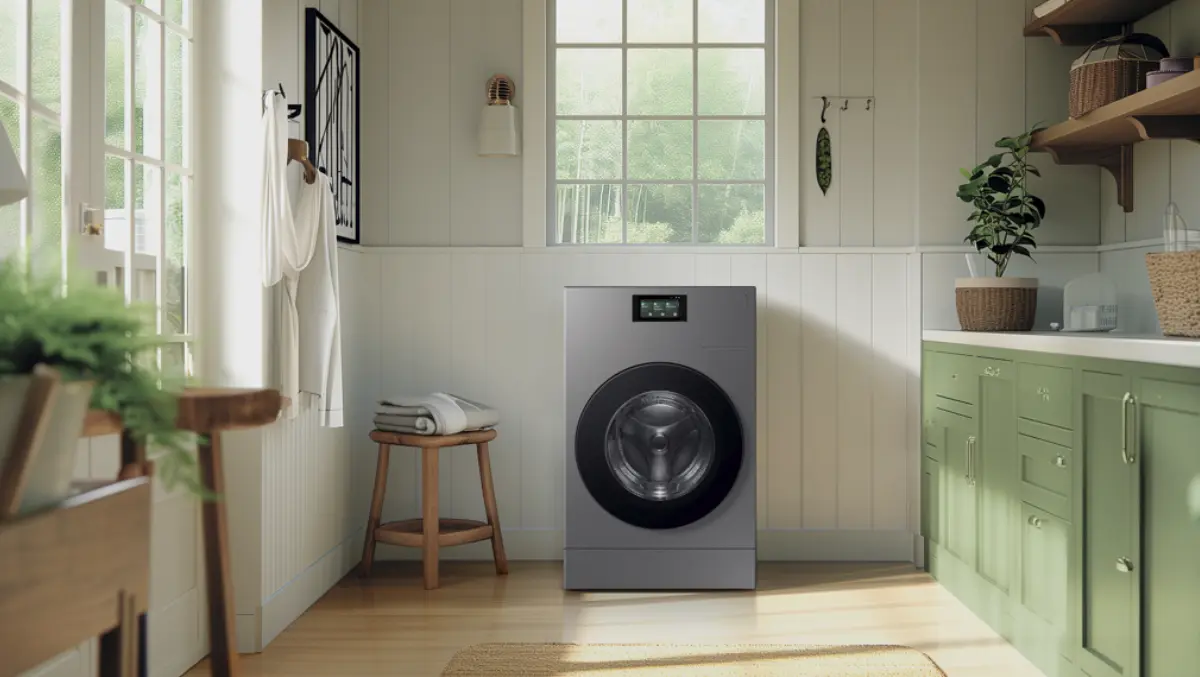
One model cited was the 19.5kg Bespoke AI Combo, which Samsung described as the largest washing machine on the market. It also said consumers should match machine size to household needs so loads are not run half full or packed beyond their intended capacity.
Samsung also said paired washer and dryer sets that communicate with each other can help simplify routines. The pitch comes as appliance makers increasingly frame laundry products not only around cleaning performance, but also household efficiency, energy management and time savings.
Gaut outlined Samsung's recommendations for households trying to cut winter laundry costs.
"There are a few simple things Australians can do to overcome their winter woes in the laundry," he said.
"It starts with selecting a washing machine and dryer that are the right capacity for your family to make sure loads aren't overloaded or running half full. Pair your washing machine with a heat pump dryer with a 10-star energy rating that further leverages AI Energy Mode to boost efficiencies with every load. Finally, choose a washer and dryer set that are capable of communicating with one another. This will help streamline your laundry routines, giving you time back to do the things you love. With these tips in mind, even the biggest washing machine on the market, the Samsung 19.5kg Bespoke AI Combo, is capable of achieving up to 20% energy savings per wash load and 10% energy savings per dryer load," Gaut said.
Samsung framed the results as evidence that appliance running costs are influencing social behaviour as well as purchasing decisions, particularly during winter when outdoor drying becomes less practical and laundry can spill into living spaces.
"With a range of intelligent and energy-efficient laundry solutions available, Australians don't need to choose between saving energy, spending time with their loved ones, and having a clutter-free home," Gaut said.