

Business Beyond Boundaries: The future of display technology in 2026
Tue, 23rd Dec 2025
Display technology is entering a new era - one where screens do far more than present information.
By 2026, commercial displays will increasingly operate as intelligent, adaptive and fully integrated business endpoints, supporting real-time engagement, operational efficiency and data-driven decision-making.
As organisations across retail, hospitality and other service-driven industries navigate dispersed operations, hybrid service models and increasingly digital customer interactions, displays are transforming from static tools into connected, dynamic platforms. They are becoming embedded across workflows - from frontline service to back-office coordination - enabling organisations to operate beyond physical boundaries while maintaining consistency, speed and control.
This shift reflects a broader rethinking of what display technology is for. Rather than acting as a final output layer, displays are becoming part of the operational fabric of modern organisations. Samsung, among others, has been closely aligned with this evolution, positioning commercial displays as active participants in business systems rather than peripheral devices.
Three key innovation drivers are shaping this transformation and redefining what display technology will deliver in 2026.
The rise of displays as digital infrastructure
Connectivity is emerging as the foundation of next-generation display environments. Instead of operating as standalone screens supported by external hardware, modern commercial displays are increasingly designed to integrate directly with enterprise platforms and operational systems.
This evolution enables displays to function as connected business endpoints - synchronising information in real time across large estates. For retailers, this may mean rapidly updating pricing or promotional content across multiple locations. For hospitality operators, it enables consistent guest messaging, wayfinding or event information across venues.
Enterprise-ready wired and wireless connectivity supports both reliability and scale, while growing interoperability reduces friction with existing content management systems and collaboration tools. The result is faster deployment, simplified updates and lower operational overheads.
Samsung has been investing in this connectivity-first approach, embedding enterprise-grade networking and platform compatibility into its commercial display strategy. By focusing on integration and centralised control, the company is aligning display technology more closely with how large, distributed organisations actually operate.
The evolution of AI-driven intelligence in display ecosystems
Artificial intelligence is becoming an increasingly important layer within display technology, helping organisations move beyond manual scheduling and static content planning.
Rather than relying solely on fixed programming, AI-enabled displays are beginning to support dynamic content adaptation - adjusting what is shown based on timing, context or operational inputs. This allows information to remain relevant without constant manual intervention, reducing workload while improving effectiveness.
AI-assisted scheduling and optimisation tools also help determine when and where information should appear, improving clarity and visibility across both customer-facing and internal environments.
In retail or hospitality settings, this can support more timely and contextual messaging, while in collaborative or operational spaces it can improve layout, focus and responsiveness.
Samsung's approach to AI within display environments has centred on practical application. Rather than pursuing automation for its own sake, the emphasis has been on identifying where intelligence meaningfully improves workflow efficiency, content relevance and collaboration - particularly for organisations managing complex or distributed teams.
Performance and resolution: raising expectations across environments
While connectivity and intelligence are reshaping how displays operate, performance remains a critical differentiator. Higher resolution, increased brightness and improved clarity are fast becoming baseline expectations across both customer-facing and operational use cases.
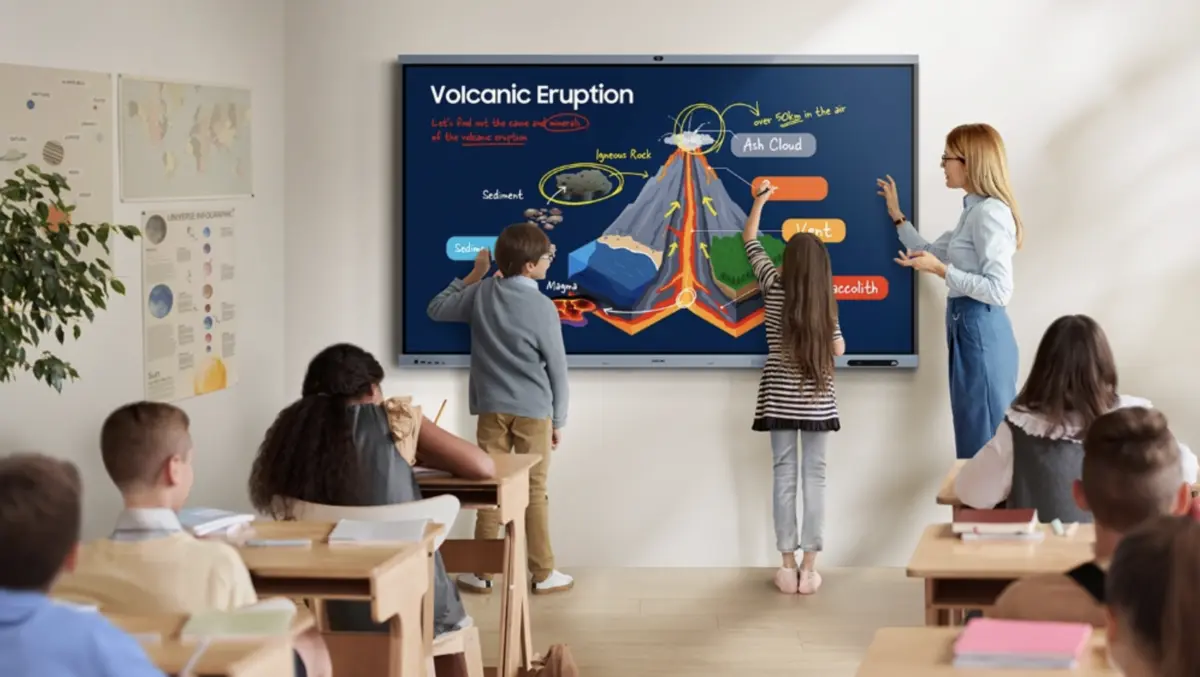
Large-format, high-resolution displays are increasingly deployed in lobbies, retail environments, entertainment venues and operational command areas, where visibility must remain consistent across varied lighting conditions. At the same time, interactive displays are evolving to support more natural collaboration, training and planning through multi-touch input, annotation tools and wireless content sharing.
These advances enable organisations to deliver immersive visual experiences while also supporting practical needs such as onboarding, hybrid meetings and real-time coordination. For manufacturers such as Samsung, this has meant balancing hardware innovation with flexibility - ensuring display solutions can support multiple environments and use cases without compromise.
What this means for organisations in 2026
By 2026, commercial displays will no longer be viewed as peripheral tools. They will form a core part of digital infrastructure - connected, intelligent and deeply integrated into daily operations.
Organisations that embrace this shift stand to benefit from faster decision-making, more consistent execution across locations and improved engagement with both customers and employees. As display technology continues to converge with cloud management, enterprise connectivity and intelligent automation, the distinction between "screens" and "systems" will continue to blur.
In this environment, organisations will increasingly look to established partners such as Samsung to help navigate the transition - combining innovation with reliability, scale and long-term operational thinking.
The result is a new generation of displays that don't just show information, but actively support how modern organisations operate, adapt and grow in an increasingly connected world.
To find out more about Samsung's business display offering, please click the link below.