

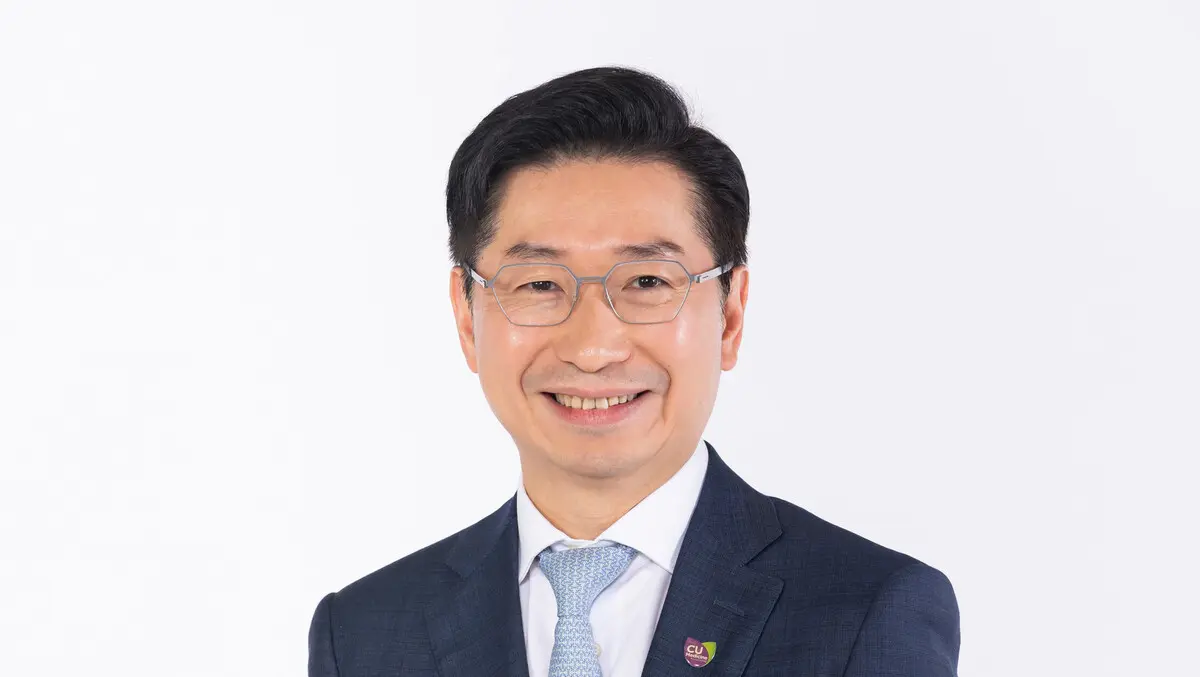
CU Medicine's Philip Chiu: Surgery goes digital, but the surgeon stays
Tue, 27th Oct 2026 (Today)
Imagine a world where surgery is not only safer and more precise but faster and more affordable for everyone. That's a vision being brought to reality through the syncretic fusion of artificial intelligence, robotics and human surgical skill, with Professor Philip Chiu Wai-yan, Dean of the Faculty of Medicine at The Chinese University of Hong Kong (CUHK), leading work towards a future where operations are a partnership between people and machines.
"When AI and robotic systems are combined, they deliver better results: surgeons gain tireless assistants that handle delicate tasks with unwavering consistency, patients recover more quickly with smaller incisions and fewer complications, and hospitals can serve far more people by shortening stays and expanding capacity," said Chiu.
As with technology in other fields, in medicine generally and surgery specifically, life-saving care once limited by cost, skill barriers or geography is becoming widely available, turning the promise of advanced technology into reality.
Cracking the da Vinci code
The potential is considerable, and will be amplified as technology in multiple fields advances. As Chiu explained, robotic surgery is a relatively new introduction to the medical field, emerging around two decades ago as a technological solution to the constraints of conventional minimally invasive surgery.
Early systems, pioneered largely by a single manufacturer (Intuitive Surgical's da Vinci platform), overcame the limitations of rigid instruments and restricted degrees of freedom inside body cavities such as the abdomen and thorax.
They enabled more precise movements in confined spaces, with the best-known early application being radical prostatectomy. In the pelvis, the robot facilitated fine suturing of the urethra to the bladder neck after resection, which Chiu said is an operation requiring millimetre-level accuracy.
Similar advantages appeared in rectal surgery, hysterectomy and thoracic procedures such as oesophagectomy, where the robot improved the quality and number of lymph nodes retrieved while reducing the risk of injury to critical structures including the heart, lungs, aorta and recurrent laryngeal nerves.
Chiu, an upper gastrointestinal surgeon who also co-directs CUHK's Multi-Scale Medical Robotics Centre, sees the robot itself as just part of the story; AI is increasingly writing its own chapter.
The ultimate aim, he said, is not simply to replicate robotic surgery as it exists today. "It is to convert surgery from the analogue to a digital scale. Because right now, with the robot and the imaging, every single action and also every single pixel is a data point."
He said robotic surgery still accounts for perhaps 5% of operations worldwide, and the picture inside his own hospital is instructive. "When we look into our operating room in the hospital, out of the 25 or 20 something operation rooms, we only have one robot," he observed.
Independent figures broadly back him up. Consultancy Oliver Wyman has estimated robotic assistance is used in roughly 2% of surgeries across Europe and about 15% in the US. Market leader Intuitive reports around 3.15 million da Vinci procedures were performed in 2025, up 18% on the year before, and expects a further 13% to 15% growth in 2026.
Flexible thinking
Chiu's own clinical and research programme has focused especially on flexible endoluminal robotics. For early gastrointestinal cancers of the stomach, colon, rectum or oesophagus, endoscopic submucosal dissection (ESD) can remove the lesion while preserving the organ and yielding five-year survival rates above 90% without chemotherapy or radiotherapy.
Conventional ESD is technically demanding because the surgeon must control a flexible endoscope and a cutting instrument simultaneously through a single channel, Chiu explained. CUHK teams have therefore developed flexible robotic platforms that provide independent arms and an independent camera, reducing the skill barrier, improving safety and shortening procedure time.
Chiu performed the world's first robotic gastric ESD in 2011 and the first robotic colorectal ESD in 2020.
These efforts sit inside a deliberate institutional architecture. Since 2013, CUHK's Chow Yuk Ho Technology Centre for Innovative Medicine has brought engineers and surgeons together. In 2020, CUHK's Faculties of Medicine and Engineering established the Multi-Scale Medical Robotics Centre (MRC) with major support from the Hong Kong government's InnoHK scheme for a 10-year programme.
Directed by Chiu and Professor Samuel Au (Department of Mechanical and Automation Engineering), the centre concentrates on endoluminal multi-scale platforms for diagnosis and therapy, magnetic-guided systems, image-guided interventions, nano- and micro-robotics, and tele-operation.
It maintains a reciprocal laboratory arrangement with Imperial College London and collaborates with ETH Zurich, Johns Hopkins University and the Technical University of Munich. A hybrid operating theatre at the Hong Kong Science Park allows joint animal and cadaver testing so that mathematical models can be evaluated immediately against real tissue.
Embodied, not isolated
While surgical robotics enjoys an established and growing estate, AI is newer still - and holds similar potential, particularly in combination with precision machines.
Chiu drew a clear line between software that offers suggestions and AI built into the robot itself. "It has to be embodied AI; it cannot be isolated," he said. "And the AI serves as an assistant and cannot replace the surgeon."
This is more than a talking point. In July 2025, a CUHK team including Chiu and Au published research in Science Robotics showing AI automating assistive tasks such as tissue retraction and vessel clipping in a live-animal trial, on the Sentire system from Au's company, Cornerstone Robotics. "We are now testing this AI system based on imaging and it seems to be working very well," Chiu confirmed.
He was realistic about machine error, too, noting that human mistakes are forgiven far more readily than those of a machine. "We understand that human will make error… But we have the concept that the machine shouldn't make any error, and that is not true."
Which is why, he said, CU Medicine continues to stress "the teaching of empathy, communication, and ethical practice as a professionalism, because that is something at this moment that we believe couldn't be replaced by machinery."
Finally, asked what the biggest challenges are in this multidisciplinary field, Chiu smiled and said communication is the hardest part. "We speak different languages," he said, though English is the lingua franca.
Engineers, as he put it, are from Mars and surgeons from Venus; the former chase precision through mathematical modelling and control. "Compared to Engineers who focus on precision through algorithm and modeling, Surgeons perform precise operations with a taste of artistic skills." More than that, and again with a grin, Chiu added that to enhance collaboration between engineers and surgeons, surgeons must have an open-mind to share important clinical questions, while engineers will find the solutions through listening to surgeons' feedback. "This is the successful interdisciplinary collaborative model of CUHK," he said.