

Exclusive: How NXT TEC. makes five-week homes possible
Fri, 29th Aug 2025
A home built in just five weeks sounds impossible.
For Natasha Di Ciano, founder of NXT TEC., and her co-founder and inventor Mataki O'Goshi Lim, it is not only possible but essential in tackling the housing crisis in Australia and beyond.
"We established NXT TEC. because we were motivated to create a solution to the global housing crisis," Di Ciano explained. "Since well before the current Australian housing crisis, we identified that the need for safe and stable housing is critical worldwide, and it is essential to the wellbeing of individuals and society as a whole. Our technology enables more homes to be built globally through a model that delivers speed, quality and sustainability."
Founded in 2015 in Western Australia, NXT TEC.'s patented "superstructure" building technology is a prefabricated system made up of 11 precast components, from piles and footings to beams, columns, walls and roof, which are designed to assemble together.
"The whole structure, from the foundation to completion, is precision designed and prefabricated offsite," she said. " The components are brought to site and the structure can be assembled in four days, and locked up with all windows and doors, and then the finishes completed in weeks. That's how the technology is able to deliver a completed home in five weeks."
Time, cost and sustainability
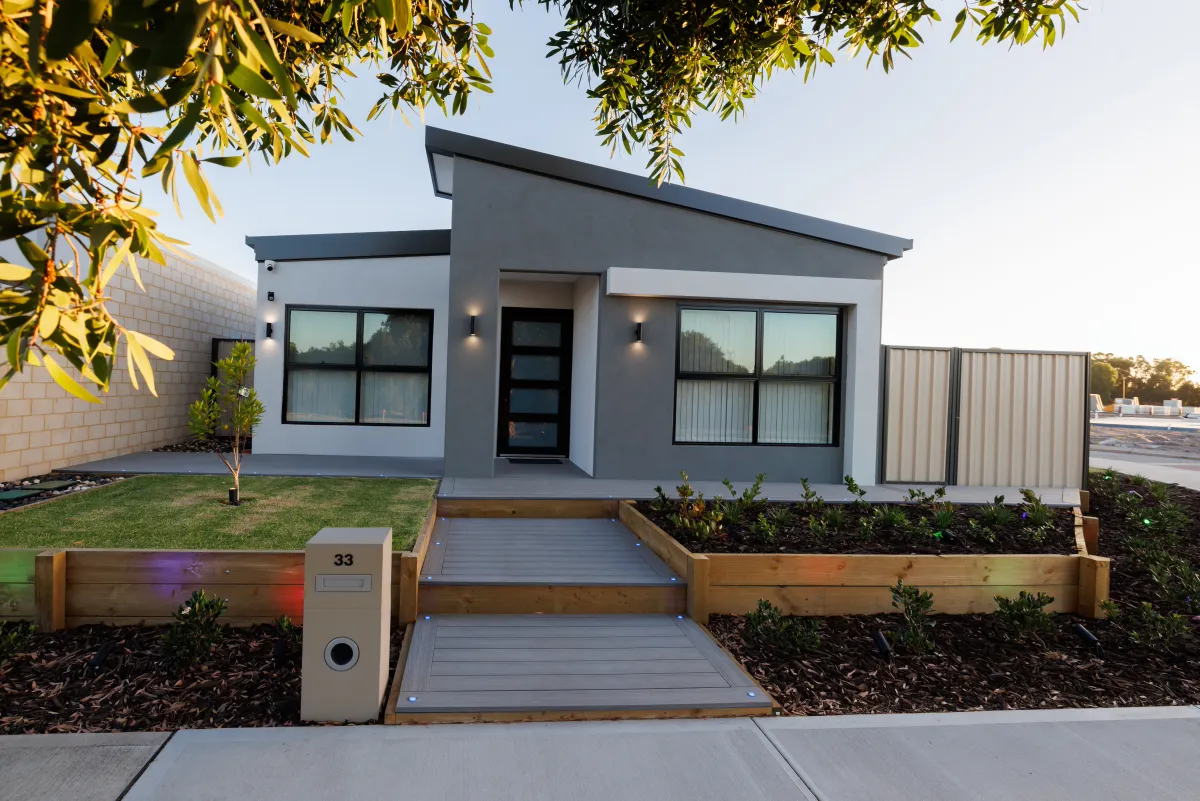
The company highlights efficiency as its greatest advantage. Traditional construction can take around two years to finish a home. By contrast, NXT TEC.'s five-week display project was 20 times faster and reached completion with turnkey delivery, including interiors and landscaping.
"By manufacturing building components to our strict standards, we are able to reduce cost, time and waste, whilst maintaining quality," Di Ciano explained. "In traditional construction you often order 20 per cent more material than needed, and that waste is money as well as an environmental issue. Our fabrication process is precise. Some other prefabricated building products can offer part of a solution, but we deliver a complete package and tick all four boxes: time, cost, environmental impact and quality."
Sustainability is central to their model. The display home achieved a 7.8-star NatHERS energy rating, well above the national standard. "Our technology produces little to no waste on site," she said. "We also localise manufacturing near project sites, cutting transport emissions and supporting local economies."
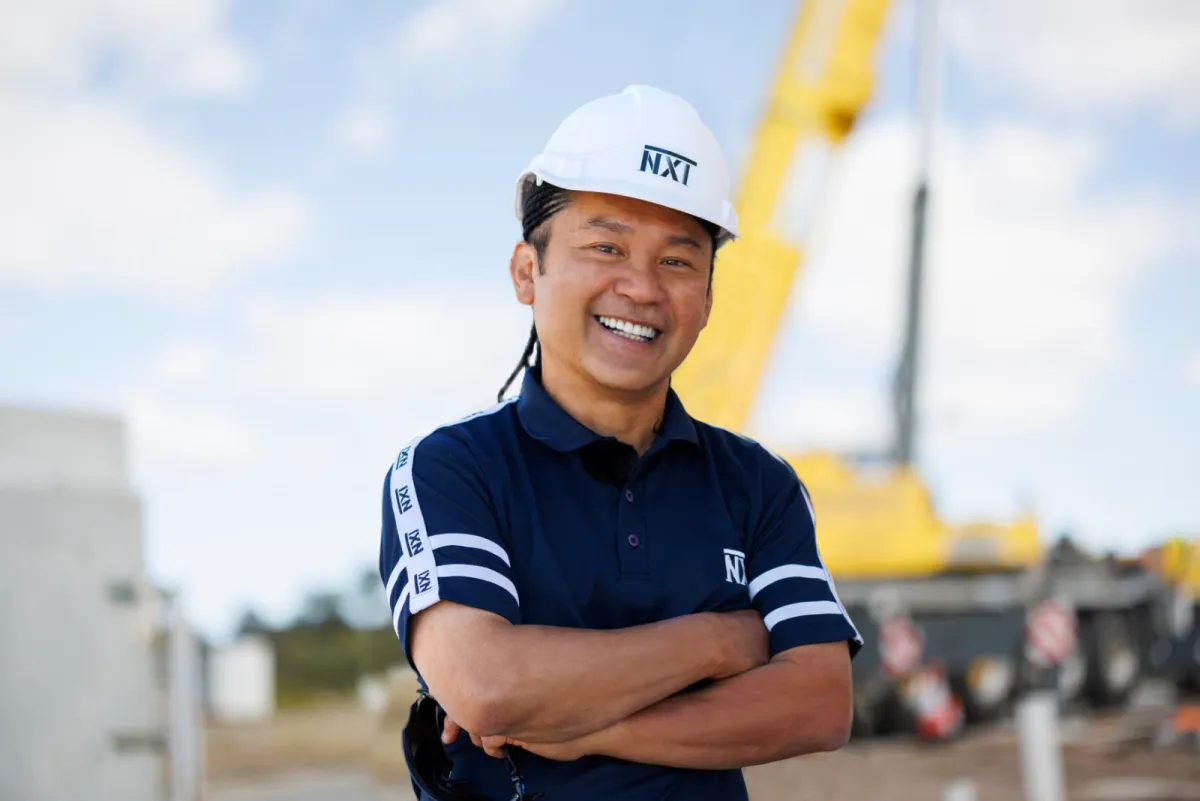
Standing alongside Di Ciano since the company's inception is Technical Director and inventor Mataki O'Goshi Lim.
With more than three decades in design, engineering and construction, Lim describes NXT TEC.'s system in strikingly simple terms.
"Our superstructure is like the human skeleton," he explained. "The footings are the feet, the columns the legs, the beams the hips, and the roof the head. Once you understand that, you understand how our system works. We can lock up a house in four days because we've designed every part of the structure to work together."
For Lim, the drive goes beyond engineering. "Every second the world's population increases but the planet doesn't grow bigger," he said. "What humanity needs now is shelter, food and medical care. My role is to put a shelter on people's heads."
He also believes the housing industry has become overcomplicated and unaffordable.
"The building industry is getting harder and more expensive every year because of time and specialist costs," he explained. "Our system strips it back to basics. A house is just a box with a roof, doors and windows. With our superstructure technology, it's no longer complicated."
Lim is philosophical about his mission. "Yesterday is history. Today is a gift. The next second is a surprise. The world changes every second, and with every second we run out of time, it is proven in how the world has daylight saving. Time is not a resource we can afford to waste - we must create a building system that delivers four priorities, speed, budget, high-quality and green housing."
Tackling Australia's housing shortage
The challenge facing Australia is stark. The federal government's National Housing Accord aims to build 1.2 million new homes over five years, or 60,000 each quarter. Yet in the first quarter of 2025 only 43,517 homes were completed, four per cent fewer than the previous quarter. Housing starts rose by 14 per cent to 47,645, but completions remain well short of targets.
Immigration alone adds 650,000 people to the national population each year, requiring 250,000 homes annually. At present only 160,000 to 180,000 residences are built per year. Western Australia has the worst undersupply, with just 48 per cent of required homes delivered. Nationally, the shortfall is esti mated at 200,000 to 300,000 dwellings.
"The biggest way our technology addresses the housing crisis is that we can manufacture homes quickly and supply more to the market," Di Ciano said.
"Through our technology licensing model we can also bring in manufacturers and builders across Australia to deliver at scale."
Interest is strong. "We get phone calls every day," she added. "From manufacturers, builders and developers who want to deliver projects with our technology. Social housing, rental housing, ownership - all markets are affected."
Beyond Australia: a global model
Globally, the challenge is even more severe. Around 2.8 billion people lack adequate housing and basic services, with 1.12 billion living in slums and a further 300 million homeless. Developed economies face a collective shortfall of 6.5 million housing units. Europe alone requires 9.6 million new homes to meet demand, while the US deficit stands at a record 4.7 million units.
"Our primary target market is the US," Di Ciano said. "There is a clear need there for resilient housing, given the hurricanes and fires. We've signed agency agreements and are preparing for a public listing in the US because it is a technology-focused market."
Other regions are also in sight, from India and Africa to Asia and Latin America.
"Housing is required everywhere," she explained. "We are not just providing housing, but also transferring knowledge and creating jobs in local economies. Governments are looking for long-term solutions, not just imports, and our licensing model delivers that."
Disrupting tradition
Breaking into such a traditional industry has not been without its challenges.
"The construction industry has operated in the same way for hundreds of years," Di Ciano said.
"Convincing stakeholders to do something new requires a change of mindset. But traditional methods simply cannot keep up with demand. We are seeing governments and financiers starting to accept prefabrication, which is encouraging."
A vision for the future
For both founders, the ambition goes beyond building technology. It is about changing lives.
"Our aim is for construction to become simplified and housing to become readily accessible, and like food and water it is essential to survival." Di Ciano said. "We want to drive the price of homes down so that young people can also own a home and that nobody is left without shelter."
She added: "With technology it becomes more accessible, more affordable, and ultimately more people will have homes. We founded NXT TEC. to help those who need it most, and we believe that everyone should have a home. Enhancing accessibility to housing for more people is key."