


Industrial land shortages near Australia's major cities are reshaping warehouse investment and supply chain planning. Dematic says the squeeze is forcing retailers, manufacturers and logistics groups to rethink how they use limited sites.
Vacancy rates remain tight in the locations many operators most want, even as broader market availability has edged up. CBRE forecasts national industrial vacancy will peak at 3.6 per cent in the second half of 2026, still below the long-term equilibrium of four per cent. Demand for modern sites in key locations is expected to remain strong.
That pressure is shifting decisions once left to property teams and warehouse managers to the board level, as companies commit to assets expected to last two or three decades.
Dematic says the central issue for many businesses is no longer simply finding space, but getting more storage and throughput from every square metre they can secure. That is especially important for retailers, food and beverage producers, third-party logistics providers and eCommerce operators that need fast fulfilment close to population centres.
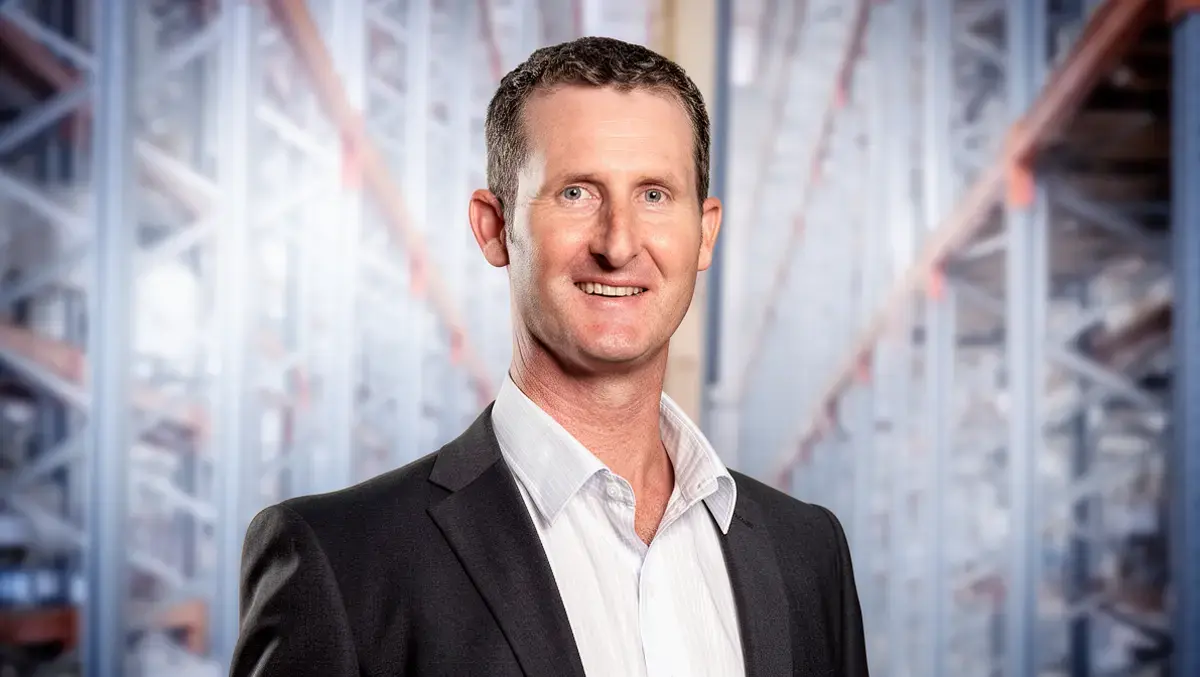
"The question is no longer simply where to build a warehouse. It is how much capacity and throughput you can get out of every square metre of industrial land you can secure. The days of solving a capacity problem by leasing an extra shed down the road are largely over. The answer now has to come from within the site you already have," said Dave Rubie, Sales Director, Integrated Systems and Mobile Automation, Dematic.
Building up
One response is to build higher. Businesses are investing in taller automated warehouses that can store far more pallets on smaller footprints than conventional single-storey buildings.
Dematic points to Americold's Spearwood facility in Perth as an example. The site stands 45 metres high and is among the tallest warehouses in the southern hemisphere, reflecting the economics of fitting more storage into a constrained location.
These projects rely on automated storage and retrieval systems to make dense buildings workable. Greater height and tighter storage layouts only add value if goods can still move in and out at the required speed.
"Height is the most visible part of the story, but it is not the whole story. A dense warehouse only delivers value when you can actually get product in and out at the speed the business needs and customers expect. That is what automation does. It makes density usable," said Rubie.
The forces behind this trend extend beyond a typical property cycle. Land close to ports, road links and major urban populations is limited by geography, planning restrictions and competition from other uses. At the same time, transport costs and delivery expectations are increasing the value of proximity.
Consolidation trend
A second response is consolidation. Instead of operating several warehouses across a region, some companies are assessing whether one larger automated site can replace a mix of owned facilities and outsourced storage locations.
Dematic cites Diageo's Australian distribution network as an example. The drinks company consolidated a dispersed network into a single automated distribution centre 12 years ago, reducing inter-site truck movements, lowering safety stock and simplifying inventory management.
Dematic argues those decisions now carry even more weight as land and transport costs rise. Businesses with older, fragmented networks are under growing pressure to find similar efficiencies, especially where extra land is scarce and expensive.
For manufacturers, one option is to add tall automated warehousing next to existing production facilities on land they already own. That avoids the need for a separate land purchase and can reduce road freight movements between factory and warehouse.
Retailers face a related calculation. Distribution and fulfilment sites close to stores or online customers can cut delivery times and transport costs, but suitable industrial land near those demand centres is often the hardest to find.
Dematic, which has operated in Australia and New Zealand since 1966 and is part of KION Group, says these constraints are prompting companies to spend more upfront on fewer, denser and more automated facilities. The long-term case depends on making each site flexible enough to handle changing demand over many years.
"Every major warehouse investment being approved right now is effectively a bet on what the next twenty years look like. The better bets are being made by businesses treating this as a strategic conversation, not a real estate transaction. The site you choose today is the site you will have to run your supply chain from for a very long time," said Rubie.