

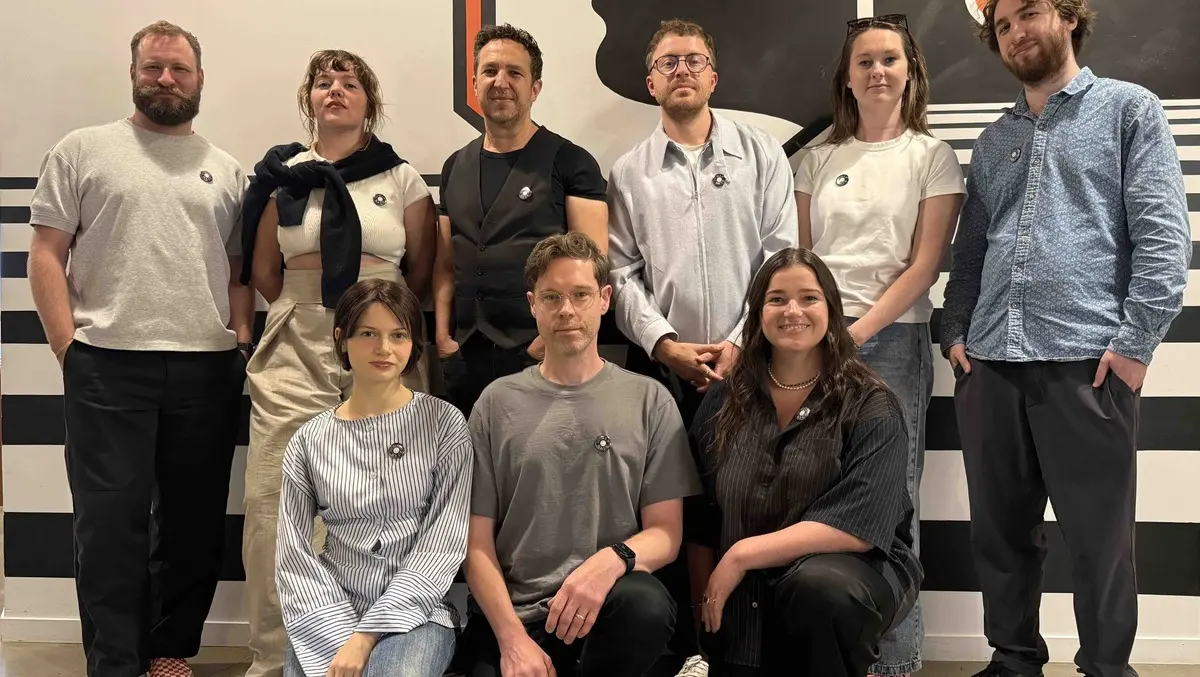

Antony Partos used his win at the APRA AMCOS Screen Music Awards to press his campaign against the use of copyrighted creative work in artificial intelligence systems without permission. His intervention comes as Australia debates possible changes to copyright settings for AI.
Partos, a composer and co-founder of Sonar Music, won Best Music for a Television Drama for The Artful Dodger. He used the occasion to back the Australian Guild of Screen Composers' Human Made campaign. Industry figures at Brisbane's Fortitude Music Hall wore record-shaped badges bearing the copyright symbol in support.
The campaign focuses on concerns that AI companies are using copyrighted music and other creative work to train models without consent or payment. Partos, who chairs the Australian Guild of Screen Composers' Industrial Relations Committee, said the issue is already affecting working composers.
"Our creative industries cannot become collateral damage in the race to attract AI investment.
"We're already being asked to recreate AI-generated tracks so productions can claim there's a human author.
"It's an extraordinary position to put a composer in; we can't copy something that may have been built from illegally harvested creative work," said Antony Partos, composer and co-founder of Sonar Music.
APRA AMCOS estimates that AUD $227 million in revenue for Australian and New Zealand music creators could be at risk by 2028. For many composers, royalties and licensing account for most of their annual income, and the concern extends beyond direct copies of songs.
Partos argued that AI systems can learn from a composer's style, orchestration and techniques to create new commercial music without reproducing a specific work or compensating the original creator. He said that raises questions not only about copyright law, but also about the commercial value of creative labour as automated tools gain ground.
Licensing debate
APRA AMCOS, which represents more than 128,000 Australian songwriters and composers, has proposed a voluntary licensing framework for AI training. Under the model, AI developers would seek permission and pay rights holders for material used to train systems, while creators could choose whether to opt in.
"If AI needs copyrighted material to train its models, then a license system needs to be implemented to compensate those artists who choose to opt in," said Partos.
The debate comes as the local screen sector grows. Australian film and television drama production expenditure reached a record AUD $2.7 billion in 2024-25, up 43 per cent on the previous year, according to figures cited by the campaign.
That expansion has increased the commercial importance of screen composition, advertising music and soundtrack work, areas where AI-generated output is beginning to appear in production workflows. Partos said Sonar Music composers had been asked to reproduce AI-generated advertising tracks so productions could present them as human-authored works.
Industry pressure
The issue has become more pressing as governments in several markets examine how copyright law should apply to AI training data. In Australia, creators' groups have warned against changes that would weaken existing protections or create broad exemptions for technology companies.
Partos linked the argument to the wider economics of the sector, saying Australian creative output underpins jobs and businesses well beyond music. He questioned whether multinational technology companies should be able to use that work without payment.
"The consequences of AI-generated music are no longer hypothetical," said Partos.
He also framed the dispute in political terms, arguing that copyright should not be traded away in policy negotiations focused on attracting AI investment. He said the Human Made campaign is not opposed to the technology itself, but seeks a system in which rights holders are recognised and paid when their work is used.
Partos's screen credits include Poker Face, Mystery Road, Last King of the Cross, Total Control, The Rover and the Academy Award-nominated Tanna. Sonar Music, which he co-founded with Jono Ma, David McCormack, Matteo Zingales and Andrew Lancaster, has worked across television, film and advertising since launching in 2010.
At the awards event, attendees noted the symbolism of a composer from The Artful Dodger leading a campaign against what supporters describe as AI copyright theft. "You've Got to Pick a Pocket or Two is fiction, not an AI blueprint for copyright policy," said Partos.