

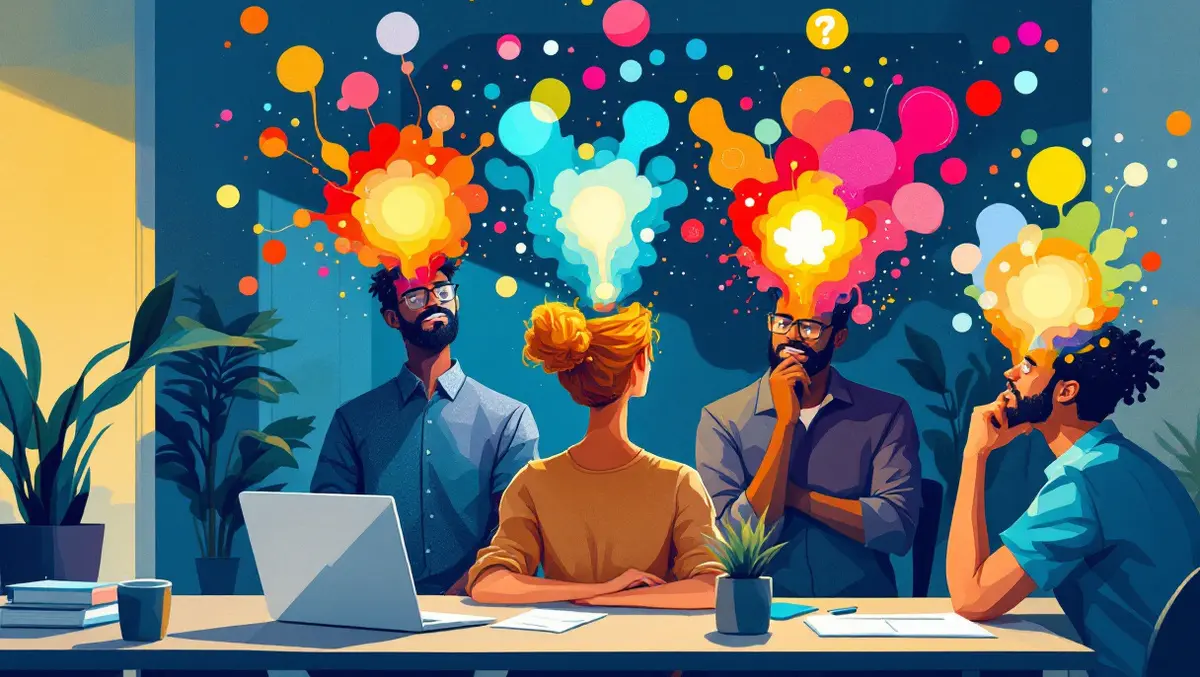
Psychedelics seen to boost creativity & leadership at work
Tue, 23rd Sep 2025
A new report by Sydney-based research company Fifth Quadrant examines the perceived benefits and usage of psychedelics in the workplace across Australia and the United States.
Key findings
The "Cultural Insights into Contemporary Psychedelics" report, launched by psychedelics advocate and author Dr Catriona Wallace, is based on a survey of 1,500 participants, half from Australia and half from the US. The report reveals that 52% of respondents noted long-term improvements in company leadership attributed to psychedelic use, and 76% observed increased creativity. In addition, the research records a 63% net positive change in empathy and a 51% net positive change in decision-making capabilities among users.
The study found that 34% of those surveyed had used a psychedelic or hallucinogenic substance, with a further 7% considering potential use. Of those not interested, 30% cited personal beliefs and lifestyle, 22% pointed to a lack of interest, and 18% mentioned safety concerns as primary reasons.
"The report, Cultural Insights into Contemporary Psychedelics, shows usage of and interest in psychedelics is already more widespread that many in the business community might realise," said psychedelics advocate and author Dr Catriona Wallace. "The significant benefits reported by many users makes this trend worthy of closer examination."
Psychedelic preferences and usage rates
MDMA was identified as the most popular psychedelic, used by 48% of those who have taken such substances. An additional 19% expressed willingness to try MDMA. LSD was the second most cited, used by 46%, with 22% open to trying it. Psilocybin followed at 43%, and Ketamine rounded out the top four with 22%.
Despite reported interest, regular or occasional use remains comparatively low: only 13% of users reported regular or occasional MDMA use, 12% for Psilocybin, 10% for LSD, and 7% for Ketamine. The data reflect that most workplace users do not engage frequently, instead reporting infrequent or experimental usage.
Motivations for workplace use
Among non-recreational users, 60% cited improved work performance as a key motivator, and 55% pointed to stronger leadership skills. Creative enhancement was a factor for 67% of users, while personal development motivated 73% of respondents. The survey also records that 52% of non-recreational users report lasting positive effects in self-awareness - a quality linked to individual growth and effectiveness in the workplace.
Perceptions of improved decision-making, positive relationships, and greater empathy were frequently mentioned, with 46% of respondents saying psychedelics had contributed to better collaboration and communication at work. Additionally, 74% of non-recreational users reported that psychedelic substances had enhanced creativity and innovation, particularly relevant in technology and the arts sectors.
In a notable result, 41% of all survey participants agreed with the statement that Donald Trump would be a more inclusive leader if he participated in a guided psychedelic experience.
Respondents also noted potential personal and health-related benefits; 78% of non-recreational users cited physical health improvements, 81% mentioned potential mental health benefits, and 64% referenced better connection with others as motivators for usage.
"It's clear that psychedelics can play a positive role in the business world," said Dr Wallace. "Rather than simply being a recreational activity, taking them appears to enhance key skills such as communication, leadership, and innovation."
Views on healthcare integration
There was substantial support among respondents for integrating psychedelic substances into mainstream healthcare systems. Some 64% supported their use under professional supervision, and 58% believed the pharmaceutical industry should be involved in developing and distributing psychedelic therapies.
Legal restrictions were highlighted as the primary barrier to access by 53% of respondents. High costs were an issue for 40%, and 33% noted difficulties in finding qualified guides or practitioners as an impediment to usage.
"Well considered and professionally supported provision of these psychedelic substances appears to have widespread support," said Dr Wallace. "This would also help to overcome the barriers that restrict access."
Dr Wallace added, "Further exploration needs to be undertaken of the potential benefits that psychedelics can have both on personal performance and workplace relations. I urge Australia's medical sector and law makers to thoroughly assess the role these substances can potentially play in the future."
The themes addressed in the research correlate with ideas explored in Dr Wallace's forthcoming book, which discusses frameworks for modern leadership involving ancient rituals, altered states of consciousness, and technologies such as artificial intelligence.