

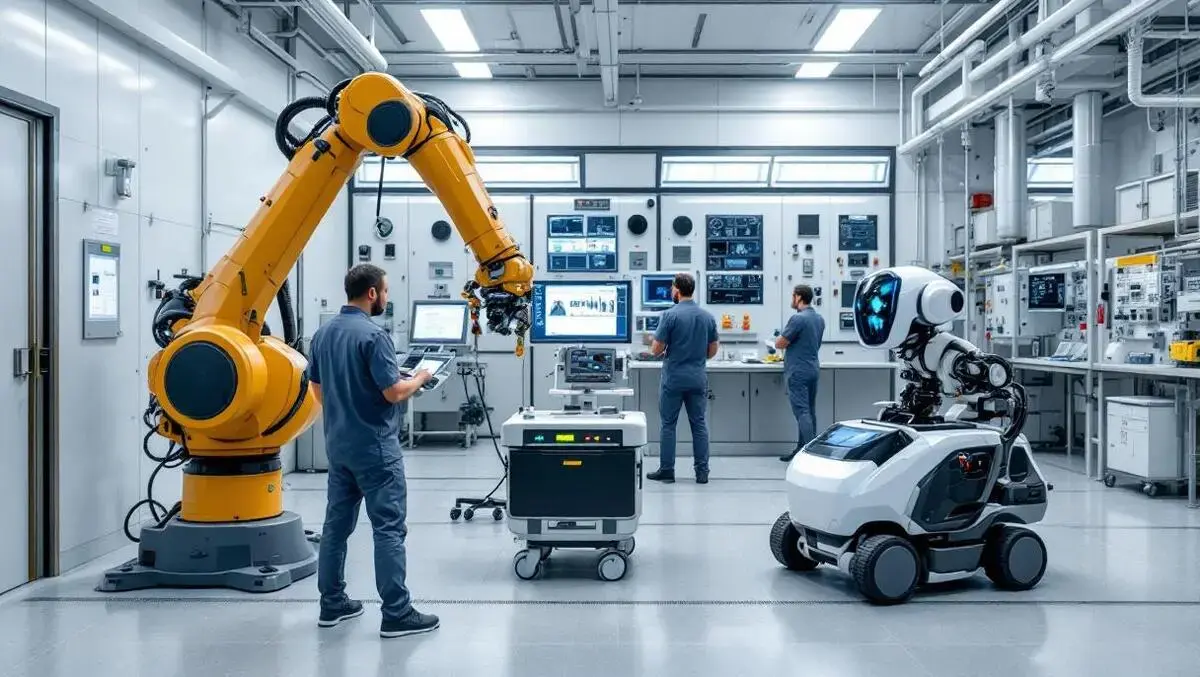

QNX has expanded its collaboration with NVIDIA to integrate QNX OS for Safety 8.0 with NVIDIA IGX Thor, targeting safety-critical edge AI systems in robotics, medical and industrial settings.
The integration also combines QNX OS for Safety 8.0 with the NVIDIA Halos Safety Stack on the IGX Thor platform, giving developers a unified environment for real-time control, functional safety and AI workloads. It is aimed at regulated systems including autonomous mobile robots, humanoid robots, surgical robotics, medical imaging equipment and industrial automation platforms.
Safety focus
QNX, a BlackBerry software business, supplies operating systems and related software for embedded and regulated environments. NVIDIA's IGX Thor is designed for edge AI deployments that require substantial computing power alongside safety and reliability.
Under the expanded collaboration, developers can run real-time controls and safety functions on QNX's microkernel-based real-time operating system while using NVIDIA hardware for AI tasks such as perception, planning and decision-making. This mixed-criticality design could reduce the need for separate system architectures and support certification work for regulated products.
The announcement builds on an existing relationship. QNX and NVIDIA had already integrated QNX OS for Safety 8.0 with the NVIDIA DRIVE AGX Thor Development Kit for automotive and autonomous vehicle use cases.
That earlier work focused on vehicles; the latest step applies a similar architecture beyond automotive. The companies are now positioning the combination for factories, hospitals and robotics developers that need to pair AI processing with deterministic system behaviour.
Industrial and medical device makers face growing pressure to introduce more software and automation while meeting strict safety requirements. In these environments, operating systems and computing platforms often must support both conventional control tasks and newer AI functions without compromising reliability or regulatory compliance.
The joint platform is intended to help developers move from prototype systems to production deployments on a common software and hardware base. For companies building machines that interact with people or operate in controlled settings, simplifying the path from development to certified deployment can be a significant commercial factor.
Early access registration has opened for select customers that want to develop on the NVIDIA IGX Thor Developer Kit with QNX, suggesting the collaboration is moving from product integration to hands-on testing with potential users in its target industries.
Broader push
The partnership also reflects a broader shift in industrial computing, as chipmakers and embedded software suppliers seek to offer complete stacks for edge AI systems rather than isolated components. Customers in robotics, healthcare and industrial automation increasingly want integrated platforms that can handle machine control, application software and AI inference in a single design.
For BlackBerry, the announcement reinforces QNX's role as one of the company's core software businesses after its retreat from smartphones. QNX has long been used in automotive systems and other embedded applications, and BlackBerry has sought to extend that footprint into medical devices, robotics and industrial controls.
QNX software is used in more than 275 million vehicles and is deployed across sectors including medical devices, rail and aerospace. The technology is also used by nine of the top 10 medical device manufacturers, underscoring the importance of regulated industries to the business.
NVIDIA, meanwhile, has pushed deeper into industrial and edge AI markets as demand grows for systems that can run AI models outside centralised data centres. By pairing its hardware and safety software with established real-time operating systems, it can broaden its appeal to manufacturers and device makers that must meet both technical and regulatory requirements.
John Wall, President of QNX, linked the latest development to the broader shift toward software-defined and autonomous systems in regulated markets.
"As robotics, medical, and industrial systems become more autonomous and software defined, safety and determinism cannot be afterthoughts," Wall said.
"Integrating QNX OS for Safety 8.0 with NVIDIA IGX Thor and NVIDIA Halos Safety Stack brings together a trusted real-time safety foundation and a powerful functional safety platform for edge AI. This expanded collaboration builds on our work with the NVIDIA DRIVE AGX Thor Development Kit and extends the same proven architecture from automotive into the next wave of regulated, intelligent systems."