

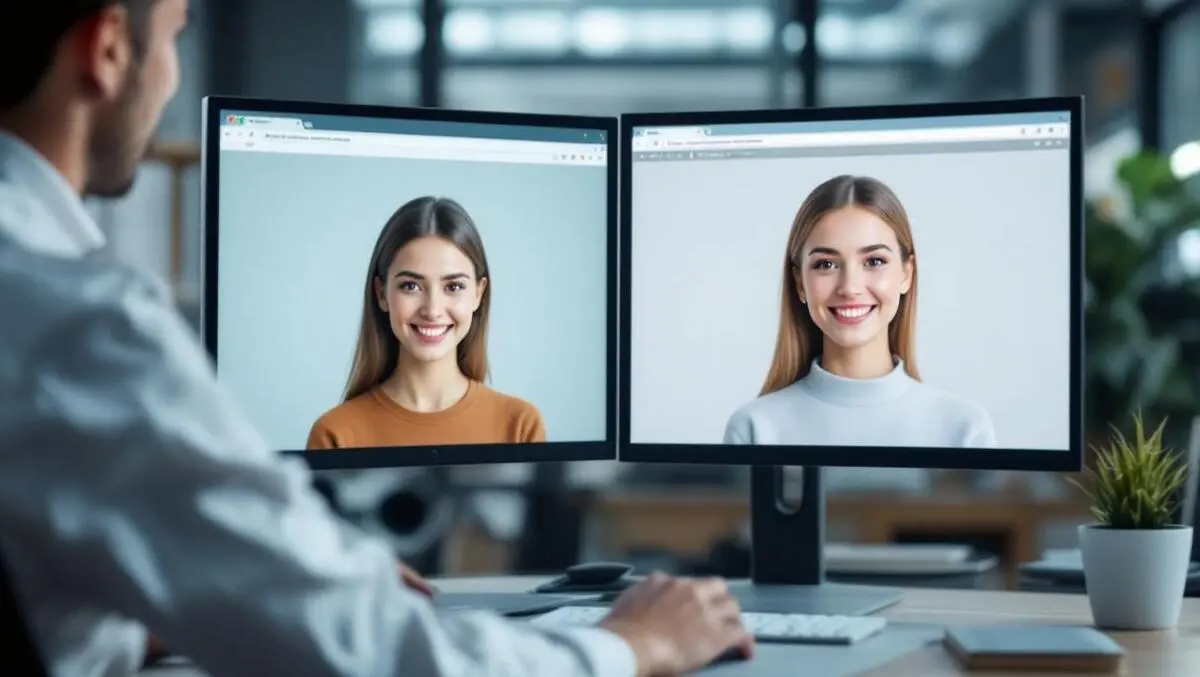

A large field study of live advertising on Taboola's Realise platform found that generative AI-produced ads can match human-made creative, and can post higher click-through rates when the visuals include cues people associate with trust.
The research team included academics from Columbia University, Harvard University, Technical University of Munich, and Carnegie Mellon University. They assessed how generative AI compared with human creative in driving consumer action using real-world campaign results rather than lab tests.
Taboola said the analysis covered more than 500 million ad impressions and 3 million clicks. The researchers examined matched sets of AI-generated and human-made ads that ran in live campaigns on the same day.
Performance results
The study reported a higher average click-through rate for AI-generated ads than for human-made ads in the raw data. AI ads recorded 0.76% click-through rate, compared with 0.65% for human ads. The researchers said performance looked comparable once they applied the tightest statistical controls.
The report also distinguished between AI ads that audiences perceived as artificial and those that did not. Taboola said AI-generated ads achieved the highest engagement when they did not "look like AI". It said those ads outperformed human-made ads and AI ads seen as artificial.
Trust cues
Visual elements linked with trust played a central role in the results. The study found that a large, clear human face ranked as the most important factor in making an ad feel more human and trustworthy.
Taboola said its best practices and policy restrictions influenced how advertisers used AI creative. It said AI-generated ads on Realise were more likely to include these trust cues than human-made ads.
Researchers also assessed performance beyond the initial click. Taboola said the study found AI-generated visuals increased or maintained click-through rates without reducing downstream conversion performance. The company framed the finding as evidence that production scale and conversion outcomes can sit alongside each other in live campaigns.
Method and scope
The researchers used what they called a quasi-experimental "sibling ads" approach. They compared matched pairs of AI-generated and human-made ads created by the same advertiser for the same campaign on the same day.
The study design aimed to separate the impact of the creative itself from other factors that affect advertising performance. Taboola said the approach controlled for variables including the identity of the advertiser, timing, audience targeting, and landing pages.
The dataset came from campaigns running on Taboola's Realise performance advertising platform. Taboola said Realise served the ads that formed the basis of the analysis. The company also said it works with thousands of businesses that advertise directly on the platform.
Early adopters
The report also pointed to differences in adoption across categories. Taboola said food and drink and personal finance brands were among the earlier adopters of AI ads in the dataset.
The findings arrive amid continued debate in the advertising industry about the role of generative AI in creative work. Marketers have used AI tools to increase output and lower production costs, though concerns persist about uniformity, authenticity, and consumer response. The study aimed to connect those questions with large-scale performance signals in market settings.
Academic researchers have also focused on how people identify AI-generated content and how that perception shapes trust. In this dataset, Taboola said AI creative performed best when it avoided a distinctly synthetic feel, and when it used visual features associated with human presence.
Oded Netzer, Vice Dean for Research, Columbia Business School, said the platform data provided access that research teams often lack.
"Taboola's platform provided us with a literal gold mine of real-world data that is simply unavailable in a lab setting. By analysing over 500 million impressions, we were able to move past the hype of GenAI and uncover its real impact in large scale settings," said Oded Netzer, Vice Dean for Research, Columbia Business School. "Our findings prove that when AI is used to enhance human cues-like the trust found in a human face-it doesn't just match human performance; it often sets a new ceiling for engagement," added Netzer.
The study's authors said the sibling-ads method offered a way to compare creative approaches under similar campaign conditions. Further work in the area is expected to focus on how trust signals vary by sector and format, and how platforms and advertisers adjust creative guidelines as generative tools become more common in live media buying.