


AI replacing entry-level roles sparks concerns for creative jobs
Wed, 4th Nov 2026 (Today)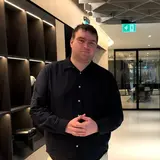
The growing utilisation of artificial intelligence in Australian universities is prompting resistance among creative arts students, with some turning towards analogue photography and handmade processes, as concerns mount over the long-term impact of the technology on artistic-minded careers.
Rebecca Najdowski, Senior Lecturer in RMIT University's School of Art, said students had demonstrated particularly strong opposition to generative AI in image creation, despite some interest in using the technology for other creative tasks.
Najdowski has rarely seen students so participative in a subject, including through active disagreement with the technology.
"I've not seen students more engaged in a subject," she told IT Brief Australia. "There are lots of vocal students who are really not interested in using AI."
While students may be willing to use AI for tasks such as writing essays, image generation is becoming a particular point of contention when it comes to using generative tools.
Students are concerned about the environmental consequences of AI, as well as the uncertainty surrounding employment opportunities in creative industries.
For those studying photography, design and other visual disciplines, the rapid improvement of AI-generated imagery has created additional pressure.
Major advertising campaigns using fully AI-generated content are just one example of how the technology is changing commercial creative work.
"It's a very uneasy experience to be studying and emerging out of university in this moment when there's so much uncertainty about what their future jobs will look like because of AI," she said.
Lack of entry-level roles affecting career progression
The challenges facing young creatives actually predate generative AI, with traditional pathways into commercial photography already becoming less predictable.
Historically, photography graduates could build their careers by assisting established photographers, developing practical skills and gradually establishing their own professional work.
However, that pathway has become less straightforward, with fewer clear opportunities for emerging photographers to gain experience.
AI could further weaken those entry points by automating production tasks that previously provided junior workers with training and industry experience.
"Some of the entry-level positions where you would receive training (in a professional environment), a lot of that could potentially be done by AI," Najdowski said.
She warned that if businesses no longer needed as many junior workers for production tasks, aspiring photographers could lose opportunities to develop the skills required to progress into more senior roles.
The potential disruption is not limited to the number of jobs available, but also concerns how the next generation of creative professionals will acquire experience.
"If you don't have that entry point into the industry, then that production line is compromised," she said.
But students are finding ways to adapt to the new paradigm, with many taking an entrepreneurial approach to establishing their careers.
They are already assisting professional photographers while studying, building commercial experience and developing their networks before graduating.
The mixed attitudes among students are also reflected in the broader university environment.
Some RMIT staff are embracing the university's own AI system and incorporating it into their work, while others have shown more trepidation, Najdowski noted.
She said universities face a difficult task in developing AI strategies that recognise its potential while maintaining the value of traditional teaching and creative practice.
For students, however, the immediate concern is how the technology will affect the careers they have spent years preparing to enter.
Analogueue photography back in vogue
One response to the increasing availability of AI-generated imagery has been renewed interest in analogue photography and tactile creative processes.
The School of Art has observed more students choosing to shoot film or explore alternative photographic techniques, including processes that emphasised the physical aspects of making images.
"While AI (use) is increasing, human-made work is becoming more popular in terms of what the students are making," she said.
Students are also combining analogue and digital approaches, with some shooting on film before developing and scanning their images for digital printing.
RMIT maintains a relationship with a local dark room, which provides students with access to facilities no longer readily available on campus.
Environmental concerns linger
The environmental impact of AI is another significant concern among students and creative practitioners.
Najdowski pointed to substantial gaps in publicly available information about the energy consumption of AI systems, making it difficult to assess their overall environmental footprint.
Technology companies generally do not provide sufficiently detailed reporting to distinguish energy used by AI from their wider technology operations, she said.
While some aspects of AI energy consumption could be estimated, the lack of transparency made it difficult to establish a complete picture.
Najdowski has explored the issue through her own artistic practice, including work involving the training of AI models to generate video.
She estimated that training several models for one project required approximately 450 hours of computing time.
Measuring the environmental impact of her work is important given the environmental themes explored in her work, she said.
The difficulty of obtaining reliable information makes it challenging for artists and institutions to understand the broader consequences of adopting AI tools.