

OpenAI gives AUD $5.5m credits to Australian founders
Mon, 24th Aug 2026
OpenAI has provided more than AUD $5.5 million in API credits to Australian founders and entrepreneurs, marking the milestone at a founder event in Sydney.
The support is part of a broader push to expand use of OpenAI's tools among local startups. Australia is already among the company's top 10 global markets for developers building on its platform.
More than 150 founders, entrepreneurs and builders attended the Sydney gathering, including established startup figures and school students developing AI-based businesses.
Earlier this year, OpenAI expanded its startup programme in Australia. Eligible businesses can receive up to USD $50,000, or about AUD $70,000, in API credits, along with 10 complimentary ChatGPT Business seats and access to Codex.
The event brought together founders working across legal services, financial technology, customer support and automation. The programme featured live demonstrations, product updates and practical sessions with businesses using OpenAI's models in commercial products.
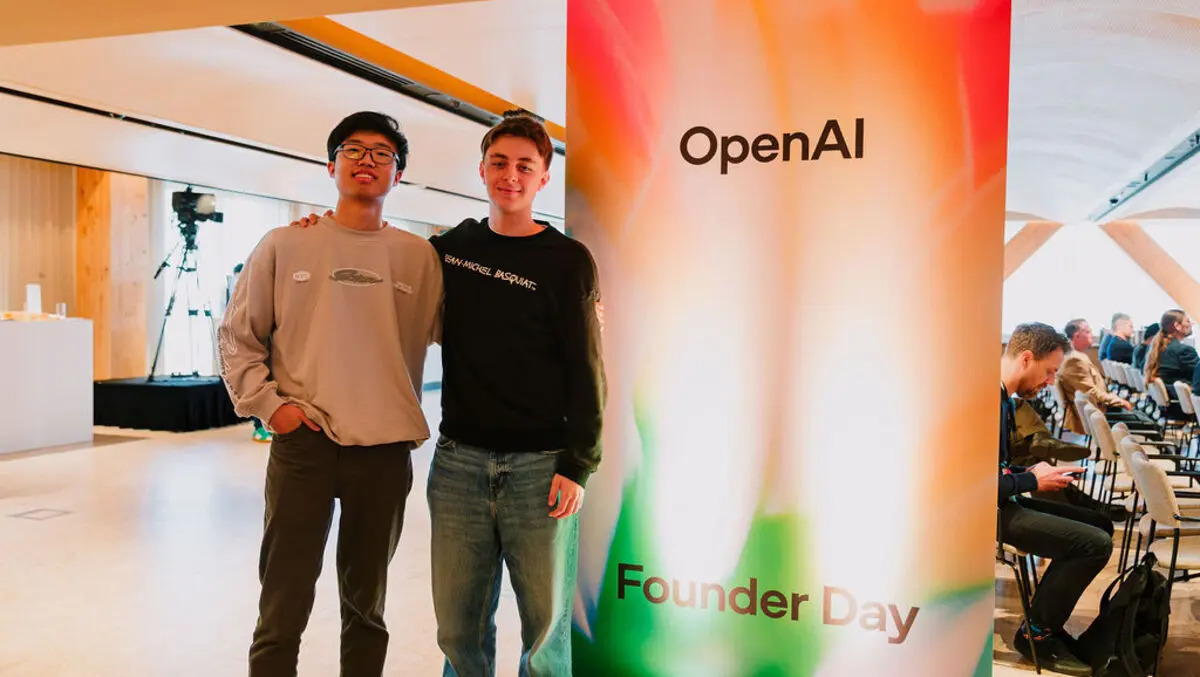
Among those highlighted were Peter Starodubtsev and Steve Zhu, two Sydney year 12 students building AI-focused startups before leaving school.
Starodubtsev founded Petrex, a gaming and advertising venture that has secured six-figure pre-seed funding. The business uses OpenAI's Codex in product development and has worked with brands including Samsung and NBC Universal Studios.
"Traditional advertising interrupts the experience; we build brands into games in a way that feels natural and adds to the fun. I started working on the idea three years ago, and since then we've partnered with brands like Samsung and NBC Universal Studios. Raising funding was a huge learning experience, but what I enjoy most is building the product, testing new ideas and growing our team," said Peter Starodubttsev.
Zhu is working with Starodubtsev on Workwise, an AI-native operations platform for Australian small businesses designed to help companies manage workflows across existing software tools.
"Watching my mum build her eCommerce business, I saw how easy it was for founders to get lost in the minutiae. We're building Workwise so running a business doesn't require the owner to constantly hold the whole business in their head, giving them more time and space for the decisions that actually move the company forward," said Steve Zhu.
Local market
OpenAI used the gathering to underline Australia's place in its international developer base. Local founders are using its models to build products for domestic customers while also targeting overseas markets.
Wulfie Bain, International Applied AI lead at OpenAI, attended the Sydney event and commented on the range of participants, from experienced startup founders to students.
"Australian founders have always built with global ambition. What's changing is how quickly a great idea can become a real product. Whether you're an established founder or still at school, AI is lowering the barriers to building and giving Australian entrepreneurs new ways to compete on the world stage," said Wulfie Bain, International Applied AI lead at OpenAI.
Bain also pointed to the cost pressures startups face as they decide how to use AI services in product development and operations.
"For Australian founders, that opportunity also depends on getting more useful work from every dollar they spend. OpenAI's GPT-5.6 family gives startups the flexibility to choose the right model for their needs, from complex tasks to fast, cost-effective work at scale. Recent improvements in efficiency have also reduced API pricing for GPT-5.6 Luna by 80%, helping founders stretch their budgets further as they build and grow," Bain said.
The latest funding figure indicates the scale of credits already distributed in the Australian market. It also shows how major AI suppliers are competing to win early loyalty from startup founders, many of whom may go on to build products that generate sustained usage of large language models and related tools.
For Australian startups, the credits can offset a meaningful share of early technical costs, particularly for small teams testing products before revenue is established. For OpenAI, the approach deepens its presence in a market where founders are increasingly building software businesses around third-party AI models rather than developing their own from scratch.
The Sydney event reflected that shift, with attendees spanning different stages of company building, from school-age entrepreneurs to operators of more established startups.