

The Ultimate Guide to Physical AI
A curated Australian edition of TechDay news, analysis, interviews, reviews, job moves, and related resources for Physical AI.
What to know about Physical AI
Physical AI sits at the intersection of artificial intelligence and the real world, where software no longer just makes predictions on a screen but directly senses, moves and acts through robots, vehicles, devices and automated infrastructure. This tag brings together stories on how AI is being embedded into factories, hospitals, farms, homes, transport and supply chains, turning digital insights into physical outcomes such as safer workplaces, faster logistics and more responsive services.
Here you’ll find coverage of breakthroughs in humanoid and industrial robots, autonomous machines, edge and embedded AI hardware, digital twins, private 5G, and the platforms that let developers train, simulate and deploy physical AI systems at scale. The articles explore major partnerships, new chips and robotics platforms, investment trends and emerging business models, alongside the technical and organisational challenges that come with putting AI into motion in shared, safety-critical environments.
Whether you’re a technologist, investor or business leader, the Physical AI tag helps you track how robots, smart devices and AI-powered infrastructure are evolving from pilots to production. Reading these stories will give you a grounded view of where the next wave of automation is heading, what it takes to deploy it responsibly, and how “embodied” intelligence is likely to reshape operations, jobs and strategy over the next decade.
Australian Physical AI News
Regional stories with direct local relevance
Australian firms lag in AI value despite rising spend
Many Australian companies are still failing to translate rising AI budgets into measurable gains, with 37% showing no meaningful value.

Cisco report: AI strains Australian networks as upgrades lag
Budget limits are leaving most Australian firms exposed as AI-driven traffic surges, with just 17% saying their networks are fully ready.

SenSen founder uses AI to release Father's Love song
The track shows how generative AI is moving into personal creativity as SenSen's Chief Executive Officer turns a Father's Day theme into music.
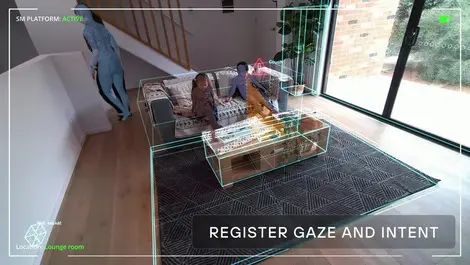
Seeing Machines launches physical AI platform for robots
The move puts the Australian company's human-sensing expertise into factories and hospitals, where robots must work safely beside people.

Datacom & Lenovo bring robot inspections to Australia
Australian airports and utilities could soon use dog-like robots to inspect risky sites, as Datacom and Lenovo roll out AI systems.

Australia has two-year window to build AI champions
Global rivals could capture most of the value from local AI start-ups unless investors and customers act fast, King River Capital warns.
Analyst Insights
Research and market analysis connected to Physical AI
Gartner forecasts AI strain on services, costs & jobs

Akkodis named specialist in Gartner physical AI services

NTT DATA named market shaper in Gartner physical AI

Couchbase launches AI Data Plane for enterprise agents

AI dominates US CEO calls as Iran references surge
Featured News

Expert Columns

Interviews
Interviews and video coverage from the networkRecent Physical AI News
.webp)
Hyundai & Kia back VAST Data in strategic investment
The investment follows years of production use and has already helped 42dot halve storage needs while keeping autonomous driving work within existing data centre capacity.

EY revenue hits USD $57 billion as AI demand surges
AI-related work helped push EY's annual revenue to USD $57 billion, with clients shifting from trials to wider business use.

Arteris launches FlexGen Multi-Die for AI chiplets
AI chipmakers can cut die-to-die link area, power and I/O by up to 50% as multi-die designs become harder to scale.
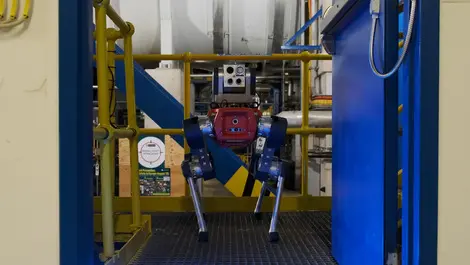
ANYbotics adds door access for ANYmal inspection robots
The upgrade lets inspection robots reach critical plant assets behind locked doors, cutting manual work while keeping security and fire controls intact.

Lumicent launches decision platform for industrial risk
Industrial operators could curb downtime and focus maintenance where it matters most as Lumicent links asset data to business risk.

Seeing Machines unveils 3D human sensing for robots
Factories and warehouses could see safer robot interactions as the system reads human posture and movement in real time on embedded hardware.

Nvidia says major robotaxi programmes use its stack
The chipmaker's technology is now embedded across robotaxi development, underscoring its role in a market Nvidia says could hit USD $400 billion by 2035.

iPresence launches kubi 2.0 on Kickstarter globally
Crowdfunding will open access to a redesigned telepresence robot for schools, hospitals and offices, with donation-backed units for needy recipients.

BlackBerry raises outlook as QNX revenue hits record
Strong demand for QNX helped lift BlackBerry's second-quarter profit and cash flow, prompting the company to increase full-year guidance.

AI adoption puts pressure on campus and branch networks
Most organisations are unprepared for AI traffic surges, with 73% expecting campus and branch network capacity limits within two years.

AWS, NVIDIA to deploy 2 million more GPUs for AI workloads
The deployment will help AWS meet surging demand for AI computing as the cloud giant deepens reliance on NVIDIA hardware and robotics.

Ciena says AI services to drive telecoms revenue growth
Telecom operators face urgent network upgrades as most expect AI and managed fibre services to be major new revenue sources.

LG deepens NVIDIA robotics tie-up with Seoul data factory
The Seoul site could speed LG's push into home and industrial robots, as the group aims to gather 100,000 hours of training data.

Samsung hosts Bengaluru AI conference with 300 participants
India's AI race is drawing wider industry backing as Samsung brought together more than 300 leaders to discuss future uses and risks.

Alloy Robotics raises USD $8 million in seed round
The funding values the Sydney-founded firm at USD $80 million as robotics teams seek faster ways to diagnose fleet failures.

Contactile wins AI robotics sprint for Boston residency
A Boston residency and US market access await the Sydney startup after it topped a four-week sprint focused on physical AI and robotics.

NVIDIA expands open world models for physical AI development
Open models matter because robots and vehicles need task-specific tuning, and Nvidia is betting on Cosmos 3 to fill that data gap.
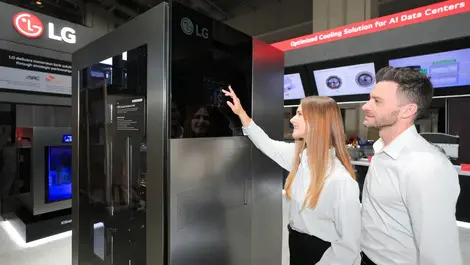
LG wins NVIDIA validation for 600kW AI cooling unit
The approval gives data centre operators a pre-validated liquid cooling option as AI servers push heat loads beyond air systems.

AMD unveils Helios rack-scale AI compute portfolio
Helios racks and new Instinct chips put AMD deeper into AI infrastructure as it courts major customers and challenges Nvidia.

Speedata deploys Arteris FlexNoC in Callisto & Andromeda
The deal underpins Speedata's bid to cut server counts and costs in data-preparation and ETL workloads as analytics chips get more specialised.